 Coach
CoachEpigenetics is the study of heritable changes in gene activity that are not changes in DNA sequence: states carried by DNA methylation, histone marks, or self-sustaining transcription-factor circuits, and copied through cell division. Two alleles of identical sequence but different stable epigenetic state are epialleles. Inheritance through mitosis is the rule and is what makes a differentiated cell stay differentiated. Inheritance through meiosis, from parent to offspring, is the exception in mammals, because the marks are erased in two waves of reprogramming: in the primordial germ cells, where imprints and most methylation are wiped and then set afresh according to sex, and again in the zygote and early embryo, where the paternal genome is actively demethylated by TET3 and the maternal passively, before the embryo’s own patterns are laid down by DNMT3.
Examples
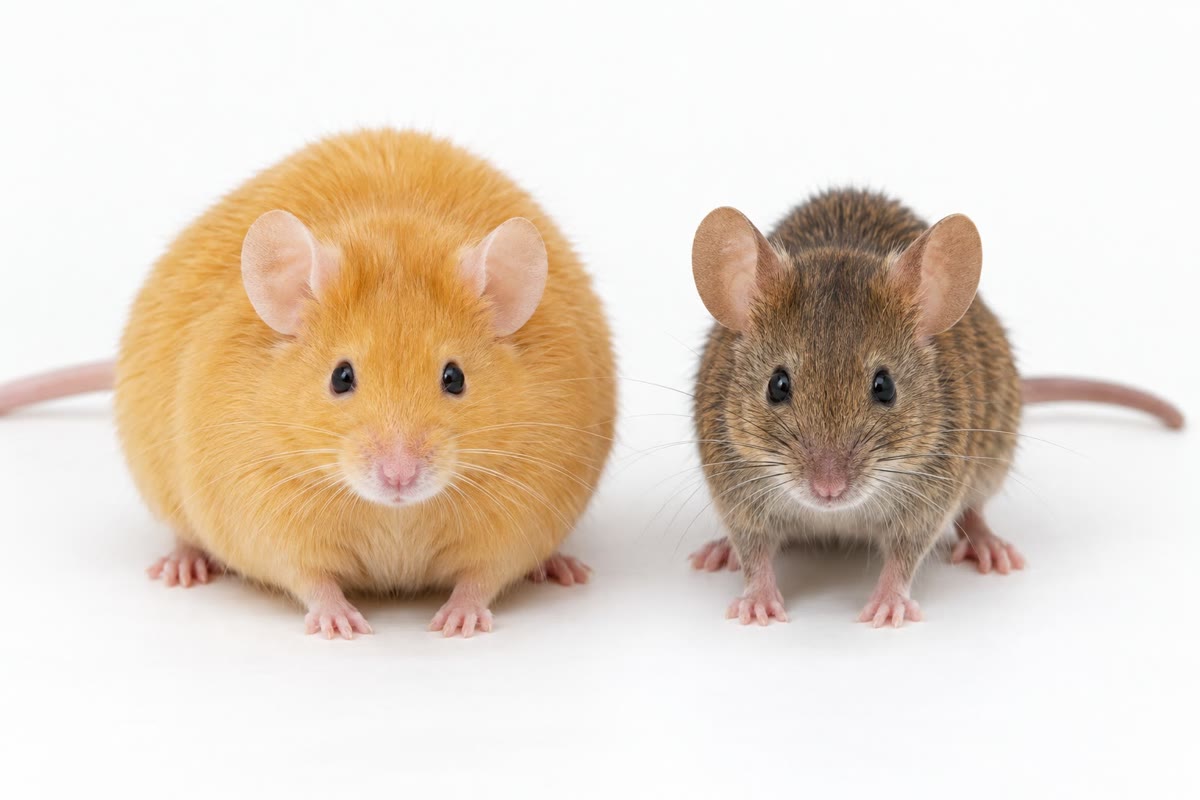
Example 1.19 (The agouti viable yellow mouse)
In the allele a retrotransposon has inserted upstream of the agouti coat-colour gene. Where the transposon’s promoter is unmethylated it drives agouti constantly in every cell; the mouse is yellow, obese and prone to diabetes. Where it is methylated the gene follows its normal control and the mouse is brown (“pseudoagouti”). Genetically identical littermates range across the whole spectrum, and a yellow mother has more yellow pups than a brown one: the epiallele is incompletely erased through the maternal germ line. Waterland and Jirtle (2003) fed pregnant mothers a diet rich in methyl donors (folate, vitamin B12, choline, betaine) and shifted the pups’ coats toward brown. The environment of one generation had set a mark that the next generation carried.