Coach
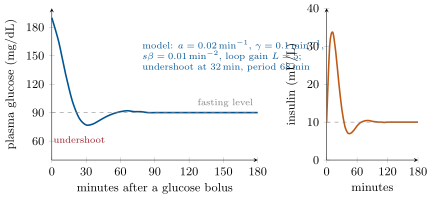
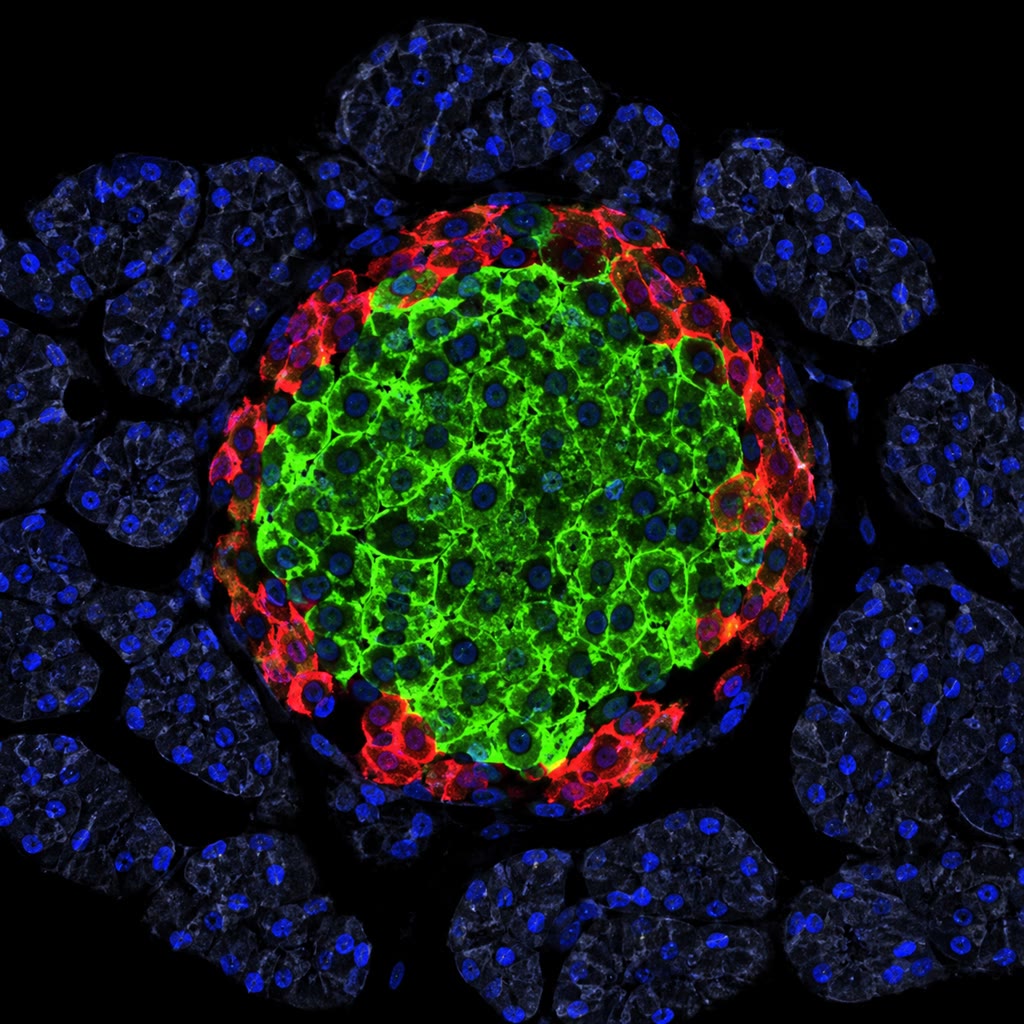
CoachThe blood holds about of glucose, at (), and the brain burns a day and can burn nothing else; a meal delivers in an hour. The islets of Langerhans, a million clusters of a few thousand cells scattered through the pancreas, hold the loop. cells sense glucose by metabolising it: more glucose, more ATP, closure of an ATP-sensitive potassium channel, depolarisation, calcium entry and exocytosis of insulin, a peptide hormone cleaved from a single precursor. Insulin tells muscle and fat to move the transporter GLUT4 to their surfaces and take glucose up, the liver to store glucose as glycogen and stop making it, and fat to stop releasing fatty acids: it is the hormone of the fed state, the only one that lowers blood glucose. cells release glucagon when glucose falls: the liver breaks down glycogen and makes new glucose from amino acids and lactate. Adrenaline, cortisol and growth hormone raise glucose too, and the redundancy is not symmetric: a body can defend against a fall by four routes and against a rise by one. Diabetes mellitus is the failure of that one: type 1, the autoimmune destruction of the cells, needs insulin from the first day; type 2, nine cases in ten, begins as resistance of the tissues to insulin, met for years by more insulin, until the cells fail to keep up and glucose rises.