Coach
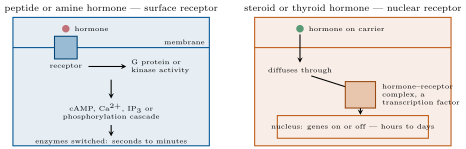
CoachA hormone is a substance released by a cell into the blood that acts on distant cells carrying its receptor; a paracrine signal acts on neighbours, an autocrine one on the cell that made it, and a neurohormone is released by a neuron into the blood. The classical endocrine glands — pituitary, thyroid, parathyroids, adrenals, pancreatic islets, gonads — have been joined by the heart (natriuretic peptide), the kidney (erythropoietin), fat (leptin), the gut (a dozen peptides) and bone. Chemically hormones are of three kinds, and the chemistry fixes the mechanism. Peptide and protein hormones (insulin, growth hormone, the pituitary hormones) are made on ribosomes, stored in granules, released by exocytosis, travel free in plasma, cannot cross membranes, and act on receptors at the cell surface — G-protein-coupled or kinase-linked — through second messengers, within seconds to minutes; their half-lives are minutes. Steroids (cortisol, aldosterone, oestrogens, testosterone, and the secosteroid vitamin D) are made from cholesterol as needed, not stored, travel bound to carrier proteins, cross membranes, and bind nuclear receptors that are themselves transcription factors: their effects take hours and last days. Amines straddle the two: adrenaline acts at the surface within a second; the thyroid hormones, though amino-acid derivatives, act on nuclear receptors like steroids. A hormone means nothing in itself: the same adrenaline dilates one vessel and constricts another because their smooth muscles carry different receptor subtypes, and the same cortisol raises blood glucose in the liver and suppresses a lymphocyte because the two cells’ chromatin offers its receptor different genes.