সব বই

পেশাদার

1 Markets I: The Ecosystem and Exchange-Traded Marketsবাজার অনলাইন 2 Markets II: Rates, FX and Creditবাজার অনলাইন 3 Markets III: Commodities, Energy and Cryptoবাজার অনলাইন 4 Quantitative Methodsপদ্ধতি অনলাইন 5 Derivatives and Volatilityডেরিভেটিভস অনলাইন 6 Rates, Credit, XVA and Riskসুদহার, ঋণ ও ঝুঁকি অনলাইন 7 Research Craft: Predictors, Backtests, Measurement, Portfoliosগবেষণা অনলাইন 8 Strategies I: Equities and Futuresকৌশল অনলাইন 9 Strategies II: Volatility, Relative Value, Macro and the Bank Desksকৌশল অনলাইন 10 Microstructure and Executionএক্সিকিউশন অনলাইন 11 Market Making and High-Frequency Tradingমার্কেট মেকিং অনলাইন 12 Machine Learning for Marketsমেশিন লার্নিং অনলাইন 13 Low-Latency Softwareপ্রযুক্তি অনলাইন 14 Networks, Hardware and Trading Infrastructureপ্রযুক্তি অনলাইন 15 Research, Data and Risk Platformsপ্রযুক্তি অনলাইন 16 The Desk and the Firmপ্রতিষ্ঠান অনলাইন 17 The Industry: Firms, Roles and Careersক্যারিয়ার অনলাইন 18 Interviews I: Maths, Probability and Speedক্যারিয়ার অনলাইন 19 Interviews II: Markets, Trading Games and the Final Roundক্যারিয়ার অনলাইন 20 Interviews III: Codeক্যারিয়ার অনলাইন
অ্যাপ পরিচিতি Coach সাইন ইন পড়া শুরু করো

বইগুলো এখনো বাংলা ভাষায় পাওয়া যায় না — ইংরেজি সংস্করণ দেখানো হচ্ছে।

Biology · পরিভাষা

Pollination and its agents কী?

Definition 6.4 University Biology — Year 2 · অধ্যায় 6 — Sexual Reproduction of Flowering Plants

Pollination is the transfer of pollen from an anther to a stigma; self-pollination within one flower or plant, cross-pollination between plants. Wind-pollinated flowers (grasses, oaks, birches, plantains) are small, green, scentless, with large feathery stigmas and enormous quantities of smooth, dry pollen; their pollen-to-ovule ratio runs to a million. Animal-pollinated flowers pay their carrier: nectar (sugar solution from nectaries), pollen itself, oils, scent; and they advertise with colour, shape and smell tuned to the carrier’s senses — ultraviolet nectar guides for bees, which see ultraviolet and not red; red tubular flowers without scent for hummingbirds; white, heavily scented, night-opening flowers with deep tubes for moths; brown, foetid flowers for carrion flies; sturdy, pale, night flowers for bats. Each such set of traits is a pollination syndrome, and the fit between flower and pollinator is the textbook case of coevolution: Darwin predicted from a Madagascan orchid’s 30 cm30\,\mathrm{cm} nectar spur a moth with a 30 cm30\,\mathrm{cm} tongue, found forty years later.

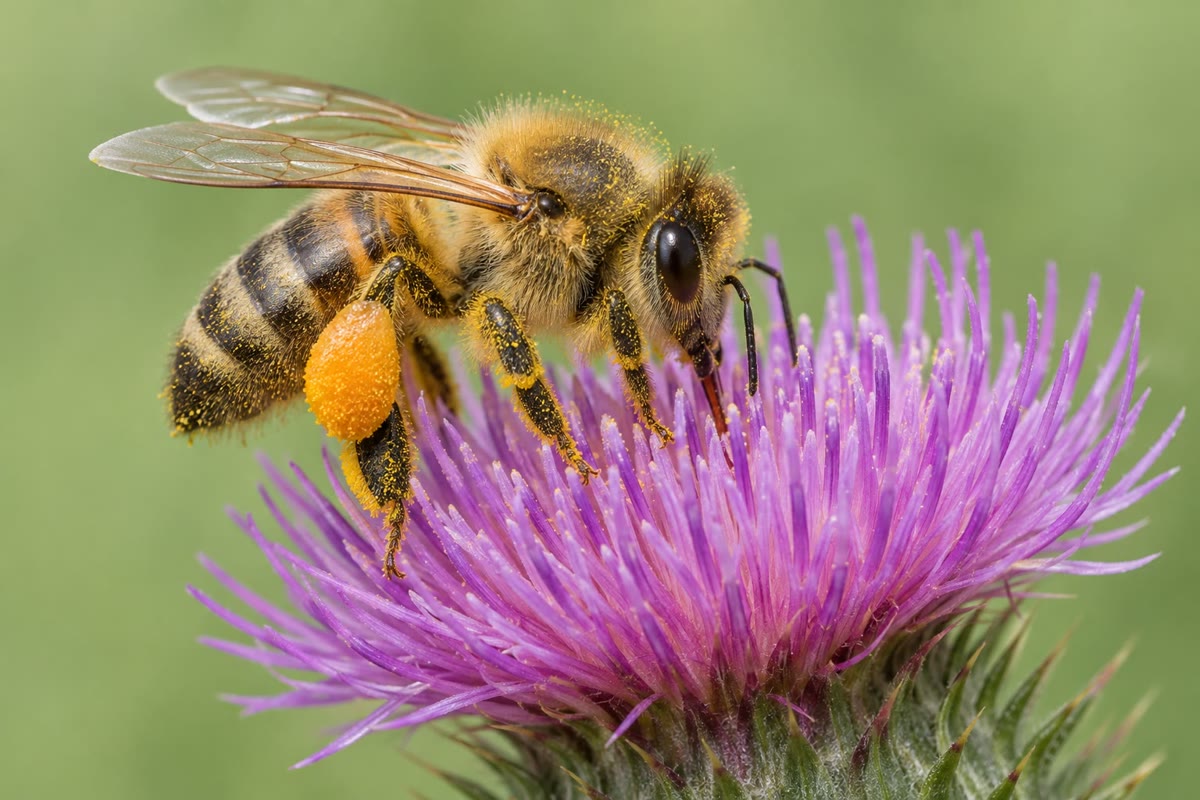
A honeybee on a thistle: pollen dusts its body and packs its hind-leg baskets; some of it will reach the stigma of the next thistle it visits. Purple, a landing platform and abundant nectar are the bee syndrome.
প্রসঙ্গসহ পড়ো →