 Coach
CoachA bacterium resists an antibiotic by one of five means. It destroys the drug: -lactamases hydrolyse the -lactam ring, and the extended-spectrum and carbapenemase variants now destroy the newest ones. It alters the target: a mutation in the ribosomal protein or gyrase that the drug binds, or, in MRSA (methicillin-resistant Staphylococcus aureus), an acquired gene for a cross-linking enzyme that -lactams do not bind; vancomycin resistance replaces the terminal D-Ala with D-lactate, which the drug does not recognise. It pumps the drug out with efflux pumps, often broad in specificity. It stops the drug getting in, by losing a porin. Or it bypasses the blocked step with an alternative enzyme. Target mutations arise by chance in the patient at rates of to per division and are selected during treatment; the enzymes and pumps are mostly acquired on plasmids from the vast reservoir of soil and gut bacteria, in which they evolved over ages against the antibiotics that fungi and other bacteria make. Persisters — dormant cells that survive a drug without being genetically resistant — explain relapses after treatment that should have worked.
Examples
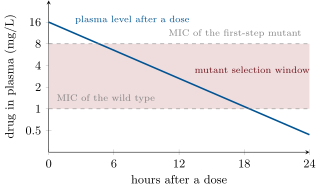
Example 12.13 (The mutant selection window)
A strain has MIC ; its first-step resistant mutants, present at one in , have MIC . A dose that holds the drug at kills the wild type and leaves the mutants to grow without competition: the concentration range between the MIC of the wild type and that of the mutants is the mutant selection window, and a treatment that sits in it breeds resistance. A dose above kills both; too low a dose, or a course stopped when the patient feels better and the drug level is falling through the window, is how a resistant population is made. The same logic sets the regimens of tuberculosis treatment: six months, four drugs, at doses above every single-step mutant’s MIC.