Coach
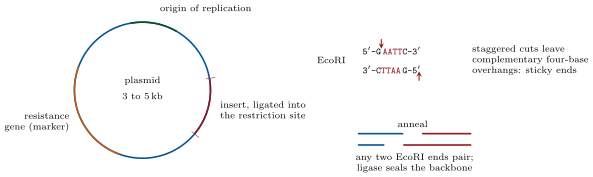
CoachA type II restriction enzyme is a bacterial endonuclease that cuts double-stranded DNA at a specific sequence of base pairs, usually a palindrome: EcoRI cuts GAATTC, leaving four-base single-stranded overhangs (sticky ends) complementary to any other EcoRI end; other enzymes leave blunt ends. DNA ligase seals two fragments whose ends fit. A vector is a DNA molecule that replicates in a host and can carry an inserted fragment: a plasmid of a few kilobases with an origin of replication, a selectable marker (an antibiotic resistance gene, so that only cells that took up the plasmid grow on the antibiotic) and a cluster of unique restriction sites for the insert; bacteriophage , cosmids, and bacterial or yeast artificial chromosomes for inserts of . DNA enters a bacterium by transformation, after a chemical or electrical shock that makes the membrane transiently permeable, with an efficiency of to transformants per microgram of plasmid. A recombinant molecule is one that joins DNA from two sources.