 Coach
CoachA seed is the beginning of a new plant, made by the parent plant. Inside its protective coat, a seed holds:
Examples
Example 9.2 (Opening a soaked bean)
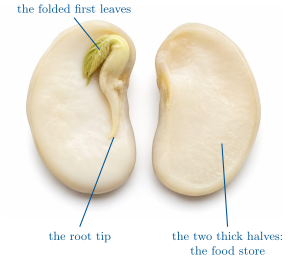
Soak a big white bean overnight, and its coat slips off easily. The bean opens into two thick halves — the food store — and there, nestled at one edge, lies a tiny pale plant, root tip and folded first leaves, small as a grain of rice. The new plant was there all along.
Example 9.6 (Why sowing waits for spring)
Gardeners sow beans in spring, not in winter: the seed in cold earth would wait — or rot — instead of germinating. Warm days and watered soil are exactly the two signals of Proposition 9.5.
Example 9.10 (One bean, one summer)
Sown in May, a bean germinates in a week; by June it is a leafy plant climbing its pole; in July come white flowers, then green pods; in August the pods hang heavy, each holding a row of new beans — next year’s seeds, made by this year’s plant.