Coach
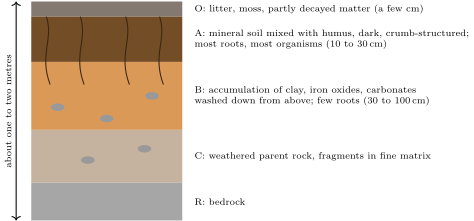
CoachSoil is the layer of weathered mineral matter, organic matter, water, air and organisms that covers land and supports plants: about half its volume is pores, filled with water or air in changing proportion, and the solid half is mineral grains — sand (), silt () and clay (under ), whose proportions give the texture — with a few per cent of organic matter that governs most of its properties. A soil profile shows horizons: the O horizon of litter and partly decayed organic matter at the surface; the dark A horizon of mineral soil mixed with humus, the stable, dark, colloidal residue of decomposition; the B horizon below, into which clay, iron and dissolved matter are washed and where they accumulate; the C horizon of weathered parent rock; and the bedrock. A soil is made (pedogenesis) by five factors — parent material, climate, organisms, topography and time — and it is made slowly: weathering produces of the order of of soil a year, so a metre of soil is ten thousand years of work.