 Coach
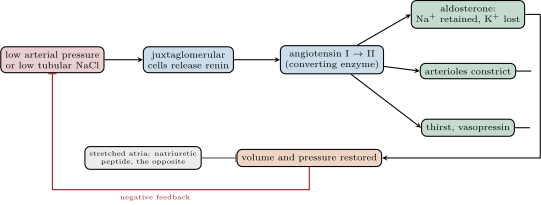
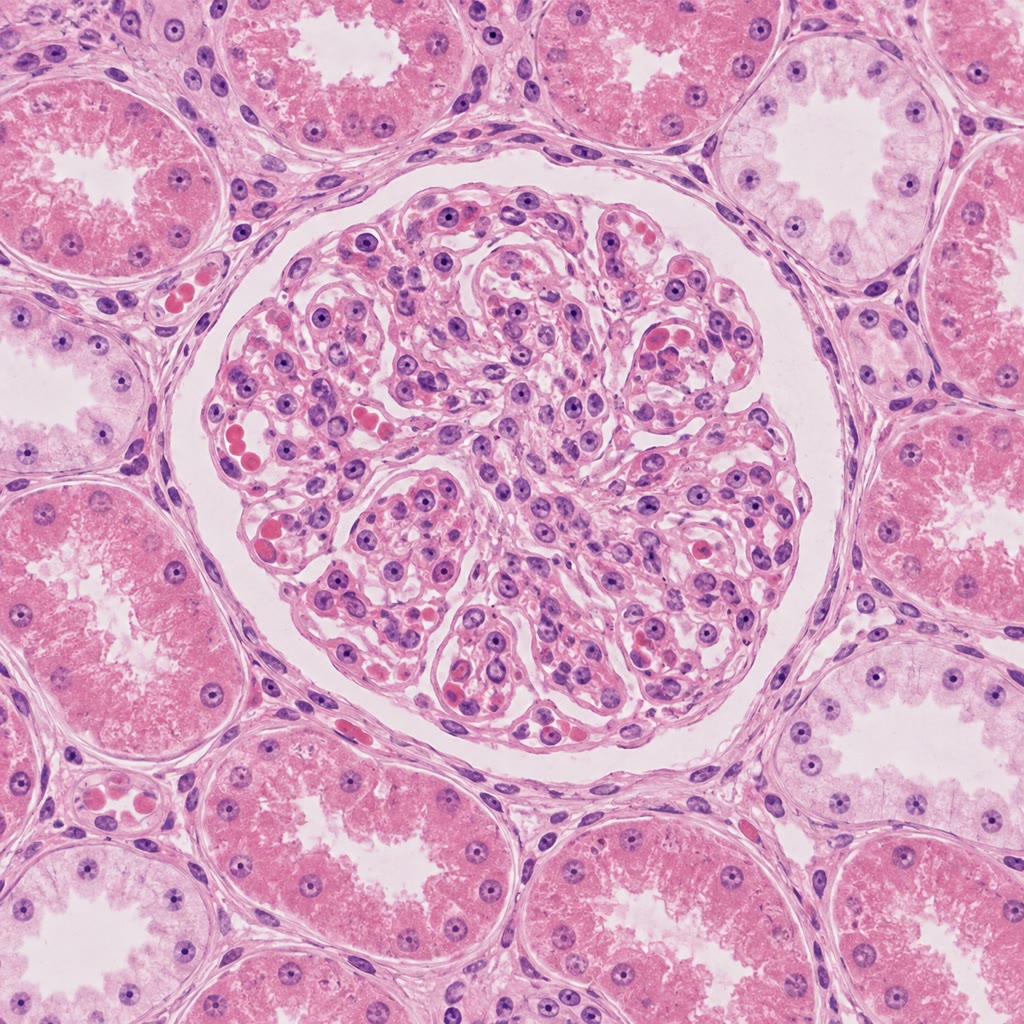
CoachTwo variables are regulated separately: the volume of the extracellular fluid, which is a matter of how much sodium the body holds, and its osmolarity, which is a matter of water. Volume: cells of the juxtaglomerular apparatus, where the distal tubule touches its own glomerulus’s arteriole, release renin when arterial pressure or tubular salt falls; renin cleaves angiotensin I from a plasma protein, converting enzyme makes angiotensin II, which constricts arterioles, stimulates thirst, and releases aldosterone from the adrenal cortex, which over hours makes the distal tubule and collecting duct reabsorb sodium (through the channel ENaC) and secrete potassium. The stretched atria release natriuretic peptide, which does the opposite. Osmolarity: osmoreceptors in the hypothalamus sense a rise of and release vasopressin from the posterior pituitary within minutes, and drive thirst; a fall shuts it off. The kidney also regulates itself: tubuloglomerular feedback constricts the arteriole of a nephron whose distal salt delivery is too high, holding each nephron’s filtration to what its tubule can handle. And acid–base: the proximal tubule recovers the filtered bicarbonate, the collecting duct secretes protons against a thousandfold gradient and excretes them buffered on phosphate and, above all, as ammonium made from glutamine — the body’s route for disposing of the acid of a protein-rich diet.
Examples
Example 20.9 (Two days)
A day without water: the plasma osmolarity rises from toward , vasopressin rises within minutes, the collecting ducts open to water, the urine concentrates to and falls to half a litre; the person is thirsty; the volume lost is mostly from the cells, whose water follows the extracellular salt. A litre of water drunk at once: osmolarity falls , vasopressin falls to nothing within twenty minutes, the ducts close, and over the next two hours the kidney passes a litre of urine at . A haemorrhage of a litre: pressure falls, renin and vasopressin both rise (volume overrides osmolarity), the arterioles constrict, sodium and water are kept, and over a day the plasma volume is refilled — with fluid drawn from the interstitium and then drunk. Diabetes insipidus, the absence of vasopressin or of its receptor, produces of dilute urine a day and a thirst to match; kidney failure, the absence of filtration, leaves a body that must be filtered by a machine three times a week, through a membrane whose clearance is a fraction of two kidneys’.