Coach
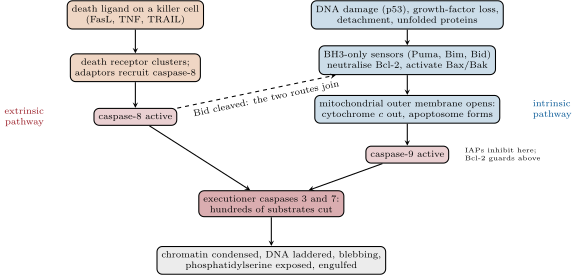
CoachThe intrinsic (mitochondrial) pathway integrates the cell’s internal state. The Bcl-2 family has three classes: guardians (Bcl-2, Bcl-xL, Mcl-1) that sit on the mitochondrial outer membrane and keep it sealed; effectors (Bax, Bak) that, when activated, oligomerise into pores in that membrane; and BH3-only sensors (Bim, Bid, Puma, Noxa, Bad), each induced or activated by a particular insult — DNA damage through p53 (Puma, Noxa), growth-factor withdrawal (Bim, Bad), detachment, unfolded proteins — which bind the guardians and free or activate the effectors. When effectors win, the outer membrane is permeabilised, cytochrome c leaks into the cytosol, binds Apaf-1 and forms the apoptosome, which activates caspase 9. The extrinsic pathway starts outside: death receptors (Fas, TNF receptor, TRAIL receptors) bound by their ligands on a killer lymphocyte or a neighbour cluster, recruit adaptors and activate caspase 8, which cleaves caspase 3 directly and, through Bid, also opens the mitochondrial route. Both pathways converge on the executioner caspases, and inhibitor proteins (IAPs, FLIP) set the threshold along the way.