 Coach
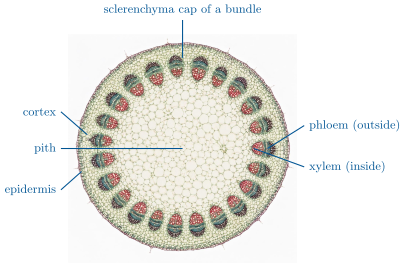
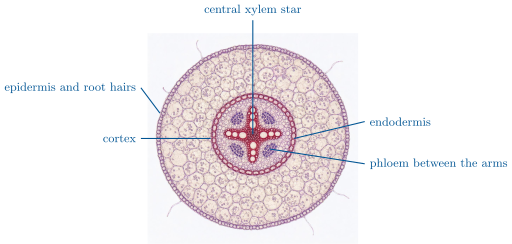
CoachEvery organ of the plant is built from three tissue systems. The dermal tissue is the epidermis, a single layer of cells covering the organ, coated in the air with a waxy cuticle and pierced by stomata, and extended in the root by root hairs. The ground tissue fills the organ: parenchyma (living, thin-walled cells for photosynthesis and storage), collenchyma (living cells with unevenly thickened walls, the flexible support of young stems) and sclerenchyma (cells with thick lignified walls, dead at maturity, the rigid support: fibres and stone cells). The vascular tissue conducts: xylem carries water and minerals upward in the hollow, lignified, dead tracheids and vessels (Chapter 24); phloem carries sugars in living sieve tubes kept alive by their companion cells.
Examples
Example 3.6 (Where the exchanges happen)
Carbon dioxide enters a leaf through its stomata, crosses the air spaces of the spongy layer and dissolves in the wet walls of the palisade cells; water arrives in the xylem of the veins and leaves, as vapour, through the same stomata. Water and ions enter the root through the root hairs and cross the cortex to the xylem at the centre. Both organs put their exchange surface on the outside and their conducting tissue in the middle.