Coach
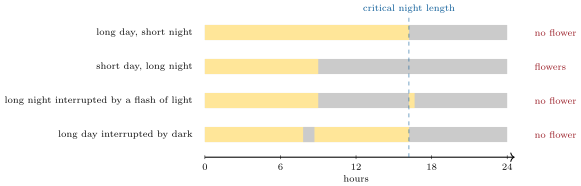
CoachA vegetative shoot apical meristem makes leaves with a bud in each axil, indefinitely. At the floral transition it becomes an inflorescence meristem, which makes bracts and, in their axils, floral meristems, each of which is determinate: it makes sepals, petals, stamens and carpels and then stops. The change is triggered by floral induction — a signal, arriving from the leaves or arising in the plant’s own physiology, that switches the meristem’s identity genes. Annuals flower once and die; perennials flower each year from some meristems and keep others vegetative. The timing decides whether pollen meets pollen, whether seeds ripen before frost, and whether the flower opens when its pollinator flies: it is under strong selection, and plants have evolved several ways of reading the season.