 Coach
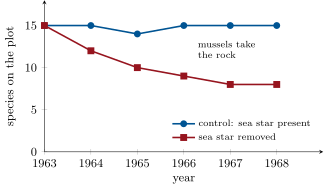
CoachA keystone species is one whose effect on the community is out of proportion to its abundance or biomass: remove it and the community’s structure changes, usually because it controls a dominant competitor. A trophic cascade is the propagation of an effect down a food chain across more than one level: a predator’s presence lowers the herbivores, which raises the plants; its removal does the reverse. Cascades show that communities are structured from the top as well as from the bottom (by productivity, Chapter 26).
Examples
Example 27.15 (Wolves, elk and willows)
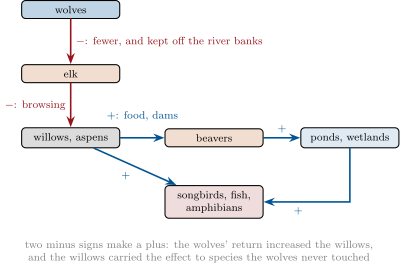
Wolves were exterminated from a large mountain park in the 1920s; its elk multiplied and browsed the willows and aspens along the rivers to stubs; beavers, which need willow, dwindled; songbirds lost their thickets. When wolves were reintroduced in 1995 the elk declined and, more important, avoided the valley bottoms where they were vulnerable; the willows regrew, beavers returned and built dams, and the wetlands they made brought back fish, amphibians and birds. The cascade ran from a carnivore through a herbivore to the plants and from there to a dozen species that never met a wolf — with weather, hunting and other predators contributing, so that the wolves’ share of the change is still debated.