 Coach
CoachCarbohydrates are molecules of composition and their derivatives. A monosaccharide (simple sugar) is a chain of three to seven carbons, one of which carries a carbonyl group and the others hydroxyls: an aldose when the carbonyl is terminal (an aldehyde: glucose, galactose, ribose), a ketose when it is internal (a ketone: fructose). By length: trioses (: glyceraldehyde), pentoses (: ribose, deoxyribose), hexoses (: glucose, fructose, galactose). Every carbon bearing four different groups is a chiral centre, so each formula stands for several stereoisomers: glucose has four chiral carbons and sixteen isomers, of which living things use one, D-glucose. Epimers differ at one carbon only (glucose and galactose at C4).
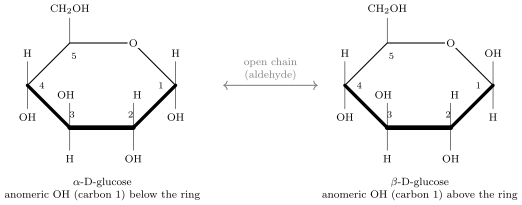
Examples
Example 10.4 (Sugars that are not )
Deoxyribose lacks the hydroxyl at C2 (Chapter 11); glucosamine and N-acetylglucosamine carry an amine instead of the C2 hydroxyl (chitin, peptidoglycan); glucuronic acid has a carboxyl at C6 (the matrix polysaccharides); sugar phosphates (glucose-6-phosphate, ribose-5-phosphate) are the forms in which sugars enter metabolism; sugar alcohols (glycerol, sorbitol) have no carbonyl. The core is the same: a small polyhydroxylated carbon chain that water loves.
Example 10.15 (A day’s sugar)
A human eats some of carbohydrate a day, nearly all as starch and sucrose; the gut hydrolyses it to glucose, fructose and galactose, the liver turns the last two into glucose, and glucose circulates at in the whole blood — twenty minutes’ supply for the brain, which takes a day, refilled continuously from the liver’s glycogen. The lens of the eye, the red cells and the kidney medulla live on glucose alone; nothing else in the diet can replace it, and when it runs out the liver makes it from protein.