 Coach
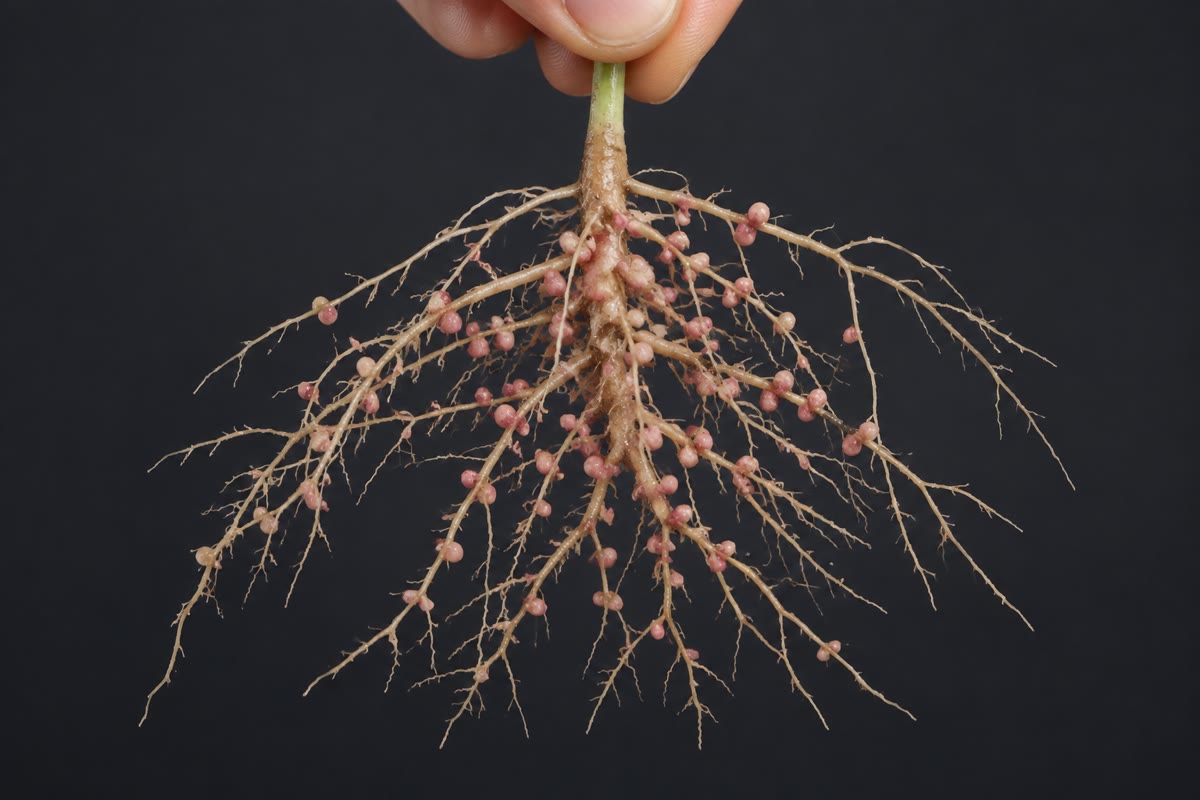
CoachNo eukaryote can use the of the air. Some bacteria can: nitrogenase breaks the triple bond of and reduces it to two ammonia, at a cost of sixteen ATP and eight electrons per molecule, and only where oxygen is excluded. Legumes (peas, beans, clover) house such bacteria (Rhizobium) in root nodules: the plant builds a chamber, feeds the bacteria sugar, and keeps the oxygen low with a red protein, leghaemoglobin, that delivers it to the bacteria’s respiration at a concentration too low to harm the enzyme; the bacteria give back ammonium, which the plant turns into amino acids. A field of clover fixes a hundred kilograms of nitrogen per hectare a year, for which the plant pays a tenth of its photosynthesis. The nitrogen cycle as a whole belongs to the Year 2 volume.
Examples
Example 23.12 (The price of nitrogen)
A maize plant needs about of nitrogen a day; from nitrate at it gets that in the litre of water it transpires, and spends a few hundred millimoles of electrons reducing it. A clover plant fixing the same amount pays ATP per plus the reductant — roughly of sugar per gram of nitrogen, some a day, a tenth of its production — and can grow on soil with no nitrate at all. Farmers have rotated legumes with cereals for two thousand years to move that nitrogen from one field to the next.