Coach
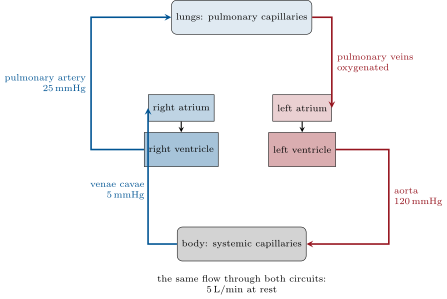
CoachIn an open circulation (insects, most molluscs) a heart pumps blood into a body cavity where it bathes the organs directly and returns at low pressure; flow is slow and poorly directed, and the insects have separated the gas problem from the blood by piping air straight to the tissues. In a closed circulation (annelids, cephalopods, vertebrates) the blood stays in vessels and is driven through capillaries at pressure, so that its distribution can be controlled organ by organ. Fish have a single circuit: heart gills body heart, so that blood reaches the tissues at the low pressure left after the gill capillaries. Mammals and birds have a double circuit: the right heart drives the pulmonary circulation (lungs, low pressure, systolic) and the left heart, after the blood returns, drives the systemic circulation (body, high pressure, ); the two pumps are in series and move the same flow, about a minute at rest. Amphibians and most reptiles have a heart with a single ventricle that partly mixes the two streams — the intermediate stage. The double circuit is what makes a warm-blooded metabolism possible: high pressure to every organ and a lung protected from it.