সব বই

পেশাদার

1 Markets I: The Ecosystem and Exchange-Traded Marketsবাজার অনলাইন 2 Markets II: Rates, FX and Creditবাজার অনলাইন 3 Markets III: Commodities, Energy and Cryptoবাজার অনলাইন 4 Quantitative Methodsপদ্ধতি অনলাইন 5 Derivatives and Volatilityডেরিভেটিভস অনলাইন 6 Rates, Credit, XVA and Riskসুদহার, ঋণ ও ঝুঁকি অনলাইন 7 Research Craft: Predictors, Backtests, Measurement, Portfoliosগবেষণা অনলাইন 8 Strategies I: Equities and Futuresকৌশল অনলাইন 9 Strategies II: Volatility, Relative Value, Macro and the Bank Desksকৌশল অনলাইন 10 Microstructure and Executionএক্সিকিউশন অনলাইন 11 Market Making and High-Frequency Tradingমার্কেট মেকিং অনলাইন 12 Machine Learning for Marketsমেশিন লার্নিং অনলাইন 13 Low-Latency Softwareপ্রযুক্তি অনলাইন 14 Networks, Hardware and Trading Infrastructureপ্রযুক্তি অনলাইন 15 Research, Data and Risk Platformsপ্রযুক্তি অনলাইন 16 The Desk and the Firmপ্রতিষ্ঠান অনলাইন 17 The Industry: Firms, Roles and Careersক্যারিয়ার অনলাইন 18 Interviews I: Maths, Probability and Speedক্যারিয়ার অনলাইন 19 Interviews II: Markets, Trading Games and the Final Roundক্যারিয়ার অনলাইন 20 Interviews III: Codeক্যারিয়ার অনলাইন
অ্যাপ পরিচিতি Coach সাইন ইন পড়া শুরু করো

বইগুলো এখনো বাংলা ভাষায় পাওয়া যায় না — ইংরেজি সংস্করণ দেখানো হচ্ছে।

Biology · পরিভাষা

Open and closed, single and double কী?

Definition 16.3 University Biology — Year 2 · অধ্যায় 16 — Blood and the Circulatory System

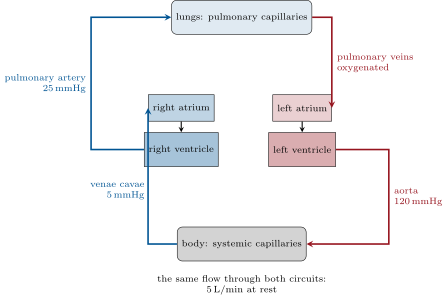
In an open circulation (insects, most molluscs) a heart pumps blood into a body cavity where it bathes the organs directly and returns at low pressure; flow is slow and poorly directed, and the insects have separated the gas problem from the blood by piping air straight to the tissues. In a closed circulation (annelids, cephalopods, vertebrates) the blood stays in vessels and is driven through capillaries at pressure, so that its distribution can be controlled organ by organ. Fish have a single circuit: heart →\to gills →\to body →\to heart, so that blood reaches the tissues at the low pressure left after the gill capillaries. Mammals and birds have a double circuit: the right heart drives the pulmonary circulation (lungs, low pressure, 25 mmHg25\,\mathrm{mmHg} systolic) and the left heart, after the blood returns, drives the systemic circulation (body, high pressure, 120 mmHg120\,\mathrm{mmHg}); the two pumps are in series and move the same flow, about 5 L5\,\mathrm{L} a minute at rest. Amphibians and most reptiles have a heart with a single ventricle that partly mixes the two streams — the intermediate stage. The double circuit is what makes a warm-blooded metabolism possible: high pressure to every organ and a lung protected from it.
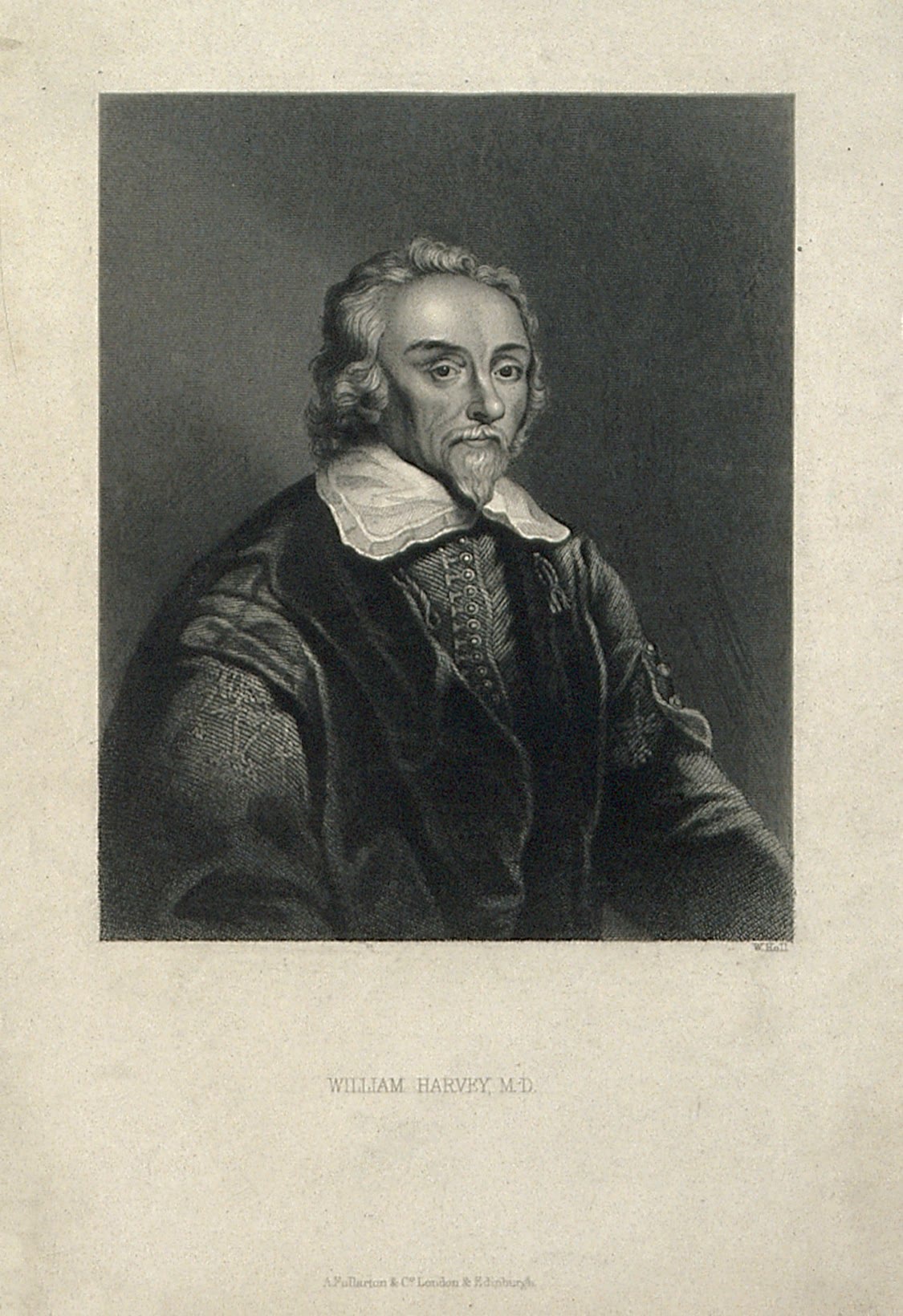
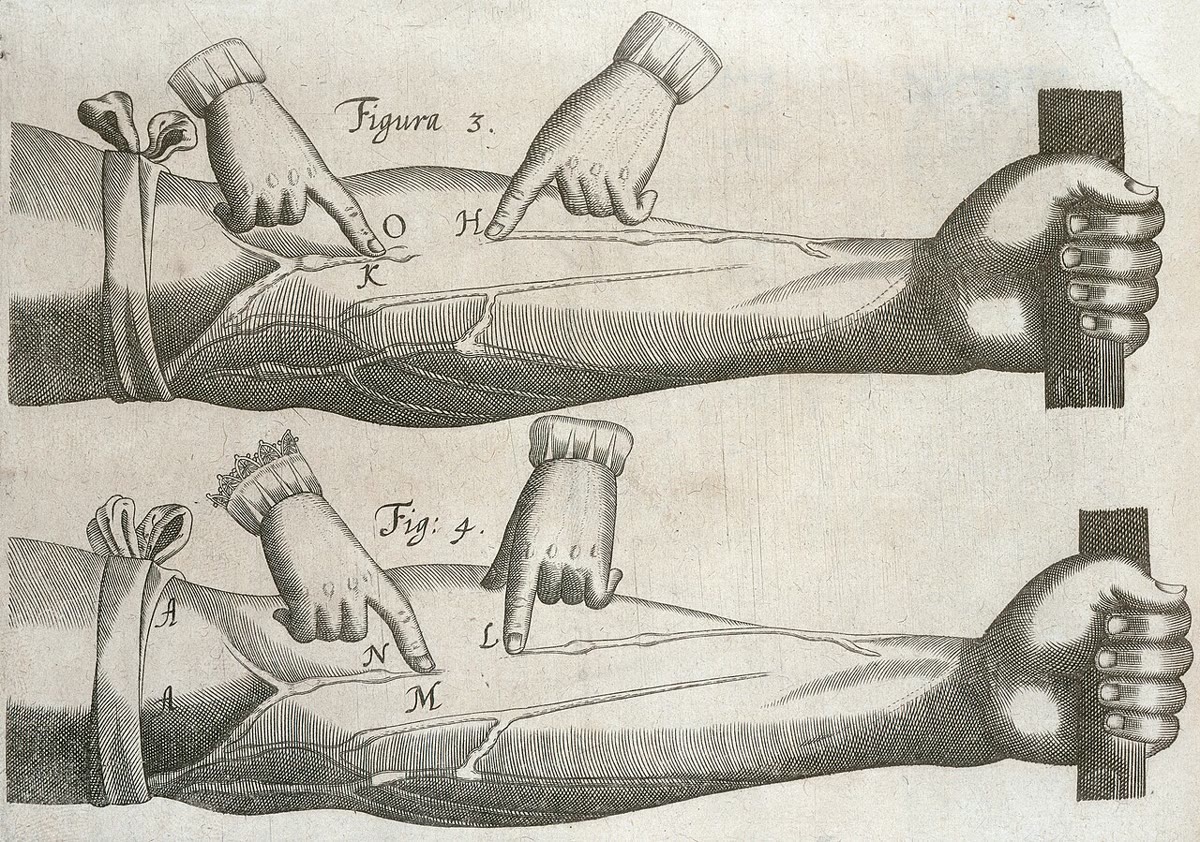
William Harvey, and the plate from his book of 1628: the veins of a ligatured forearm swell below the cord, and blood pressed toward the hand stops at the valves. William Harvey, and the plate from his book of 1628: the veins of a ligatured forearm swell below the cord, and blood pressed toward the hand stops at the valves.
William Harvey, and the plate from his book of 1628: the veins of a ligatured forearm swell below the cord, and blood pressed toward the hand stops at the valves.
The double circulation. The right heart sends blood through the lungs at low pressure; the left heart sends it round the body at high pressure; the two pumps, in series, move the same volume per minute.
প্রসঙ্গসহ পড়ো →