 Coach
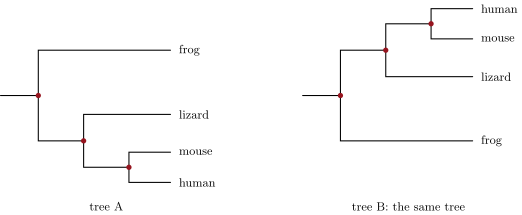
CoachA phylogenetic tree is a diagram of the kinship of a set of species (or other groups). Its tips are the species compared; each node where two branches meet represents their most recent common ancestor — a hypothetical population, not a known fossil; the root is the common ancestor of all. Two species are closer kin than a third when their common ancestor (their node) is more recent than the node they share with the third. Kinship is read from the nodes, never from the left-to-right position of the tips.
Examples
Example 26.3 (Misreadings to avoid)
"Humans descend from chimpanzees": no — on the tree, humans and chimpanzees are sister tips, descended from a common ancestor that was neither. "The frog is more primitive": no — every tip is a present species with the same length of history since the root; the frog lineage has evolved for as long as ours. "The lizard is closer to the frog than to the mouse" (from tree A): no — lizard and mouse share a more recent node.