University Biology — Year 3 · Bachelor Year 3
6Genetic Engineering and Biotechnology
Until 1982 every diabetic in the world was kept alive by insulin extracted from the pancreases of pigs and cattle — some eight thousand kilograms of glands for a kilogram of hormone — and a fraction of patients reacted against the foreign protein. That year the first drug made by a genetically engineered organism reached the market: human insulin, synthesised by Escherichia coli carrying the human gene on a plasmid. The tools that made it possible had been assembled over the preceding decade — enzymes that cut DNA at chosen sequences, enzymes that join the pieces, plasmids that carry them into a cell and copy them there — and were joined in the following ones by the polymerase chain reaction, by the injection of genes into embryos, and, since 2012, by a bacterial immune system turned into a programmable pair of scissors that can rewrite one letter of a genome in a living cell. This chapter is about those tools, the arithmetic that governs their use, and what has been built with them, from a glowing mouse to a cure for sickle-cell disease.
6.1 Cutting, joining and copying DNA
Definition 6.1 (Restriction enzymes, ligase and vectors)
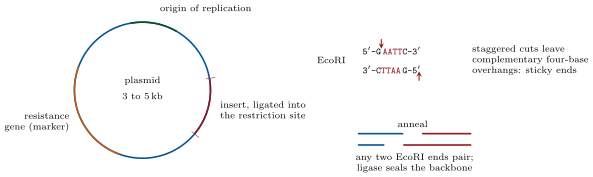
A type II restriction enzyme is a bacterial endonuclease that cuts double-stranded DNA at a specific sequence of base pairs, usually a palindrome: EcoRI cuts GAATTC, leaving four-base single-stranded overhangs (sticky ends) complementary to any other EcoRI end; other enzymes leave blunt ends. DNA ligase seals two fragments whose ends fit. A vector is a DNA molecule that replicates in a host and can carry an inserted fragment: a plasmid of a few kilobases with an origin of replication, a selectable marker (an antibiotic resistance gene, so that only cells that took up the plasmid grow on the antibiotic) and a cluster of unique restriction sites for the insert; bacteriophage , cosmids, and bacterial or yeast artificial chromosomes for inserts of . DNA enters a bacterium by transformation, after a chemical or electrical shock that makes the membrane transiently permeable, with an efficiency of to transformants per microgram of plasmid. A recombinant molecule is one that joins DNA from two sources.
Evidence. Cohen, Chang, Boyer and Helling (1973) cut the plasmid pSC101 and a second plasmid carrying a different resistance gene with EcoRI, mixed and ligated the fragments, transformed E. coli, and recovered colonies resistant to both antibiotics carrying a single plasmid made of both — the first recombinant DNA to replicate in a cell. The next year they inserted ribosomal RNA genes of a toad into pSC101 and showed that the frog DNA was replicated, and transcribed, in the bacterium: genes cross the boundary between kingdoms unchanged, and a bacterium will copy whatever DNA it is given. ∎
Method 6.2 (Cloning a gene)
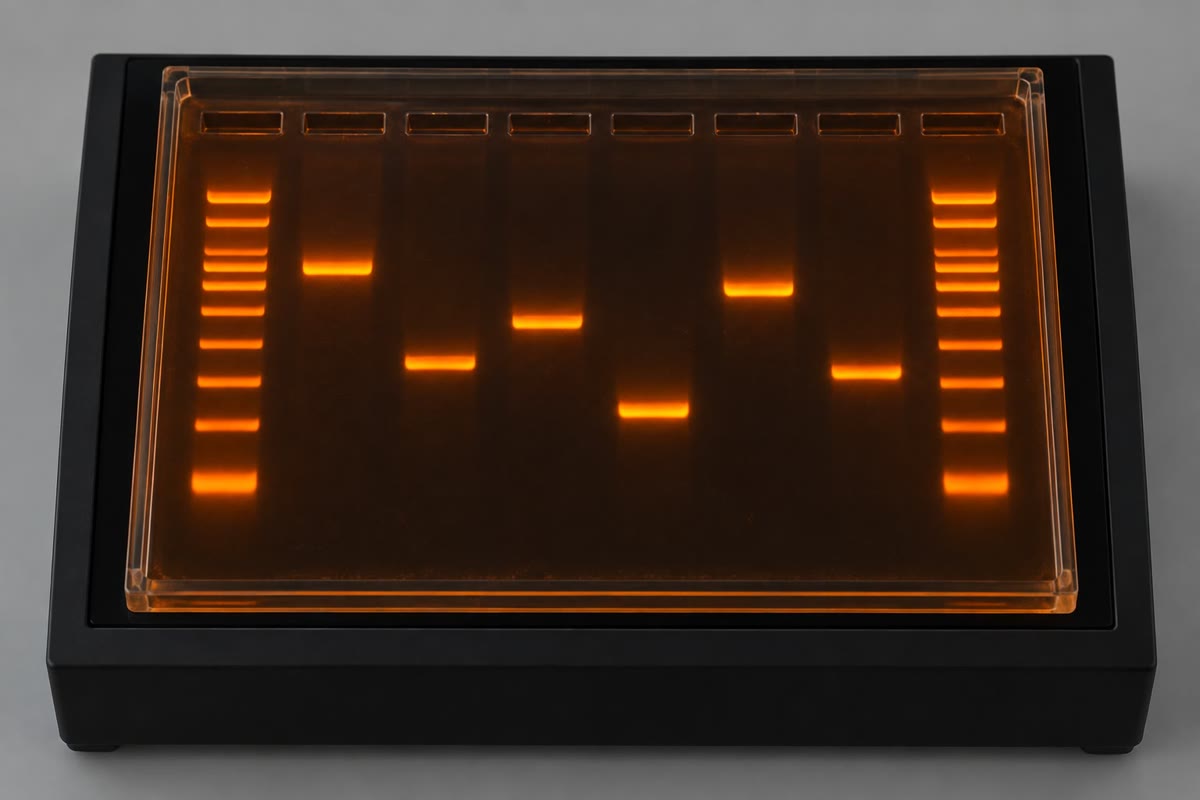
(1) Obtain the insert: cut genomic DNA with a restriction enzyme, or copy messenger RNA into complementary DNA (cDNA, which lacks introns and so can be expressed in bacteria), or amplify the gene by PCR with primers carrying restriction sites. (2) Cut vector and insert with the same enzyme(s) — two different enzymes force the insert’s orientation — and ligate. (3) Transform bacteria and plate on the antibiotic: only cells with a plasmid grow. (4) Distinguish plasmids with an insert from those that closed on themselves: a marker gene interrupted by the cloning site (lacZ: white colonies have an insert, blue do not). (5) Screen the colonies for the desired insert: by hybridisation with a labelled probe, by PCR, or by restriction digestion and gel electrophoresis. (6) Sequence the insert. A library is the collection of clones from a whole genome or transcriptome, from which any gene can be fished by the same screen.
Definition 6.3 (The polymerase chain reaction)
The polymerase chain reaction (PCR) amplifies a chosen stretch of DNA between two primers — synthetic oligonucleotides of about twenty bases complementary to the two strands at the ends of the target — through cycles of three temperatures: to separate the strands, for the primers to anneal, for a heat-stable polymerase (Taq, from the hot-spring bacterium Thermus aquaticus) to extend them. Each cycle doubles the number of copies of the segment between the primers, so thirty cycles turn a single molecule into a billion. Reverse transcription PCR first copies RNA into DNA and so measures transcripts or RNA viruses; quantitative PCR (qPCR) follows the amplification in real time with a fluorescent dye and reads the starting quantity from the cycle at which the signal crosses a threshold.
Theorem 6.4 (The arithmetic of amplification)
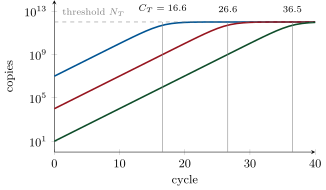
With efficiency per cycle ( for perfect doubling), starting copies become
after cycles. If the fluorescence crosses a fixed threshold when the copy number reaches , the threshold cycle is
a straight line in with slope : for , each tenfold increase in the starting quantity lowers by cycles, and two samples with threshold cycles differing by differ in starting copies by the factor .
Proof. Each cycle multiplies the copy number by , so is a geometric sequence. Setting and solving for gives ; the slope is the coefficient of . For two samples, , whence . ∎
Example 6.5 (Reading a qPCR plate)
A viral RNA test crosses the threshold at cycle for one patient and cycle for another; with the first carries times more virus. A sample of ten copies crosses at about cycle when the threshold is copies (); a run of cycles therefore detects a few molecules, and a single contaminating molecule of a previous amplicon does too, which is why laboratories separate the rooms where PCR is set up from those where products are handled.
6.2 Making proteins
Definition 6.6 (Expression systems)
An expression vector places the cloned coding sequence under a strong, controllable promoter of the host (the lac or T7 promoter in E. coli, induced by a sugar analogue), with a ribosome-binding site, a terminator, and often a tag — six histidines, a small protein — fused to the product for purification on a column. Bacteria make grams per litre of a simple protein (insulin, growth hormone, enzymes) but cannot glycosylate or fold complex mammalian proteins; yeast adds sugars of its own kind; insect and mammalian cells (Chinese hamster ovary cells are the industry’s standard) make antibodies and clotting factors folded and glycosylated as in a human. A monoclonal antibody is made by a hybridoma — an antibody-producing B cell fused to an immortal myeloma cell (Köhler and Milstein, 1975) — or, now, by cloning the antibody genes into a mammalian expression line, where the mouse framework can be replaced by human sequence to avoid immune rejection (Chapter 16).
Example 6.7 (Insulin)
Human insulin is two chains, A (21 residues) and B (30), joined by disulfide bonds, cut in the cell from a single proinsulin precursor. The first process expressed the two chains separately in E. coli, each fused to -galactosidase, cleaved them off chemically and joined them in vitro; later processes express proinsulin and cleave it with the enzymes the pancreas uses. Since 1996 the sequence itself has been altered: swapping or adding a residue or two gives analogues that dissociate faster (for a meal) or precipitate at the injection site and release over a day. A protein that took eight tonnes of glands per kilogram is now made in a fermenter, identical to the human one or better than it.
6.3 Transgenic organisms
Definition 6.8 (Transgenesis and gene targeting)
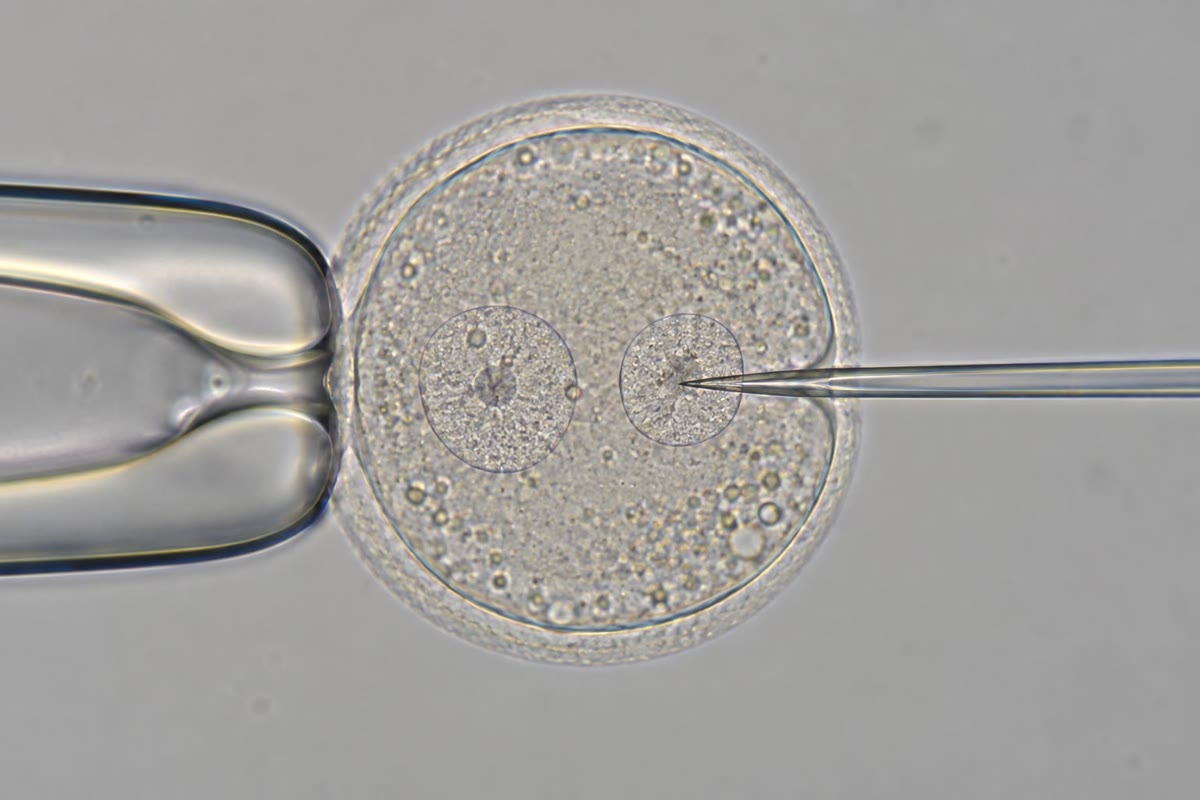
A transgenic organism carries a gene introduced into its germ line, so that every cell has it and it is inherited. In mice the classical route is microinjection of the DNA into one pronucleus of a fertilised egg (Gordon and Ruddle, 1980), which integrates at a random site in a fraction of embryos; Palmiter and Brinster (1982) made mice twice normal size by injecting the rat growth-hormone gene behind a metallothionein promoter. Gene targeting replaces or disrupts a chosen gene instead: a construct with long arms homologous to the target is introduced into embryonic stem cells, the rare cells in which homologous recombination has put it in the right place are selected and injected into a blastocyst, and the chimaeric mouse that results transmits the altered gene (Capecchi, Smithies and Evans, 1980s). A knockout lacks the gene; a knock-in carries a modified version; a conditional allele, flanked by loxP sites, is deleted only where and when Cre is expressed (Chapter 3). Some ten thousand mouse genes have been knocked out, and for most the phenotype was the first indication of what the gene does.
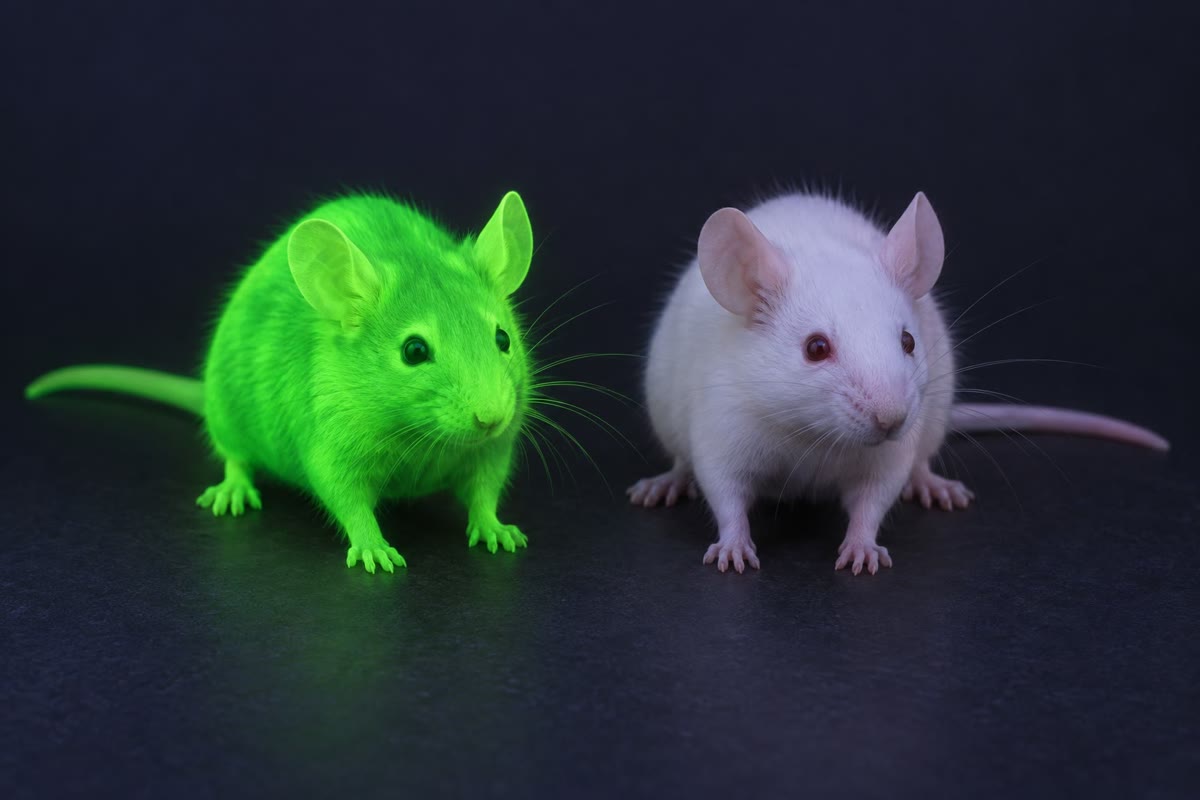
Definition 6.9 (Transgenic plants)
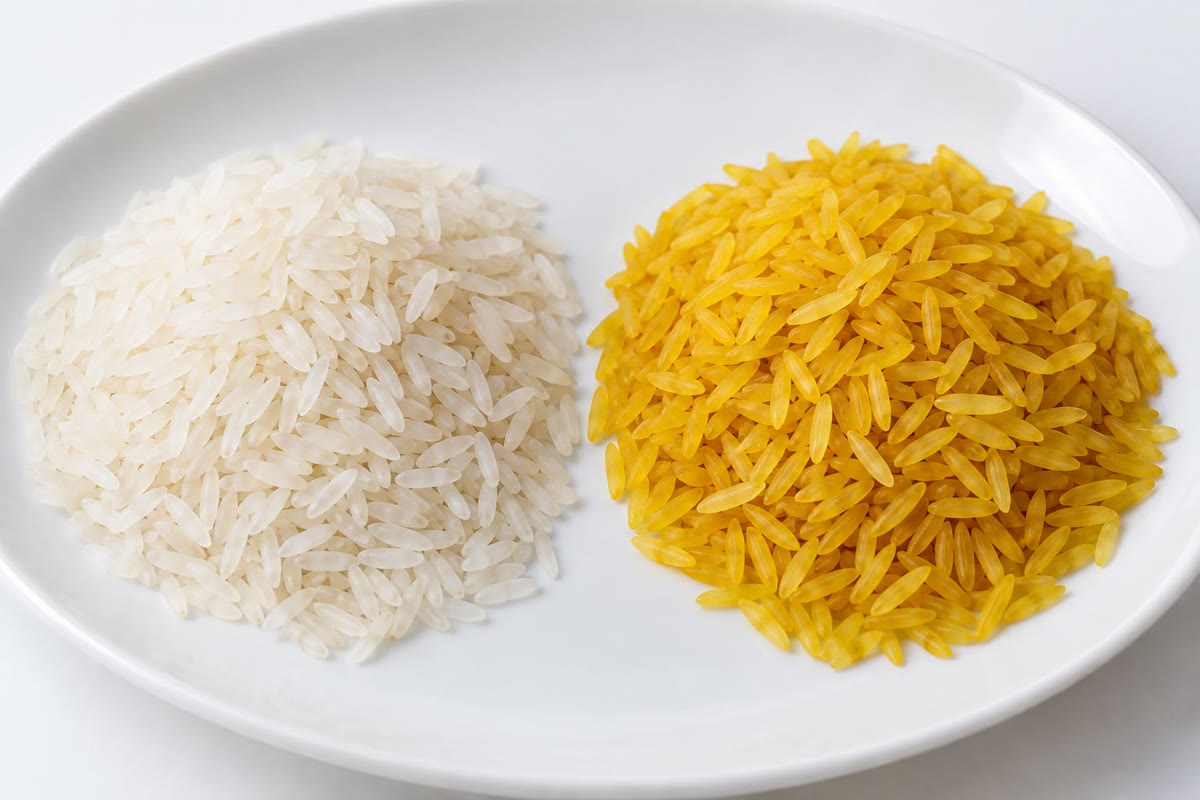
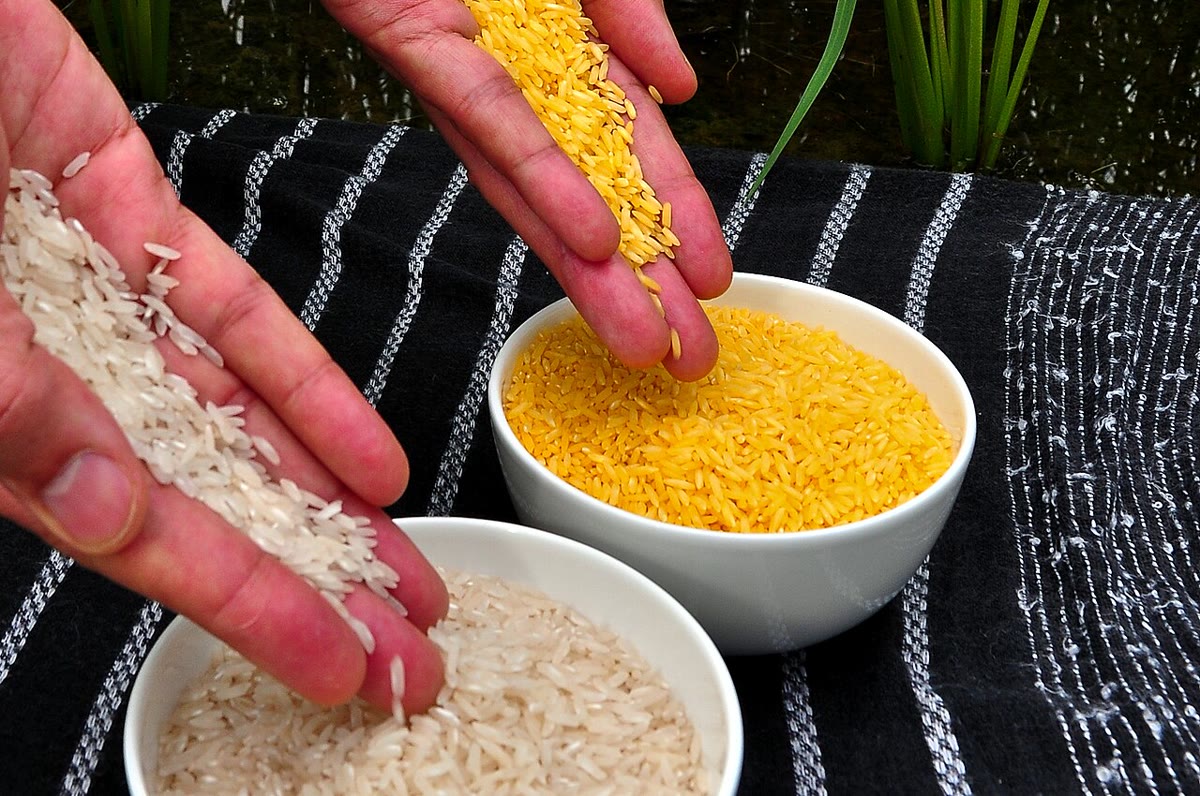
Plants are transformed by Agrobacterium tumefaciens, a soil bacterium that naturally inserts a segment of its tumour-inducing plasmid, the T-DNA, into the genome of a wounded plant to make it grow a gall and feed the bacterium. Replacing the T-DNA’s own genes with any gene of choice, between the border sequences the bacterium recognises, turns the pathogen into a vector; the transformed cells are selected and regenerated into whole plants, which every plant cell can do. Species the bacterium does not infect (the cereals, for long) are transformed by shooting DNA-coated gold particles into tissue. Genetically modified crops grown at scale carry a bacterial toxin gene (Bt) against insect larvae, or a bacterial enzyme conferring tolerance to a herbicide, or both; Golden Rice carries two genes of the carotenoid pathway (a plant phytoene synthase and a bacterial desaturase) so that its endosperm makes -carotene, the precursor of vitamin A, whose deficiency blinds and kills several hundred thousand children a year.
Remark 6.10 (The debate)
Thirty years of cultivation on hundreds of millions of hectares, and every systematic review by scientific academies, have found no health effect of approved transgenic crops that differs from their conventional counterparts; the transgene is one more gene among forty thousand, and the protein it makes is tested as any food additive is. The real questions are ecological and economic: the spread of resistance in pests and weeds under uniform selection, gene flow into wild relatives, the concentration of the seed market, and who benefits. They are the questions that any powerful agricultural technology raises, and the answers depend on the trait and the setting, not on the method by which the gene was moved.
6.4 Editing genomes
Definition 6.11 (CRISPR–Cas9)
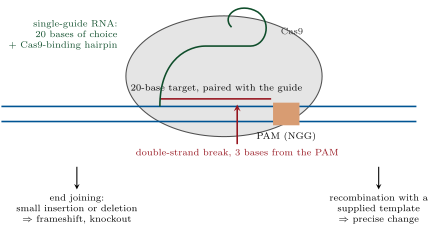
Bacteria store fragments of the genomes of phages that have infected their ancestors in an array of repeats (CRISPR), transcribe them into short guide RNAs, and use them to direct a nuclease to cut any matching DNA that enters the cell: an adaptive immune system with a genetic memory. In Streptococcus pyogenes the nuclease is the single protein Cas9, which binds a guide RNA and a second small RNA, searches DNA for a three-base protospacer-adjacent motif (PAM, 5-NGG), unwinds the adjacent DNA, and, if the twenty bases next to the PAM pair with the guide, cuts both strands three bases from the PAM. Jinek, Charpentier, Doudna and colleagues (2012) fused the two RNAs into one single-guide RNA and showed that Cas9 with a guide of any chosen sequence cuts DNA at that sequence in a test tube; within a year the pair had been shown to work in human, mouse, zebrafish, plant and yeast cells. Genome editing is what the cell does with the cut: end joining leaves a small insertion or deletion that disrupts the gene (a knockout in one step, in any organism, in weeks), and homologous recombination with a supplied template writes in a chosen sequence.
Proposition 6.12 (Editing without a break)
Cutting both strands is the crudest edit: the outcome of end joining is random, and a break elsewhere — an off-target site differing from the guide at a few positions, which Cas9 tolerates — is a mutation nobody asked for. A Cas9 with one nuclease domain inactivated nicks a single strand; with both inactivated it merely binds, and can carry other enzymes to a sequence. Base editors fuse a nicking Cas9 to a deaminase that converts C to U (read as T) or A to I (read as G) in the unwound strand, changing one base without a break and without a template; prime editors carry a reverse transcriptase and a guide extended with the desired sequence, and copy that sequence into the nicked strand, allowing any substitution and small insertions or deletions. Off-target activity is reduced by engineered high-fidelity Cas9 variants, by delivering the enzyme briefly as protein rather than as a gene, and by choosing guides whose nearest genomic relatives differ at several positions; it is measured by sequencing the sites predicted, and by unbiased methods that catch every break in the genome.
Example 6.13 (A cure)
Sickle-cell disease is a single base change in -globin. Fetal haemoglobin, made from -globin, would substitute, but the genes are switched off after birth by the repressor BCL11A. The first approved CRISPR therapy (2023) takes the patient’s own blood stem cells, cuts the erythroid enhancer of BCL11A with Cas9 so that end joining disables it in most cells, and returns the cells after the patient’s marrow has been cleared: the red cells they make are rich in fetal haemoglobin, do not sickle, and the crises stop. The edit is somatic — the germ line is untouched and the change is not inherited — and it uses the “crude” outcome, disruption, where disruption is what is wanted.
Theorem 6.14 (Super-Mendelian spread of a gene drive)
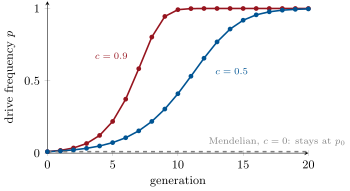
A gene drive is a construct encoding Cas9 and a guide that cuts the wild-type allele at its own locus in a heterozygote; repair by recombination copies the drive into the cut chromosome, so that a fraction of the heterozygote’s gametes carry the drive instead of the Mendelian half. If the drive has frequency in a large, randomly mating population and no fitness cost, its frequency in the next generation is
so that it spreads from rarity at a rate proportional to , and reaches half the population in about generations from an initial frequency .
Proof. Random mating gives homozygotes for the drive at frequency , heterozygotes at , wild-type homozygotes at . The homozygotes transmit the drive to all their gametes, the heterozygotes to a fraction (half by Mendel, plus times the wild-type half converted), the wild-type to none. Hence . For small this is , geometric growth with ratio , which reaches from after about generations; the logistic term slows it only near the end. ∎
Remark 6.15 (What may be edited)
Editing the somatic cells of a consenting patient is medicine, judged like any treatment by its risks and benefits. Editing the germ line — an embryo, whose every descendant would carry the change — is different in kind: the person affected cannot consent, the change is inherited, and the technique’s off-target and mosaic outcomes are not yet controlled; after a Chinese scientist announced in 2018 that he had done it in twins, the scientific academies of most countries called for a moratorium and several states made it a crime. A gene drive released into a wild population is a decision taken for everyone downstream, which is why the field’s own proposals for eliminating malaria mosquitoes couple the drives to fail-safes — reversal drives, self-limiting designs — and to public consent in the countries concerned.
6.5 Exercises
Exercise 6.1 ★
List the three components a cloning plasmid must have and explain the purpose of each.
Solution
Solution of Exercise 6.1.
An origin of replication, so that the host copies the plasmid and passes it to daughter cells; a selectable marker, usually antibiotic resistance, so that only cells carrying the plasmid grow; and a unique restriction site (or cluster of sites) at which the insert is ligated without cutting the plasmid elsewhere.
Exercise 6.2 ★
EcoRI recognises GAATTC. How often does the site occur, on average, in random DNA, and how many fragments does it make of the E. coli genome? Why is the real number somewhat different?
Solution
Solution of Exercise 6.2.
A given six-base sequence occurs once every bp in random DNA: about fragments averaging . Real genomes are not random — base composition, codon usage and the avoidance of some sequences shift the count (the actual number of EcoRI sites in E. coli is several hundred).
Exercise 6.3 ★
State the three temperature steps of a PCR cycle and what happens at each. Why must the polymerase be heat-stable?
Solution
Solution of Exercise 6.3.
Denaturation at separates the strands; annealing at lets the primers pair with their sites; extension at lets the polymerase copy from each primer. An ordinary polymerase would be destroyed at in the first cycle and would have to be added afresh thirty times; Taq survives all the cycles.
Exercise 6.4 ★
What does Cas9 need in order to cut a given sequence, and what two outcomes can follow the cut?
Solution
Solution of Exercise 6.4.
A guide RNA whose twenty bases match the target, and a PAM (NGG) immediately 3 of the target on the non-target strand. After the double-strand break: end joining, which leaves a small insertion or deletion and usually destroys the gene’s reading frame; or homologous recombination with a template carrying the desired sequence, which writes it in.
Exercise 6.5 ★★
A PCR runs cycles at efficiency from copies. How many copies result? A qPCR of two samples gives and ; with , what is the ratio of their starting quantities?
Solution
Solution of Exercise 6.5.
copies. ; ratio : the first sample had about times more template.
Exercise 6.6 ★★
Why is a cDNA library, and not a genomic library, used to express a human protein in bacteria? Name two other obstacles to making a human protein in E. coli and say how each is overcome.
Solution
Solution of Exercise 6.6.
Bacteria cannot splice: a genomic copy with introns would be transcribed into an unusable message, so the intron-free cDNA, copied from the mature mRNA, is used. Other obstacles: the human promoter is not recognised by bacterial polymerase (supply a bacterial promoter and ribosome-binding site); human codon usage differs (synthesise the gene with the host’s preferred codons); the protein may not fold or may aggregate (lower the temperature, fuse to a soluble partner, or refold from inclusion bodies); glycosylation is absent (use yeast or mammalian cells if it matters); disulfides need the oxidising periplasm.
Exercise 6.7 ★★
A knockout mouse is made by gene targeting in embryonic stem cells. Explain why the first mouse born is a chimaera, why one must breed it, and what fraction of the grandchildren of a chimaera whose germ line is half targeted are homozygous knockouts if heterozygous grandparents are intercrossed.
Solution
Solution of Exercise 6.7.
The targeted stem cells are injected into a host blastocyst and mix with its own cells, so the mouse is built from two genotypes — a chimaera — and only if some of its germ cells derive from the targeted cells does it transmit the allele. Breeding the chimaera to a wild-type mouse gives heterozygotes (from half its gametes if half the germ line is targeted); intercrossing heterozygotes gives one quarter homozygous knockouts.
Exercise 6.8 ★★
A guide RNA of 20 bases with an NGG PAM is chosen. How many sites in a bp genome (both strands) match the guide exactly by chance? How many match with up to two mismatches, if Cas9 tolerates them? (Count sequences within two mismatches as .)
Solution
Solution of Exercise 6.8.
Exact: sites (the GG of the PAM costs a factor ) — none, in practice. Within two mismatches there are sequences: chance sites. The real genome is not random, and a guide is checked against it directly.
Exercise 6.9 ★★
Using Theorem 6.14, compute the frequency of a drive with after three generations from , and estimate the number of generations to reach .
Solution
Solution of Exercise 6.9.
; ; ; then , : about five generations to pass , against the estimate .
Exercise 6.10 ★★★
The sickle-cell therapy disrupts an enhancer rather than correcting the -globin mutation. Give two reasons why disruption by end joining was chosen over correction by homologous recombination in blood stem cells, and one drawback.
Solution
Solution of Exercise 6.10.
End joining acts in every cell, including quiescent stem cells in which homologous recombination, an S/G2 process, is inefficient; it needs no template to be delivered and its product — any disruption of the enhancer — does the job, whereas correction requires the exact sequence and yields a minority of cells. Also, the same edit works for every -globin mutation, sickle or thalassaemic. Drawback: it removes a regulatory element (with whatever other roles it has), it leaves the sickle allele in place, and the mixture of indels is uncontrolled.
Exercise 6.11 ★★★
A gene drive against a mosquito carries a fitness cost in homozygotes. Modify the recursion to include selection against drive homozygotes and find the condition on and for the drive to spread from rarity. Then explain why resistance alleles — end-joining products at the target that the guide no longer recognises — are the principal obstacle in practice.
Solution
Solution of Exercise 6.11.
With homozygote fitness : . From rarity homozygotes are negligible and the drive grows as whatever ; whether it goes to fixation is decided near , where a rare wild-type allele of frequency returns as : fixation if , an intermediate equilibrium otherwise. Resistance: each failed conversion (end joining instead of recombination) leaves an allele that the guide no longer recognises; if such alleles are fit — an in-frame indel in a non-essential region — they carry no cost while the drive does, so selection favours them and they replace the drive. The remedies are to target essential sequences where indels are lethal, and to use several guides at once.
Exercise 6.12 ★★★
Argue, with the mechanisms of this chapter and of Chapter 3, why germline editing of a human embryo cannot at present guarantee the intended outcome in every cell, and what evidence would be needed before a rational person could consider it safe.
Solution
Solution of Exercise 6.12.
Cas9 injected into a zygote may act after the first divisions, so different cells receive different repairs — mosaicism; the repair of each break is chosen by the cell, end joining giving unpredictable indels and large deletions or loss of heterozygosity at the cut; the homologous-recombination outcome is a minority; off-target breaks occur at sites that cannot all be predicted; and the embryo can only be checked by sequencing a few biopsied cells, which cannot speak for the rest. Evidence needed: methods that edit every cell identically (before the first S phase) with efficiencies near , whole-genome sequencing of every cell of edited animal embryos showing no unintended change, and long-term follow-up of edited animals over generations — none of which exists.
6.6 Problem: From a Gene to a Drug and a Crop
Problem 6.1
Weekend problem — a gene cloned with the arithmetic of restriction sites and transformation, a virus counted by qPCR, a hormone produced by the tonne in a fermenter, a genome edited with its off-targets counted, and a gene drive timed, ending on the copies of a virus in a sample, the annual fermenter volume for the world’s insulin and the number of generations a drive needs
Data: a gene; a six-base restriction site; a plasmid of ; transformation efficiency colonies per microgram of plasmid; ligation gives of plasmids an insert. qPCR efficiency , threshold . Insulin: , a patient uses units a day, one unit being ; patients; a fermenter yields of product per batch, ten batches a year. Genome bp. Drive conversion , released at .
Part I — Cloning.
- How often does a given six-base site occur in random DNA? What is the probability that the gene contains no such site, so that the enzyme can be used to clone it whole?
- If it does contain a site, how would you clone it anyway? (Two methods.)
- of ligated plasmid is transformed. How many colonies, and how many carry the insert?
- Blue–white screening is used. What fraction of colonies is white, and how many white colonies must be picked to have a chance that at least one carries the gene in the right orientation (half of the inserts)?
- The recombinant plasmid is . A cell holds copies and divides every . After overnight growth () from one cell, how many plasmid molecules, and what mass of plasmid DNA ( per base pair)?
- Why does the plasmid need a bacterial origin but the inserted human gene need no bacterial promoter for cloning, whereas it does for expression?
Part II — Counting a virus.
- A patient’s sample crosses the threshold at . How many copies were in the reaction? Another at ?
- Sensitivity: how many cycles are needed to bring a single copy to the threshold?
- The test’s cut-off is set at . What number of copies does that correspond to, and why not use cycles?
- A contaminating molecule of a previous run’s product enters a negative sample. At what cycle does it cross the threshold? What laboratory practice prevents this?
- Reverse transcription converts of viral RNA to DNA. Correct the count of question 7 for the first sample.
- Two samples differ by with , but the efficiency is actually . What fold difference does the analyst report, and what is the true one?
Part III — Insulin by the tonne.
- Compute the daily insulin mass per patient and the annual world requirement for patients, in kilograms.
- How many moles of insulin is that, and how many molecules?
- What fermenter volume, run ten batches a year, produces it? Compare with a swimming pool of .
- Extraction from glands gave of insulin per of pancreas; a pig pancreas weighs . How many pigs a year would the world need?
- Why is the recombinant hormone preferred even where animal insulin is cheap? Give two reasons.
- Insulin analogues differ from the human sequence by one or two residues. Explain why an analogue is still a drug that acts on the human receptor, and why a change of one residue can alter its dissociation time.
Part IV — Editing and driving.
- How many exact matches of a 20-base guide plus NGG does the genome contain by chance (both strands: positions)?
- If Cas9 tolerates up to three mismatches, how many sequences are within three mismatches of the guide, and how many chance off-target sites result?
- The edited blood stem cells are ; carry the intended disruption. How many cells carry an off-target break at a given site if it is cut in one cell in , and why is a break in a tumour-suppressor gene in a single stem cell a concern?
- Compute the drive’s frequency after generations from , and estimate the generations to .
- A mosquito has ten generations a year. How many years to take over? How does a fitness cost of in homozygotes change the picture qualitatively?
- A resistance allele arises when end joining, not recombination, repairs the cut, with probability per conversion attempt. Estimate the number of resistance alleles created in a population of heterozygotes in one generation, and explain what happens to the drive if they are fit.
- Summarise: the copies in the first sample (question 7), the world’s annual insulin fermenter volume (question 15), and the generations for the drive to reach half the population (question 22).
Solution
Solution of Problem 6.1.
1. Once per bp. . 2. Choose an enzyme with no site in the gene; or amplify the gene by PCR with primers that carry new restriction sites at their 5 ends (or use blunt or ligation-independent cloning). 3. colonies; , , carry the insert. 4. White: . Half the inserts are in the right orientation, so gives : pick seven. 5. doublings, cells, plasmids; each Da g: of plasmid. 6. Cloning needs only replication, supplied by the plasmid’s origin; the human promoter is not read by bacterial RNA polymerase, so for expression a bacterial promoter and ribosome-binding site must be put in front of the (intron-free) coding sequence. 7. : copies; at , copies. 8. : , forty cycles. 9. copies. Beyond about cycles a single contaminating molecule, or primer artefacts, reach the threshold, and a sample of fewer than one copy is meaningless. 10. One molecule crosses at cycle : a positive. Prevent it with separate rooms and equipment for setting up and for handling products, one-way workflow, negative controls in every run, and enzymatic destruction of carried-over amplicons. 11. RNA copies. 12. Reported -fold; true -fold. 13. a day, a year; : a year. 14. mol; molecules. 15. g g/L L — a tenth of the pool. 16. kg of pancreas, at each: pigs a year. 17. The recombinant hormone is identical to the human one, so it raises no antibodies and causes no allergic reactions; it carries no animal pathogens (viruses, prions); supply does not depend on slaughter; and the sequence can be improved. 18. The residues that touch the receptor are unchanged, so binding and signalling are those of insulin; the altered residues lie at the surface where insulin molecules associate into dimers and hexamers, and changing them changes how fast the injected depot falls apart into absorbable monomers. 19. : no exact chance match. 20. sequences; chance off-target sites. 21. cells. A stem cell lives and divides for the patient’s lifetime; one that has lost a tumour suppressor, or acquired a translocation, can found a clone that becomes a leukaemia. 22. , , ; geometric growth by per generation gives ; iterating the recursion, the frequency passes at generation (). 23. About a year. A cost in homozygotes is less than , so the drive still goes to fixation, more slowly, while the population’s mean fitness falls — which is the purpose of a suppression drive; a cost above would stall it at an intermediate frequency. 24. resistance alleles in one generation. Being uncuttable and, if fit, cost-free while the drive is costly, they are favoured and spread, and the drive is eliminated — so drives target sites where end-joining products are lethal, with several guides at once. 25. About copies in the first sample; some of fermenter a year for the world’s insulin; about generations, a mosquito year, for the drive.