 Coach
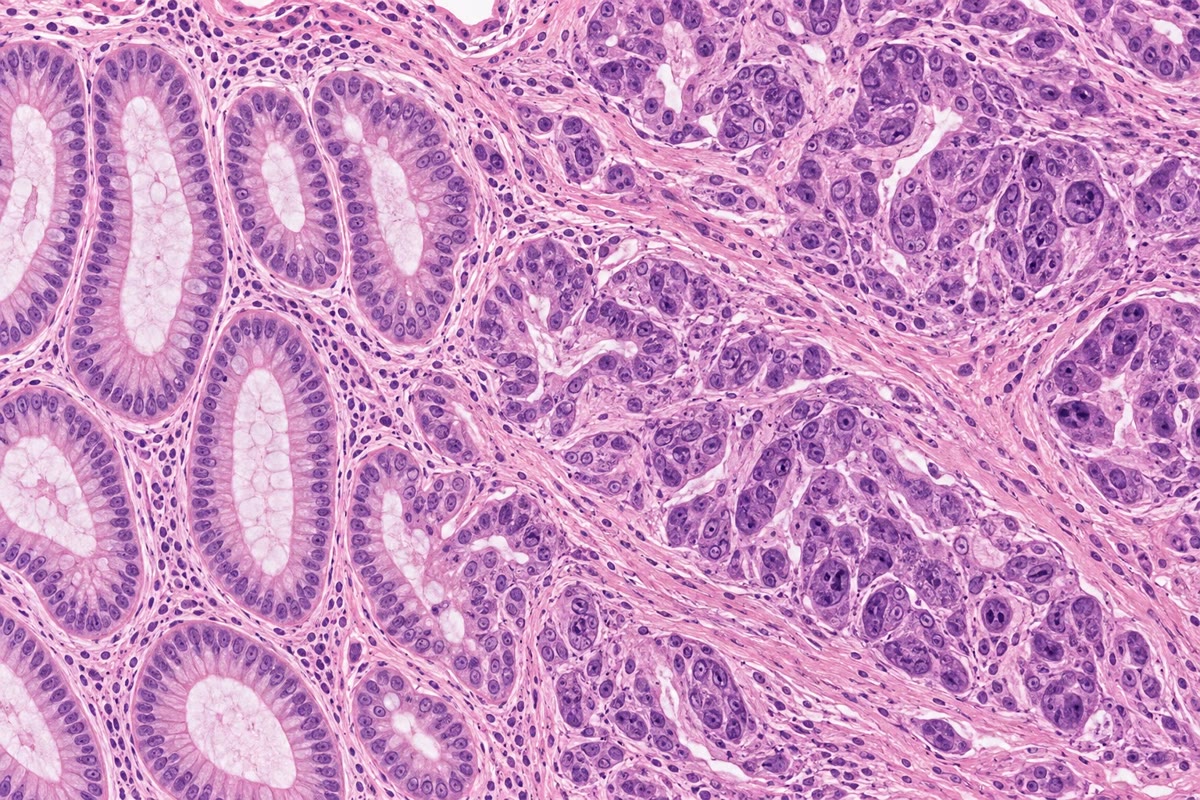
CoachA tumour (neoplasm) is a clone of cells that has escaped the controls on its growth and accumulates in a tissue. It is benign if it stays confined and encapsulated, malignant — a cancer — if its cells invade neighbouring tissue and seed secondary tumours elsewhere (metastasis), which is what kills. Cancers are named for their cell of origin: carcinomas from epithelia ( of human cancers), sarcomas from connective tissue, leukaemias and lymphomas from blood-forming cells, gliomas from glia. Whatever the tissue, a malignant clone has acquired the same set of capabilities, the hallmarks of cancer: it proliferates without external growth signals and ignores the signals that would stop it; it resists apoptosis; it divides without limit, having reactivated telomerase; it induces blood vessels; it invades and metastasises; and, underlying these, its genome is unstable, it reprograms its metabolism toward glycolysis even in oxygen (the Warburg effect), it recruits inflammatory cells that help it, and it evades the immune system. Each hallmark is a control of normal tissue defeated, and each maps onto genes.
Examples
Example 11.4 (Reading the exponent)
The incidence of most carcinomas in adults rises as about the fifth to sixth power of age — from about in per year at thirty to in at eighty, a factor of for a factor in age, and — which suggests six or seven rate-limiting events. The estimate is crude: the expansion of a clone after each hit raises the number of cells at risk of the next, so fewer events with clonal growth between them give the same slope, and the number of driver mutations found in sequenced tumours is two to eight. Knudson’s retinoblastoma fits the theorem’s second statement exactly: the sporadic disease, needing two hits, has an incidence that rises with age (through the few years the retinoblasts exist); the hereditary disease, needing one, is present at a nearly constant rate from birth and strikes early and repeatedly.
Example 11.14 (Therapies and their logic)
Surgery and radiotherapy remove or kill a localised tumour; radiation kills by double-strand breaks, and its fractionation into daily doses lets normal tissue repair between them (Chapter 3). Cytotoxic chemotherapy — alkylating agents, antimetabolites, microtubule poisons, topoisomerase inhibitors — kills dividing cells of any kind, tumour cells slightly more, and follows a log-kill law: each course kills a constant fraction, say , so that six courses reduce cells to one, and the same six courses are needed whether the tumour is large or small; the patient’s hair, gut and marrow, which also divide, set the dose. Targeted therapy attacks a lesion the tumour depends on: imatinib blocks the BCR–ABL kinase and turned chronic myeloid leukaemia from a fatal disease into a chronic one; trastuzumab binds HER2; the PARP inhibitors, the Cdk4/6 inhibitors and venetoclax of earlier chapters each exploit one defect. Immunotherapy releases the T cells. And the theorem says how they should be used: in combination, early, when is smallest — which is what adjuvant chemotherapy after surgery does — and with drugs whose resistance mechanisms do not overlap. The tumour is an evolving population, and treatment is selection.