 Coach
An enzyme is a protein made by a living organism that catalyses one reaction of its chemistry. Enzymes are very efficient and very specific: each fits a few molecules only, and they work best in a narrow range of temperature and acidity.
示例
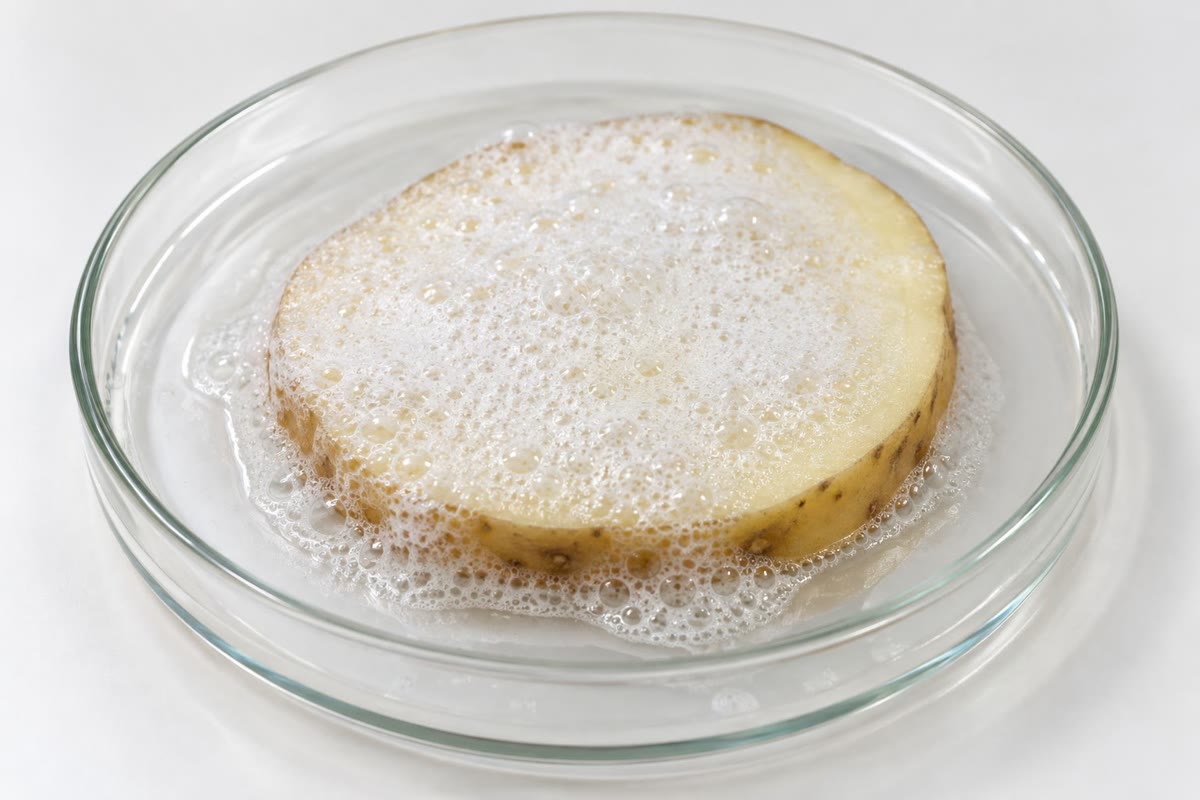
Example 42.8 (Catalase)
Hydrogen peroxide is formed in cells as a by-product, and is harmful to them. The enzyme catalase, present in blood, liver and many plant tissues, decomposes it into water and oxygen at enormous speed: that is the foam on a grazed knee, or on a slice of raw potato. Boiled potato gives no foam: heating has destroyed the shape of the enzyme.