 Coach
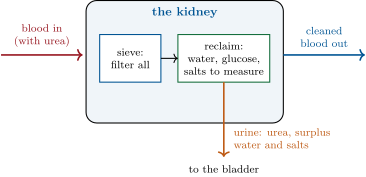
CoachThe two kidneys — fist-sized, bean-shaped, low in the back — are blood-cleaning filters. Each receives a generous artery straight from the body circuit’s main line. Inside, the blood is filtered through about a million microscopic filter units; the cleaned blood returns by the kidney’s vein, and the removed load — urea, surplus water, surplus salts — leaves as urine, trickling down two tubes to the bladder, the holding tank emptied at will.
Examples
Example 53.5 (Reading the thrift)
The reclaiming stage explains the everyday observations. Drink much, and the kidneys reclaim less water: urine plentiful and pale. Sweat a hot match dry, and they reclaim nearly all: urine scant and dark — the body guarding its water (Proposition 22.3 taught water’s value for plants; the kidney is the animal side of the same economy). And glucose in the urine, which the sieve lets through but reclaiming should recover completely, is a classic medical signal that something — reclaiming or blood sugar — is out of order.