 Coach
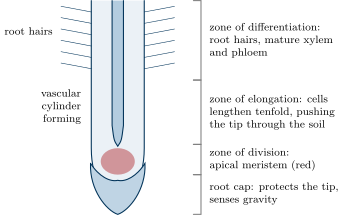
CoachA meristem is a tissue of small, undifferentiated cells that keep dividing. The apical meristems at the tips of every shoot and root produce primary growth: elongation, and the primary tissues above. The lateral meristems — the vascular cambium between xylem and phloem, and the cork cambium under the epidermis — produce secondary growth: thickening, by adding wood (secondary xylem) inward and bark outward, in the stems and roots of trees and shrubs. The mechanisms of meristem activity belong to the Year 2 volume.
Examples
Example 3.13 (Mammal and plant, side by side)
Nutrition: the mammal eats organic matter; the plant makes it from carbon dioxide, water and light. Exchange surfaces: internal, fixed in size, perfused by blood; external, growing, ventilated by the wind and the soil. Internal environment: regulated fluid at constant temperature and composition; none — the cells regulate their own contents and the plant’s temperature is the air’s. Growth: to a fixed adult form; open and modular, all life long. Movement: the animal goes to its food; the plant grows toward light and water. Coordination: nerves and hormones in seconds to hours; hormones alone, in hours to days. Each column is a consistent way of being an open system.