 Coach
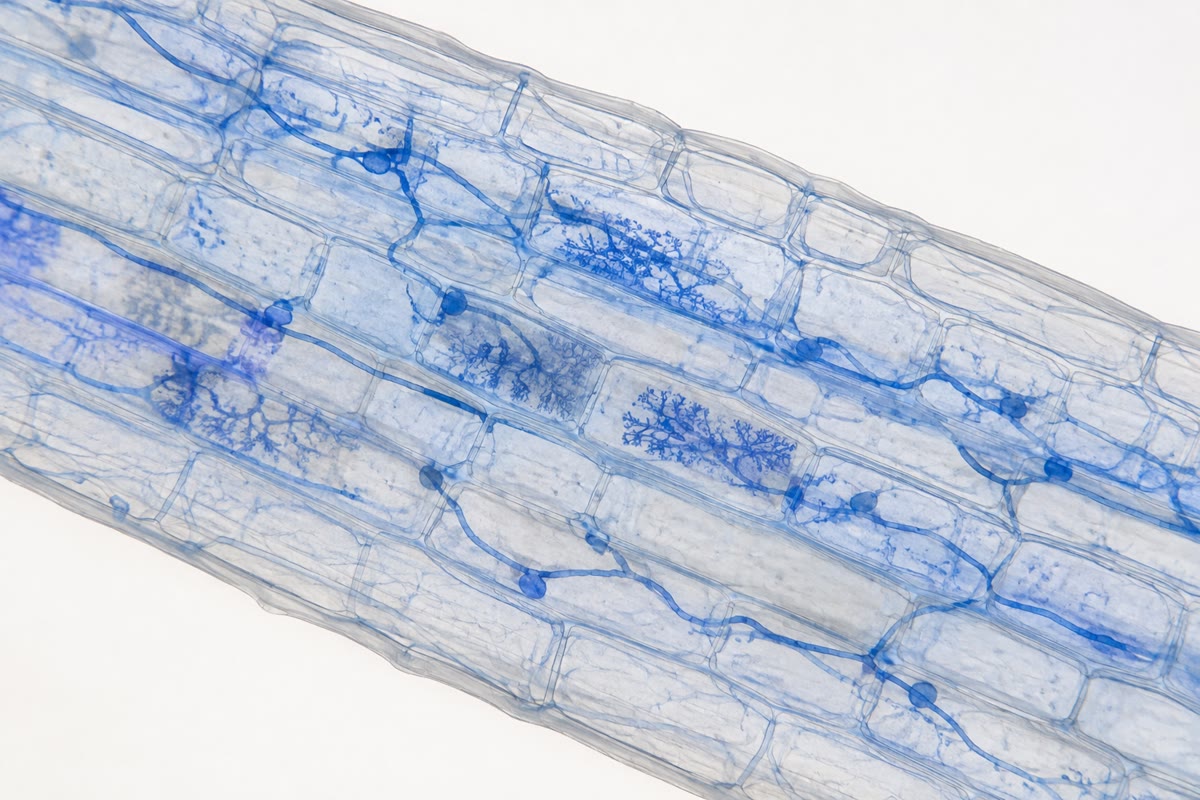
CoachA mycorrhiza is an association between a root and a fungus, found in nine plants out of ten. In the commonest form the fungal hyphae grow into the cortex cells and branch inside them into arbuscules, the exchange surface, while outside the root a network of hyphae a few micrometres across explores the soil for metres. The fungus delivers phosphate and other poorly mobile ions, and water, that the root’s own hairs could not reach; the plant delivers sugar, a tenth or more of its photosynthesis. Trees of temperate forests carry a second form, in which the fungus sheathes the root tips and threads between the cells; its fruiting bodies are the mushrooms of the forest floor.
Examples
Example 23.14 (Why phosphate needs a fungus)
Phosphate binds to soil particles and diffuses a millimetre in a day; a root hair takes up all the phosphate within reach in hours and then waits. Hyphae a tenth as thick as a root hair reach ten times farther per gram of tissue, and a metre of hypha costs the plant a thousandth of what a metre of root does. For nitrate, which moves freely with the soil water, the root’s own hairs suffice, and plants on nitrate-rich soils reduce their fungus; for phosphate, the fungus is the root’s extension.