 Coach
CoachA parasite lives at the expense of a host, on it (ectoparasite: tick, louse, mistletoe) or in it (endoparasite: tapeworm, malaria parasite, rust fungus), taking nutrients and reducing its fitness without necessarily killing it; parasites are often specialised, with complex life cycles through several hosts. A symbiosis is any close, lasting association between two species; a mutualism is one that benefits both: the mycorrhiza (a fungus on or in plant roots, exchanging phosphate and water for sugar; Chapter 23), the root nodule (nitrogen-fixing bacteria fed by the legume), the lichen (a fungus housing an alga or cyanobacterium), the reef coral (a cnidarian housing photosynthetic dinoflagellates), the gut microbiota of a ruminant or a termite (Chapter 22), and pollination (nectar for pollen transport). Many mutualisms began as parasitisms or predations that the partners’ coevolution turned to mutual benefit, and remain conditional: a mycorrhizal fungus in a phosphate-rich soil is a cost, and the plant reduces it.
Examples
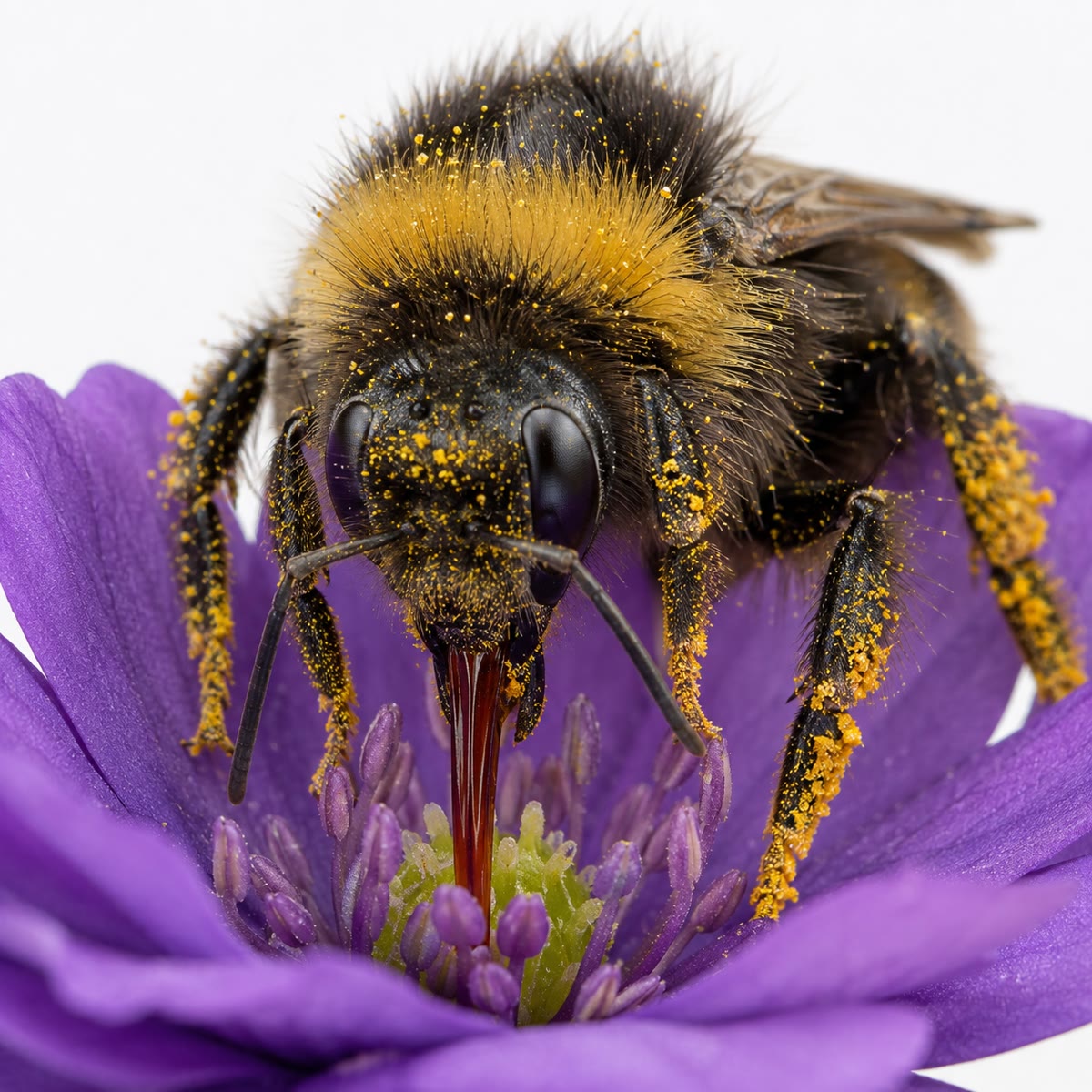
Example 27.11 (Pollination as a trade)
A flower spends a few joules of sugar on nectar; a bee spends flight to collect it and carries pollen between flowers as it goes. The flower’s colour, scent, shape and timing are addressed to its pollinators, and the bee’s tongue length, colour vision and foraging memory to its flowers; some pairs are so tightly fitted — a long nectar spur and the one moth whose tongue reaches it — that neither survives without the other, and a whole plant community can depend on a few species of insect.