
সব বই

পেশাদার

1 Markets I: The Ecosystem and Exchange-Traded Marketsবাজার অনলাইন 2 Markets II: Rates, FX and Creditবাজার অনলাইন 3 Markets III: Commodities, Energy and Cryptoবাজার অনলাইন 4 Quantitative Methodsপদ্ধতি অনলাইন 5 Derivatives and Volatilityডেরিভেটিভস অনলাইন 6 Rates, Credit, XVA and Riskসুদহার, ঋণ ও ঝুঁকি অনলাইন 7 Research Craft: Predictors, Backtests, Measurement, Portfoliosগবেষণা অনলাইন 8 Strategies I: Equities and Futuresকৌশল অনলাইন 9 Strategies II: Volatility, Relative Value, Macro and the Bank Desksকৌশল অনলাইন 10 Microstructure and Executionএক্সিকিউশন অনলাইন 11 Market Making and High-Frequency Tradingমার্কেট মেকিং অনলাইন 12 Machine Learning for Marketsমেশিন লার্নিং অনলাইন 13 Low-Latency Softwareপ্রযুক্তি অনলাইন 14 Networks, Hardware and Trading Infrastructureপ্রযুক্তি অনলাইন 15 Research, Data and Risk Platformsপ্রযুক্তি অনলাইন 16 The Desk and the Firmপ্রতিষ্ঠান অনলাইন 17 The Industry: Firms, Roles and Careersক্যারিয়ার অনলাইন 18 Interviews I: Maths, Probability and Speedক্যারিয়ার অনলাইন 19 Interviews II: Markets, Trading Games and the Final Roundক্যারিয়ার অনলাইন 20 Interviews III: Codeক্যারিয়ার অনলাইন
অ্যাপ পরিচিতি Coach সাইন ইন পড়া শুরু করো

বইগুলো এখনো বাংলা ভাষায় পাওয়া যায় না — ইংরেজি সংস্করণ দেখানো হচ্ছে।

Biology · পরিভাষা

Segmentation, skeletons কী?

অন্য নাম: segmentation · skeleton · hydrostatic skeleton · exoskeleton · endoskeleton

Definition 4.4 University Biology — Year 1 · অধ্যায় 4 — Animal Body Plans and Tissues

A body is segmented when it is built of repeated units along its axis (the rings of an earthworm, the segments of a crayfish, the vertebrae and muscle blocks of a fish), each with its own set of muscles, nerves and often appendages. Segments may be alike or specialised into regions (head, thorax, abdomen). The skeleton, against which the muscles pull, is hydrostatic (a fluid under pressure in a coelom, as in the earthworm), an exoskeleton (a rigid cuticle outside the body, jointed, moulted to grow, as in arthropods), or an endoskeleton (cartilage or bone inside the body, growing with it, as in vertebrates).
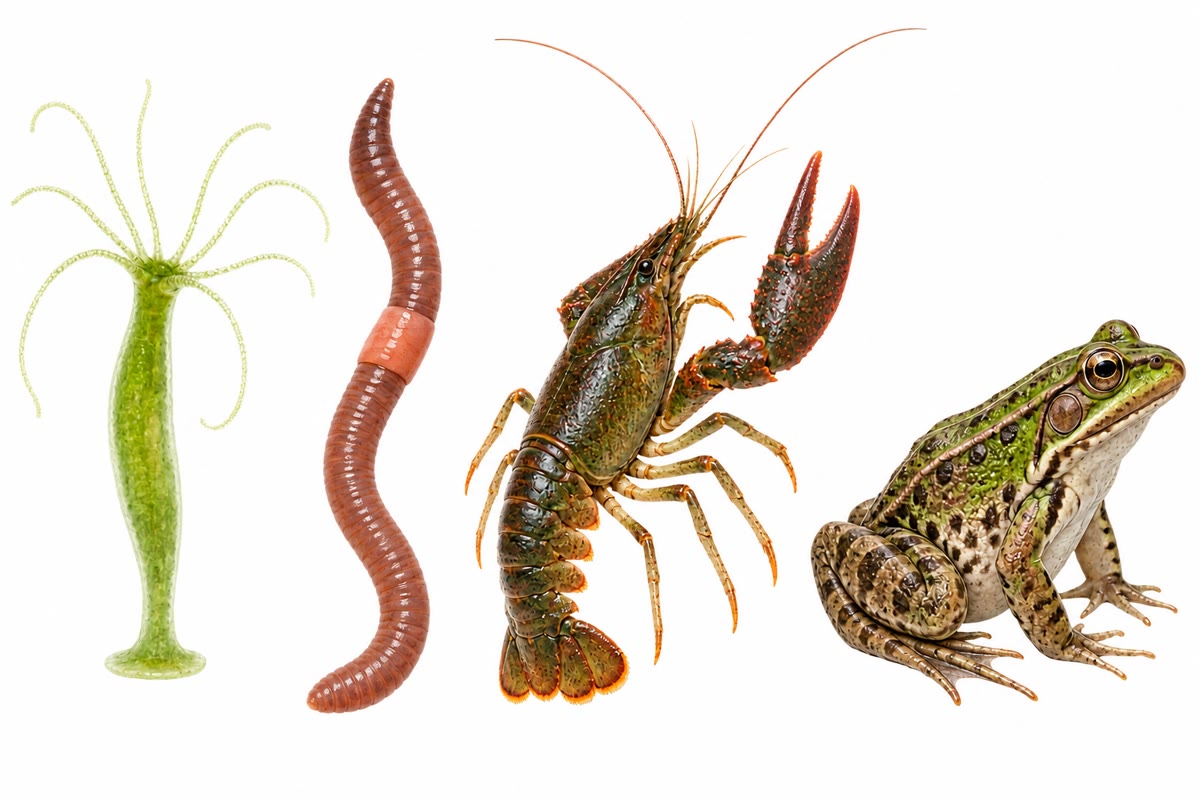
Four body plans. A hydra (radial, two layers, no coelom), an earthworm (bilateral, coelomate, segmented, hydrostatic skeleton), a crayfish (segmented with specialised regions, jointed exoskeleton) and a frog (deuterostome, endoskeleton of bone).

উদাহরণ

Example 4.6 (Reading an animal from its plan)

An animal with a head end, a through gut, a body of similar rings and no hard parts: a coelomate protostome moving by a hydrostatic skeleton, each segment’s coelomic fluid pressurised by circular and longitudinal muscles in turn — an earthworm burrowing. An animal with a jointed cuticle and specialised segments: an arthropod, whose growth must pass through moults. Bilateral, segmented muscle blocks around a dorsal axis of vertebrae: a vertebrate, whose endoskeleton grows continuously.

প্রসঙ্গসহ পড়ো →