
Biology · Glossary

What is Symbiosis?

Definition 24.7 High School Biology · Chapter 24 — Diversification of Living Things

A symbiosis is a lasting, close association of two species from which both benefit. A lichen is a fungus housing algal cells that feed it by photosynthesis while it shelters and waters them; a coral is an animal housing algae in its tissues; the roots of most plants are wrapped in fungi that supply minerals in exchange for sugar; the guts of animals hold bacteria that digest what the animal cannot. The association produces organisms, structures and ways of life that neither partner could achieve alone.
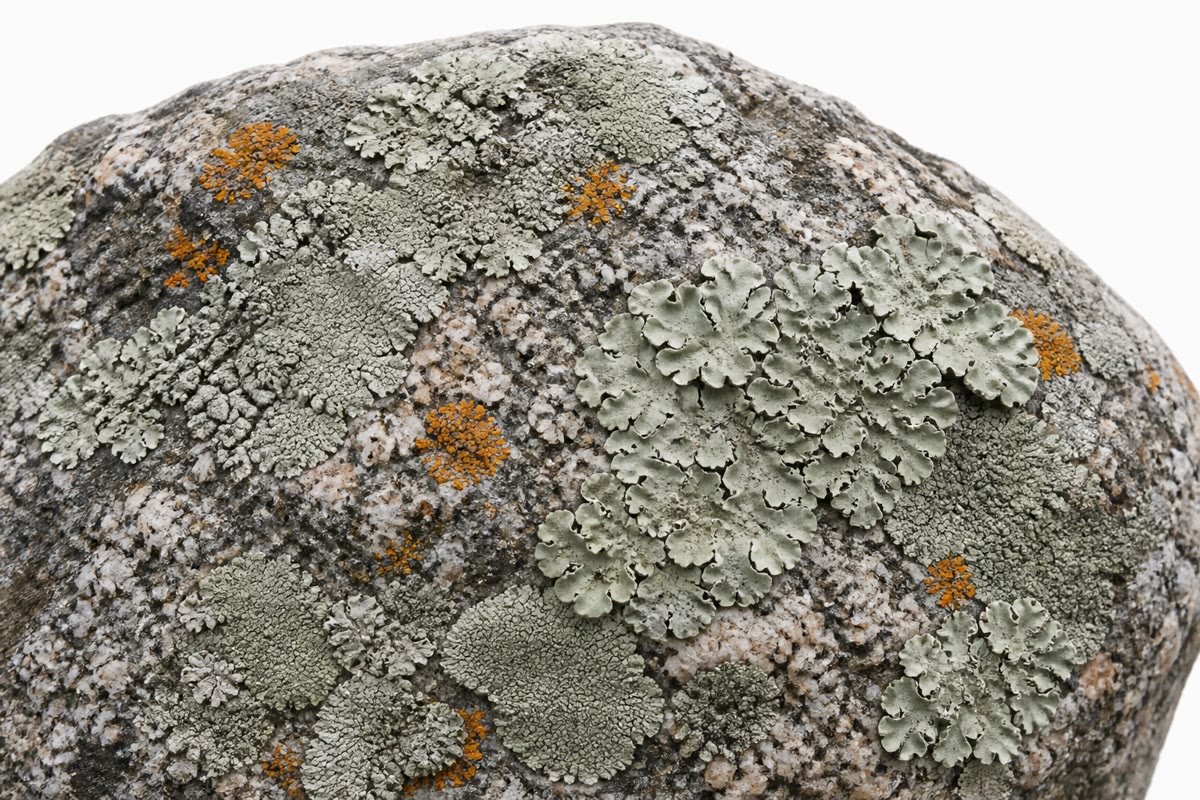
Lichens on a granite boulder. Each patch is a fungus and an alga grown into one body: a form of life, able to colonise bare rock, that neither partner can take alone.
Read in context →
Definition 14.1 University Biology — Year 3 · Chapter 14 — Microbiomes and Symbioses

Symbiosis is the sustained, intimate association of organisms of different species; it is a mutualism if both gain, a commensalism if one gains and the other is unaffected, and a parasitism if one gains at the other’s expense — and the same pair may move along that line with circumstances. An endosymbiont lives inside its host’s cells; an obligate partner cannot live alone. Symbionts are transmitted vertically, from parent to offspring (the aphid’s Buchnera pass through the egg), or horizontally, acquired anew each generation from the environment or from other hosts (the squid’s Vibrio, the human gut’s bacteria). The microbiome is the whole community of microbes of a habitat — a gut, a leaf surface, a gram of soil — and the holobiont is a host together with its microbiome, considered as the unit that natural selection sees.

Examples

Example 14.2 (Three obligate partners)

The aphid Buchnera has lived inside its host’s cells for two hundred million years, makes the essential amino acids that phloem sap lacks, and has shrunk its genome to 640kb640\,\mathrm{kb} — a seventh of its free-living relatives’ — losing every gene the host now supplies. The bacterium Wolbachia, in two thirds of insect species, is transmitted through eggs only, and so has evolved to favour females: it kills male embryos, feminises them, or makes uninfected females’ eggs die when fertilised by infected males (cytoplasmic incompatibility), which spreads it through a population; mosquitoes carrying it transmit dengue poorly, and releasing them has cut dengue in several cities. The amoeba Paulinella took in a cyanobacterium about a hundred million years ago that is now neither quite a bacterium nor quite a chloroplast — a second, independent origin of photosynthetic organelles, caught halfway.

Read in context →