Primary & Middle School Biology · Grades 1–9
14Sorting Living Things
Tip a box of mixed buttons on the table and your hands start sorting by themselves: big with big, red with red, four holes with four holes. Naturalists felt the same urge in front of the living world’s jumble of beetles, birds, ferns and fish — and sorting living things carefully turned out to be one of biology’s most powerful ideas.
14.1 Sorting needs a rule
Definition 14.1 (Sorting and criteria)
To sort a collection is to put together the things that go together. A criterion is the rule used for the sorting — “has six legs”, “has feathers”. A good criterion for living things is a feature of the body you can observe: something the animal or plant has, not the place it lives or what it happens to be doing.
Example 14.2 (Two sortings of the same animals)
Take the cat, the duck, the trout and the ladybug. Sorted by “lives near water”: duck and trout together. Sorted by “has feathers”: the duck stands alone. Both are sortings — but only the second uses the animal’s own body, and that is the kind biologists trust: an animal can move house, but it cannot change its feathers for scales.
Remark 14.3 (Why not sort by home or menu?)
Habitat and menu change with the seasons and with luck — the blackbird of Chapter 10 switches from worms to berries without becoming a different animal. Body features stay. That is why “what it has” beats “what it does” as a sorting rule.
14.2 The great groups of animals
Proposition 14.4 (Some big groups)
Sorting by body features gathers animals into big groups, including:
- insects: six legs, a body in three parts — the ant, the ladybug, the bee, the butterfly;
- fish: fins and scales, life spent in water — the trout, the goldfish;
- birds: feathers, wings and a beak — the duck, the blackbird, the ostrich;
- mammals: fur or hair, and mothers that feed their young milk — the cat, the cow, the bat, the whale — and humans;
- amphibians: moist skin, eggs laid in water, a tadpole childhood — the frog, the newt.
Proof. Admitted at this level. ∎

Example 14.5 (Surprises done right)
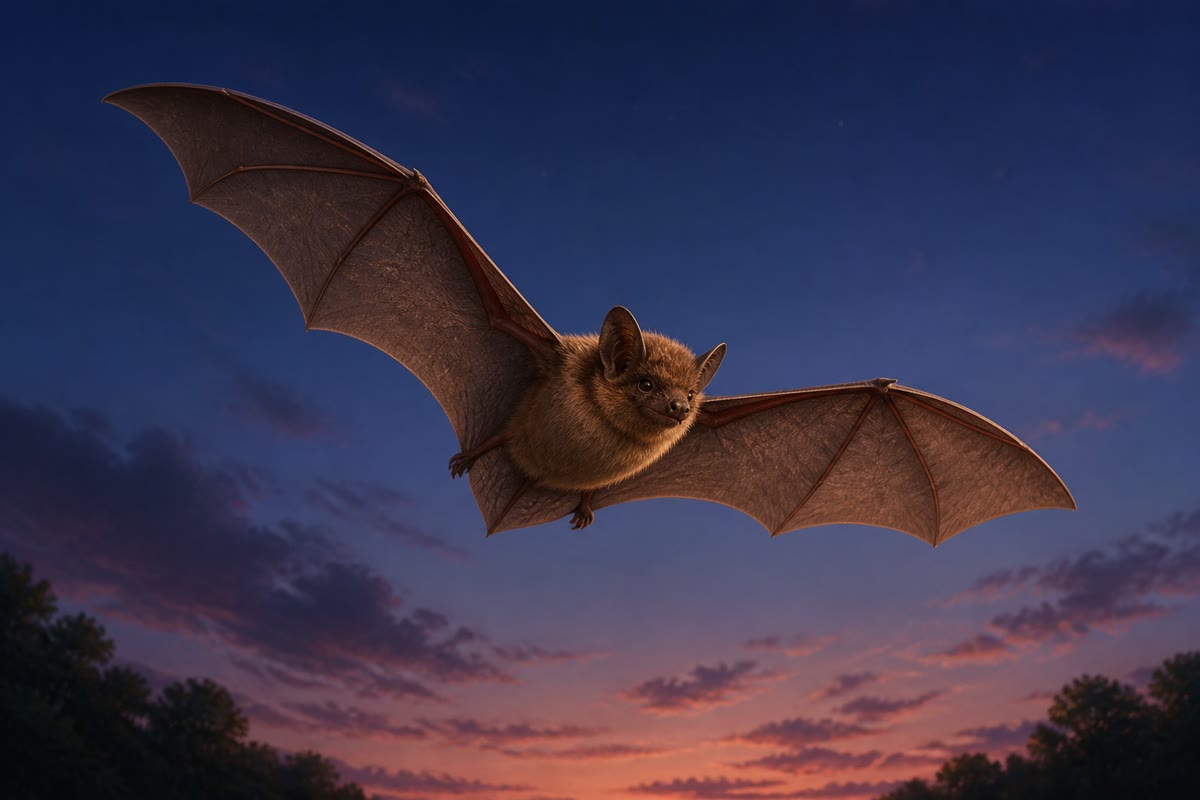
Criteria save us from lazy guesses. The bat flies like a bird — but it has fur, no feathers, and feeds its young milk: a mammal. The whale swims like a fish — fur reduced to almost nothing, but milk for its calf and no scales: a mammal too. The ostrich cannot fly at all, yet feathers and beak say: bird. The criterion, not the impression, decides.
Method 14.6 (Sorting an unknown animal)
- Observe the body: skin, fur, feathers or scales? how many legs? wings? a beak?
- Ask about the young if you can: milk? eggs? a tadpole stage?
- Compare with the groups of Proposition 14.4 and place the animal where its features fit;
- if an impression (“it flies!”) disagrees with a feature (“it has fur”), trust the feature.
14.3 Plants get sorted too
Proposition 14.7 (Sorting plants)
Plants are sorted by their features just like animals. Useful criteria: does it make flowers and seeds (the daisy, the chestnut) or never any (the fern, the moss)? Is its stem soft and green, or woody like a tree’s trunk? Are the leaves broad, or needles like the pine’s?
Proof. Admitted at this level. ∎
Example 14.8 (Three corners of the park)
In one park: the rose bush — flowers, woody stems; the moss on the north wall — no flowers ever, no real stem at all; the pine — a tree with needles and cones. Three plants, three different answers to the same criteria.
Remark 14.9 (Sorting is the first step of a science)
Well-sorted groups let people ask better questions: whatever is true of insects in general — six legs, a body in three parts, often wings — is suddenly known for hundreds of thousands of species at once. Later chapters will turn sorting into a family tree of all living things — for now, learn to sort by what you can see.
14.4 Exercises
Exercise 14.1 ★
What is a criterion? Give one good criterion for sorting animals, and one that biologists avoid.
Exercise 14.2 ★
Give the feature (or features) that defines each group: insects, fish, birds, mammals.
Exercise 14.3 ★
Place each animal in its group: the bee, the goldfish, the ostrich, the cow, the frog.
Solution
Solution of Exercise 14.3.
Bee: insect. Goldfish: fish. Ostrich: bird. Cow: mammal. Frog: amphibian.
Exercise 14.4 ★
The bat flies. Why is it a mammal and not a bird? Which features decide?
Exercise 14.5 ★
The whale lives in the sea. Why is it not a fish? Which features decide?
Exercise 14.6 ★
A spider has eight legs. Can it be an insect? What does the criterion answer?
Exercise 14.7 ★
Sort these plants with the criteria of Proposition 14.7: the daisy, the moss, the pine, the rose bush.
Exercise 14.8 ★
Try it: sort the animals of your street or garden — every one you can spot in a walk — into the groups of this chapter. Which group wins by number?
Exercise 14.9 ★★
Lea sorts animals into “pets” and “wild animals”. Her friend sorts the same animals into “mammals” and “birds”. Whose sorting is the biologist’s kind, and why? Use Remark 14.3.
Exercise 14.10 ★★
A penguin swims superbly, cannot fly, and is covered in what look like shiny tiles. A naturalist looks closer: the “tiles” are tightly packed feathers, and there is a beak. Run Method 14.6 on the penguin, step by step.