 Coach
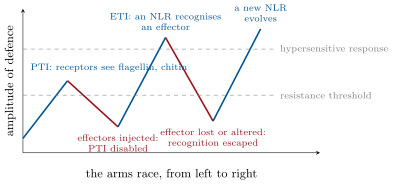
CoachEvery plant cell is its own immune cell. The first layer, pattern-triggered immunity (PTI), uses surface receptor kinases that recognise molecules common to whole classes of microbes — FLS2 binds a 22-amino-acid piece of bacterial flagellin, others bind chitin fragments of fungal walls — and within minutes launches calcium influx, a burst of reactive oxygen, kinase cascades, stomatal closure, wall thickening with callose, and the transcription of hundreds of defence genes; it holds off most microbes. Pathogens that succeed inject effectors — proteins that disable PTI components — and against these the second layer, effector-triggered immunity (ETI), fields intracellular NLR receptors (nucleotide-binding, leucine-rich repeat), each recognising one effector or the damage it does, in the gene-for-gene pairing Flor described in flax rust (1940s). ETI is faster and stronger than PTI and usually ends in the hypersensitive response: the infected cell and its neighbours kill themselves, walling the pathogen in dead tissue — the small brown flecks on a resistant leaf. Both layers release hormones that carry the alarm: salicylic acid against biotrophs (which feed on living cells), triggering systemic acquired resistance throughout the plant for weeks; jasmonic acid and ethylene against necrotrophs (which kill and then feed) and chewing insects, with volatile jasmonates warning neighbouring plants and attracting the insects’ parasitoids. The two hormones antagonise each other, and some pathogens exploit it: a bacterium that makes a jasmonate mimic switches off the salicylate defence that would have stopped it.
Examples
Example 22.9 (The plant clock and the length of the day)
Plants keep a circadian clock of the same design as the animal one and of unrelated parts: morning factors (CCA1, LHY) repress an evening gene (TOC1) whose product represses them, with further loops that make a robust 24-hour cycle even in constant light, anticipating dawn by opening stomata and switching on photosynthesis genes an hour before the sun. The clock’s most consequential output is the measurement of day length. In Arabidopsis, a long-day plant, the clock makes the CONSTANS protein accumulate in the late afternoon; in a long day that afternoon is still lit, phytochrome and cryptochrome stabilise the protein, and it switches on FT in the leaf; in a short day the protein is made in darkness and destroyed. FT protein, the florigen that grafting experiments had chased since Chailakhyan (1936), travels in the phloem to the shoot apex and, with a partner there, converts the apex from making leaves to making flowers. Short-day plants (rice, soybean) use the same clock with the sign reversed. A plant thus reads the calendar by comparing an internal rhythm with the external light — the “external coincidence” that Bünning proposed in 1936 and that molecular genetics made literal seventy years later.