University Biology — Year 3 · Bachelor Year 3
22Molecular Plant Physiology and Stress Responses
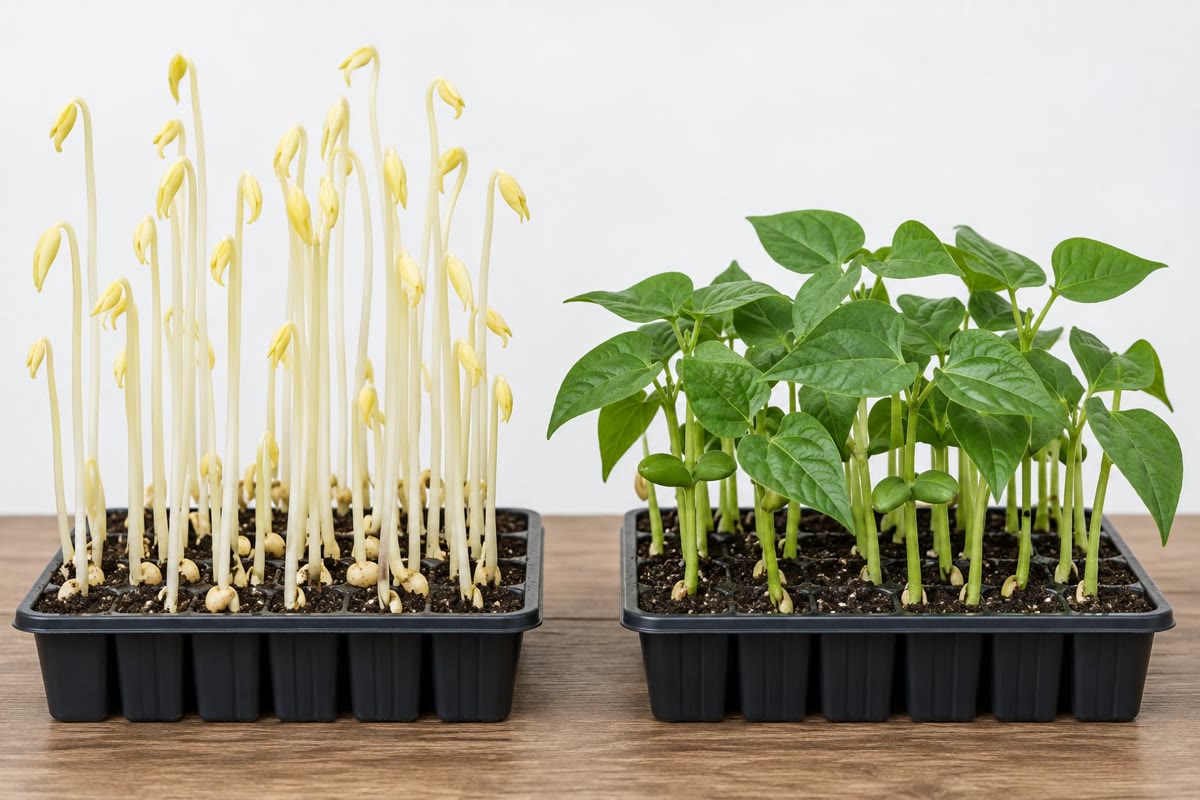
A bean seedling grown in a dark cupboard is a pale, spindly thing: a long white stem, a hook at the top, two folded yellow leaves. Move it to a window and within a day it has stopped elongating, straightened its hook, spread and greened its leaves — a different organism, from the same genes. It had not been waiting for energy; it had been waiting for information. A red photon absorbed by a single protein tells it that it has reached the light; the ratio of red to far-red tells it whether a neighbour’s leaf is overhead; the length of the night tells it the season; a drop in the water potential of its roots, a touch of wind, the flagellin of a bacterium on its leaf — each is detected by a receptor, converted to a chemical signal, and answered by a change in which genes are expressed and which cells grow. A plant cannot run from its environment; it must read it and remodel itself. This chapter is about that reading: the photoreceptors, the hormones and how they act at the molecular scale, the responses to drought, salt, cold and heat, and the two-layered immune system that plants evolved without a single mobile cell.
22.1 Reading the light
Definition 22.1 (Photoreceptors)
Plants sense light with three families of proteins, none of them chlorophyll. Phytochromes are dimers with a bilin pigment switched by red light () from the inactive Pr form to the active Pfr, and back by far-red (); Pfr moves into the nucleus and marks a family of transcription factors, the PIFs, for degradation, releasing the genes of light-grown development; in darkness Pfr slowly reverts. Cryptochromes (blue, ) are flavoproteins related to DNA-repair enzymes, controlling de-etiolation, the clock and flowering; phototropins (blue) are membrane kinases that direct bending toward light, the opening of stomata and the movement of chloroplasts. A seedling in the dark is etiolated — long hypocotyl, closed cotyledons, no chlorophyll, all resources spent on reaching the surface; light switches it to photomorphogenesis, and the switch is thrown by Pfr and cryptochrome inactivating a single repressor complex (COP1) that in darkness destroys the transcription factors of the light programme. Light is thus read twice: as energy, by the chloroplast, and as signal, by receptors sensitive to photon fluxes a million times smaller.
Proposition 22.2 (The phytochrome photoequilibrium)
Under continuous light Pr and Pfr interconvert until the two photoconversion rates balance: with the rate of Pr Pfr (proportional to the red flux) and that of Pfr Pr (proportional to the far-red flux, plus a little from red, which Pfr also absorbs), the fraction of active form is
independent of the total flux and set only by the red:far-red ratio of the light. Pure red gives (Pfr absorbs some red too), pure far-red ; open daylight, , gives about , and the light under a leaf canopy, whose chlorophyll has taken out the red and let the far-red through, has and . A plant reads its as the presence of neighbours: a low value triggers the shade-avoidance syndrome — elongated stems, raised leaves, early flowering, less branching — through the PIFs that Pfr no longer destroys. A farmer’s dense planting is a race of shade-avoiders; the dwarf wheats of the Green Revolution, insensitive to the signal, put the saved growth into grain.
Proof. with fixed gives, at steady state, , whence . Both rates are proportional to the incident flux, so scaling the light scales both and leaves unchanged; only the spectral composition matters. The steady state is approached with rate — seconds in sunlight, minutes at dusk — and the dark reversion of Pfr, with a half-life of hours, sets what remains at night. ∎
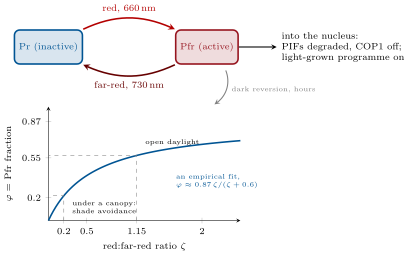
Evidence. Borthwick, Hendricks and colleagues (1952) gave lettuce seeds brief flashes: red made them germinate, far-red given afterwards cancelled it, red again restored it, and so on through a dozen alternations — the last flash decided, the signature of a reversible pigment, which they then extracted (1959) as a blue protein that changed its absorption spectrum under red and far-red. The dark-grown seedling’s whole programme was later shown to hang on one repressor: mutants lacking COP1 develop in total darkness as if in light, short and green-ready, and phytochrome- and cryptochrome-deficient mutants stay etiolated in the light. ∎
22.2 Hormones at the molecular scale
Definition 22.3 (The plant hormones and their receptors)
The Year 1 volume described what the plant hormones do; here is how they are heard. Several act by regulated destruction. Auxin (indole-3-acetic acid) binds the F-box protein TIR1, gluing it to the Aux/IAA repressors, which are then ubiquitinated and destroyed by the proteasome: the auxin-response genes they were repressing switch on within minutes — the hormone is a molecular glue, and the receptor is part of the degradation machinery. Gibberellin does the same with the DELLA repressors of growth, through its receptor GID1: the dwarf wheats and rices of the Green Revolution carry DELLA proteins that cannot be destroyed, and so stay short however much gibberellin they make. Jasmonate follows the same logic with the JAZ repressors. Abscisic acid (ABA), the hormone of drought and dormancy, binds the PYR/PYL receptors, which then inhibit a phosphatase (PP2C), releasing a kinase (SnRK2) that phosphorylates ion channels and transcription factors — a double negative that makes the response steep. Ethylene, a gas, binds copper-containing receptors in the ER membrane that in its absence actively repress the response; binding switches them off, and the ripening, senescence and stress genes come on. Cytokinins act through histidine-kinase receptors like bacterial two-component systems; brassinosteroids, the plant’s steroids, through a surface receptor kinase, not a nuclear receptor — the only steroid hormones anywhere heard at the cell surface. Plants have no glands: each hormone is made where it is needed, or moved by specific carriers, and its concentration is set locally by synthesis, conjugation and destruction.
Theorem 22.4 (Chemiosmotic polar transport of auxin)
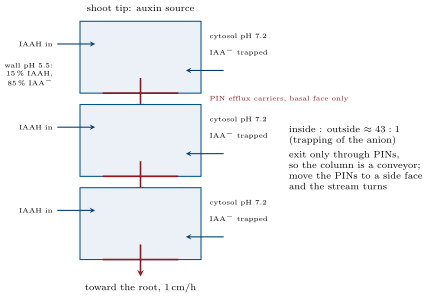
Indole-3-acetic acid is a weak acid, . In the cell wall space at pH a substantial fraction is the neutral IAAH, which diffuses across the membrane; in the cytosol at pH nearly all is the anion IAA, which cannot leave by diffusion. At equilibrium of the neutral form across the membrane the ratio of total auxin inside to outside is
the cell traps auxin forty-fold. It can leave only through the PIN efflux carriers, and because each cell places its PINs on one face — the basal face in the stem — the auxin taken up all round leaves at the bottom, enters the next cell, and so on: a column of cells with the same polarity is a conveyor moving auxin at about from shoot tip to root, and re-orienting the PINs re-directs the stream, which is how a shaded side of a stem comes to hold more auxin and grow faster.
Proof. Henderson–Hasselbalch: , so total . The neutral form equilibrates, ; dividing the totals gives the ratio, . With PINs on one face, the anion’s only exit is directional; a column of cells passes the flux along, and the measured velocity, an order of magnitude above diffusion over these distances, is that of carrier-mediated efflux at each cell boundary. The Cholodny–Went hypothesis (1920s) that bending follows a lateral redistribution of auxin was confirmed by direct measurement in oat coleoptiles and by imaging PIN relocation in Arabidopsis roots turned on their side (2000s). ∎
Example 22.5 (Gravitropism and phototropism)
Turn a seedling on its side. In the root cap, dense starch-filled plastids settle onto the new lower side of the columella cells within minutes; the PIN3 carriers of those cells relocate to the lower face; auxin flows preferentially down the lower flank of the root, where, above the optimum for root cells, it inhibits elongation, and the root curves downward. In the shoot the same lateral flow to the lower side promotes elongation (shoot cells’ optimum is higher), and the shoot curves upward. Phototropism: phototropin on the lit side of a shoot alters PIN placement so that auxin accumulates on the shaded side, which grows faster, bending the shoot toward the light. Both movements are slow — hours — because they are growth, not motion, and both are irreversible in the tissue that has grown. Darwin (1880) showed the tip of a grass seedling perceives the light and the region below bends; Went (1928) collected the influence in an agar block placed on a cut tip and showed a block placed asymmetrically on a decapitated shoot made it bend: the influence was a diffusible substance, which was then named auxin.
22.3 Water, salt, cold and heat
Definition 22.6 (Abiotic stress)
A plant cannot escape, so it hardens. Drought: falling water potential in the roots triggers ABA synthesis; ABA closes stomata within minutes, and over days switches on genes for osmotic adjustment (proline, sugars and other compatible solutes accumulate, lowering the cell’s water potential so it keeps drawing water), for dehydrins that protect proteins, and for a smaller leaf area and a deeper root. Salt is drought plus poison: sodium enters through potassium channels and competes with potassium; tolerant plants pump it back out of roots (the SOS pathway), into vacuoles (NHX exchangers), or excrete it from leaf glands, and their halophyte extreme lives in sea water. Cold: chilling stiffens membranes and slows enzymes; freezing draws water from cells into extracellular ice and desiccates them. Cold acclimation — a week of cool days — induces the CBF transcription factors, which turn on hundreds of genes for membrane-fluidising lipids, sugars, antifreeze proteins and dehydrins, and a winter rye that would die at in August survives in January. Heat unfolds proteins; within minutes of a rise a heat-shock factor releases heat-shock proteins, chaperones that refold or dispose of them, the same families as in every organism. Flooding starves roots of oxygen; rice makes air channels (aerenchyma) and elongates to keep its leaves above water, ethylene being the signal that accumulates when it cannot escape into the water. Many of these programmes overlap — ABA, reactive oxygen species and calcium spikes are shared second messengers — and a plant acclimated to one stress is often partly protected against another.
Proposition 22.7 (The stoma as a valve)
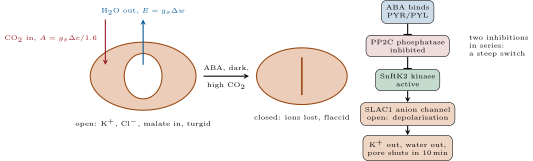
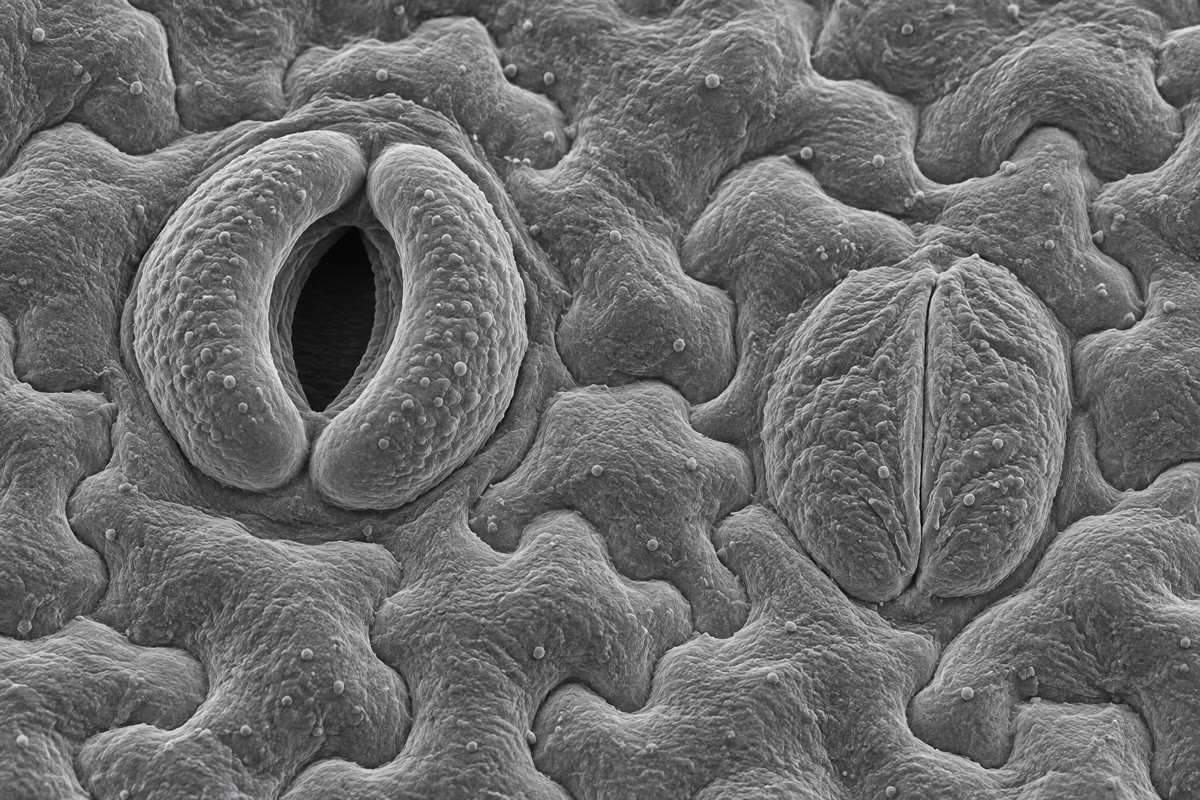
A pair of guard cells bounds each stomatal pore; the pore opens when they take up potassium and anions (and make sugar), swell, and bow apart, and closes when they lose them. Blue light (phototropins), low CO and humidity open; darkness, high CO, drought and ABA close. ABA’s route: receptor phosphatase inhibited kinase active anion channels (SLAC1) open the membrane depolarises potassium leaves through outward channels water follows the pore shuts, in ten minutes. The pore is where the plant’s central trade is made: CO diffuses in and water vapour out through the same hole, and because the vapour gradient (a leaf at humidity inside against air at ) is fifty times steeper than the CO gradient ( outside, inside), a leaf loses several hundred molecules of water for every molecule of carbon it fixes. The stomatal conductance sets both fluxes: transpiration and assimilation (CO being heavier, it diffuses times more slowly), so the water-use efficiency depends on the gradients, not on how far the pore is open; closing the pore lowers both fluxes together, and raising the internal CO (C plants, which concentrate it) or opening only at night (CAM plants, in cool humid air) is how desert plants improve the ratio.
Proof. Fick’s law across the pore for each gas, with the same geometric conductance scaled by the ratio of diffusion coefficients ; dividing the two fluxes cancels . Numbers: of air at and humidity, : — water molecules per CO under those mild conditions, in dry air. The sequence of ABA’s action was worked out with guard-cell protoplasts under patch clamp, the anion current appearing within a minute of ABA and the mutant lacking SLAC1 failing to close. ∎
22.4 Immunity without immune cells
Definition 22.8 (Two layers of plant immunity)
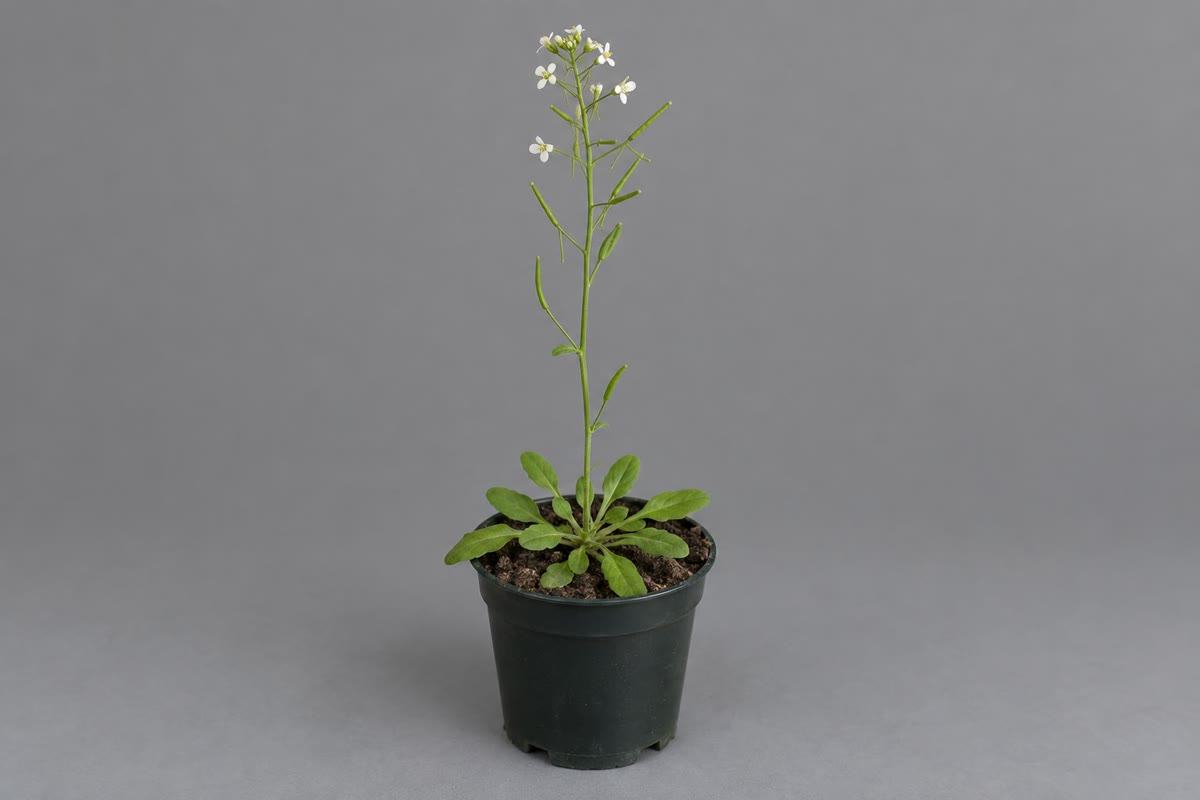
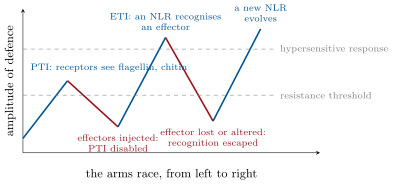
Every plant cell is its own immune cell. The first layer, pattern-triggered immunity (PTI), uses surface receptor kinases that recognise molecules common to whole classes of microbes — FLS2 binds a 22-amino-acid piece of bacterial flagellin, others bind chitin fragments of fungal walls — and within minutes launches calcium influx, a burst of reactive oxygen, kinase cascades, stomatal closure, wall thickening with callose, and the transcription of hundreds of defence genes; it holds off most microbes. Pathogens that succeed inject effectors — proteins that disable PTI components — and against these the second layer, effector-triggered immunity (ETI), fields intracellular NLR receptors (nucleotide-binding, leucine-rich repeat), each recognising one effector or the damage it does, in the gene-for-gene pairing Flor described in flax rust (1940s). ETI is faster and stronger than PTI and usually ends in the hypersensitive response: the infected cell and its neighbours kill themselves, walling the pathogen in dead tissue — the small brown flecks on a resistant leaf. Both layers release hormones that carry the alarm: salicylic acid against biotrophs (which feed on living cells), triggering systemic acquired resistance throughout the plant for weeks; jasmonic acid and ethylene against necrotrophs (which kill and then feed) and chewing insects, with volatile jasmonates warning neighbouring plants and attracting the insects’ parasitoids. The two hormones antagonise each other, and some pathogens exploit it: a bacterium that makes a jasmonate mimic switches off the salicylate defence that would have stopped it.
Evidence. Flor (1940s) crossed flax varieties and rust strains and found that resistance to each strain segregated as a single dominant plant gene matched by a single avirulence gene in the fungus — the gene-for-gene relation, unexplained for fifty years until the first NLR genes were cloned (1994) and the first effector–receptor pairs shown to bind or to mark each other’s damage. Gómez-Gómez and Boller (2000) found the Arabidopsis mutant blind to flagellin, fls2, and showed its receptor kinase bound the peptide flg22 at nanomolar concentration and that the mutant was more susceptible to bacteria sprayed on its leaves but not to bacteria injected into them — the receptor guards the surface and the stomata through which bacteria enter. Ross (1961) inoculated one leaf of a tobacco plant with a virus and found the other leaves resistant a week later: systemic acquired resistance, later shown to need salicylic acid, which the plant makes from the same pathway as aspirin’s parent. ∎
Example 22.9 (The plant clock and the length of the day)
Plants keep a circadian clock of the same design as the animal one and of unrelated parts: morning factors (CCA1, LHY) repress an evening gene (TOC1) whose product represses them, with further loops that make a robust 24-hour cycle even in constant light, anticipating dawn by opening stomata and switching on photosynthesis genes an hour before the sun. The clock’s most consequential output is the measurement of day length. In Arabidopsis, a long-day plant, the clock makes the CONSTANS protein accumulate in the late afternoon; in a long day that afternoon is still lit, phytochrome and cryptochrome stabilise the protein, and it switches on FT in the leaf; in a short day the protein is made in darkness and destroyed. FT protein, the florigen that grafting experiments had chased since Chailakhyan (1936), travels in the phloem to the shoot apex and, with a partner there, converts the apex from making leaves to making flowers. Short-day plants (rice, soybean) use the same clock with the sign reversed. A plant thus reads the calendar by comparing an internal rhythm with the external light — the “external coincidence” that Bünning proposed in 1936 and that molecular genetics made literal seventy years later.
Remark 22.10 (Standing still, changing everything)
The animal’s answer to a bad environment is to leave it; the plant’s is to become a different plant. It has receptors for the colour and direction of light, the pull of gravity, the water potential of its soil, the touch of wind and the chemistry of its enemies; its hormones act by destroying repressors, so that a signal can switch a programme in minutes; and its every cell is its own sensor, immune system and, if need be, its own regenerating meristem. The dwarf wheats that fed a growing world were a DELLA protein that could not be degraded; the drought-tolerant crops of the next decades will be, in large part, a matter of ABA receptors, stomatal conductance and the water-use efficiency this chapter has computed.
22.5 Exercises
Exercise 22.1 ★
List the three photoreceptor families with their wavelengths and one response each. Why does a plant need photoreceptors when it already has chlorophyll?
Solution
Solution of Exercise 22.1.
Phytochromes, red and far-red : de-etiolation, shade avoidance, germination. Cryptochromes, blue : de-etiolation, the clock, flowering. Phototropins, blue: bending toward light, stomatal opening, chloroplast movement. Chlorophyll measures light as energy and does nothing with the information; the photoreceptors read colour, direction and duration at fluxes a million times lower and change gene expression — the difference between eating the light and reading it.
Exercise 22.2 ★
Explain how auxin, gibberellin and jasmonate share a mechanism of action, and why this makes the response fast.
Solution
Solution of Exercise 22.2.
Each hormone promotes the ubiquitination and destruction of a repressor: auxin glues TIR1 to the Aux/IAA proteins, gibberellin bound to GID1 delivers the DELLA proteins to an F-box ligase, jasmonate glues COI1 to the JAZ proteins. The repressors already sit on their target genes with the activators poised beside them, so no new protein need be made: destroying the repressor, which the proteasome does in minutes, switches the genes on at once.
Exercise 22.3 ★
Describe the sequence of events from ABA arriving at a guard cell to the pore closing, and name the point at which a mutation would leave the plant unable to close its stomata.
Solution
Solution of Exercise 22.3.
ABA binds PYR/PYL; the complex inhibits the PP2C phosphatase; the SnRK2 kinase (OST1), no longer dephosphorylated, becomes active and phosphorylates the SLAC1 anion channel; anions leave, the membrane depolarises, outward potassium channels open, K and then water leave, turgor falls and the guard cells sag together. Any link can be broken: no receptors, a phosphatase that cannot be inhibited (the classic abi1 mutant), no OST1 or no SLAC1 — each gives a wilty plant whose stomata stay open in drought.
Exercise 22.4 ★
Distinguish pattern-triggered and effector-triggered immunity by what is recognised, where the receptor is, and how the response ends.
Solution
Solution of Exercise 22.4.
PTI recognises molecules common to whole microbial classes (flagellin, chitin) with receptor kinases at the cell surface and ends in a reinforced wall, closed stomata, defence gene expression and slower growth, usually without cell death. ETI recognises a specific effector protein or its damage with an intracellular NLR receptor and ends in the hypersensitive death of the infected cells and a systemic alarm.
Exercise 22.5 ★★
Using the fit , compute the Pfr fraction in daylight (), under one leaf (), under a dense canopy (), and under an incandescent lamp (). Why do seedlings under such lamps grow tall?
Solution
Solution of Exercise 22.5.
Daylight ; one leaf ; dense canopy ; incandescent lamp . A filament lamp is rich in far-red, so is below daylight’s and the seedling reads partial shade: it elongates. Cool white lamps and LEDs without far-red do the opposite.
Exercise 22.6 ★★
Compute the inside:outside ratio for auxin if the wall pH is and the cytosol ; then if the wall is acidified to (as growing cells do). What happens to trapping if the cytosol acidifies to under anoxia?
Solution
Solution of Exercise 22.6.
Wall , cytosol : . Wall : — acidifying the wall raises the neutral fraction outside and the uptake. Cytosol with wall : : trapping falls five-fold, auxin leaks out of every face, and the polar gradients flatten — one reason anoxic roots lose their orientation.
Exercise 22.7 ★★
Auxin moves at through cells long. How many cells does it cross per hour, and how long does it spend in each? Compare with the time to diffuse (, ) and say which step limits the transport.
Solution
Solution of Exercise 22.7.
: cells an hour, in each. Diffusion across : . The cell’s interior is crossed in seconds; most of the is spent waiting to be carried out through the PINs at the basal membrane, which is the rate-limiting step.
Exercise 22.8 ★★
A leaf at has an internal vapour mole fraction of and the air ; CO is outside and inside. Compute the water molecules lost per CO fixed. Recompute for a C plant with internal CO at , and for a dry day with air at .
Solution
Solution of Exercise 22.8.
water molecules per CO. C, : . Dry day, : .
Exercise 22.9 ★★
Explain why a plant acclimated to cold is often also more tolerant of drought, naming the shared signals and the shared protective molecules.
Solution
Solution of Exercise 22.9.
Freezing dehydrates cells by drawing water into extracellular ice, so cold and drought are both dehydration stresses. They share second messengers (ABA, calcium spikes, reactive oxygen), transcription factors (the CBF/DREB family is induced by both), and products: dehydrins and LEA proteins that shield membranes and proteins from water loss, compatible solutes (proline, sugars) that hold water, and antioxidants. A plant that has made them for one stress has them for the other.
Exercise 22.10 ★★★
Phytochrome approaches its photoequilibrium with rate proportional to the flux. If full sunlight gives , how long does the switch take at dawn’s of full sun? Pfr reverts in darkness with a half-life of : what fraction remains after an 8-hour night, and how does this let a seed distinguish a brief exposure from a day?
Solution
Solution of Exercise 22.10.
At of full sun, : 95 % of equilibrium after , ten minutes, against six seconds at noon. Eight hours is four half-lives: of the Pfr remains. A brief flash sets but the Pfr then decays, whereas a day keeps it high for hours; responses that require Pfr to act for hours (germination, de-etiolation) integrate the exposure, so a seed turned up by a plough for a moment does not respond as one lying on the surface does.
Exercise 22.11 ★★★
The hypersensitive response kills perhaps a hundred cells per infection site. Argue, with a rough cost–benefit estimate for a leaf of cells facing ten infections a day, why suicide of infected cells is cheap, and why a necrotroph (which feeds on dead cells) turns this defence into a weakness.
Solution
Solution of Exercise 22.11.
Ten sites a day at cells each: cells, of the leaf; over a season a fraction of a per cent, against the loss of the leaf if one infection spread unchecked. The dead cells cost almost nothing and take the pathogen’s food with them — for a biotroph, which needs living cells. A necrotroph feeds on dead tissue: the hypersensitive response hands it a meal and a foothold, and some (Botrytis, Sclerotinia) secrete toxins that provoke it on purpose; against them the plant relies on jasmonate-mediated defences and not on cell death.
Exercise 22.12 ★★★
Model external coincidence: CONSTANS protein is made between hours 12 and 16 after dawn and destroyed with a half-life of in darkness but in light. Estimate the protein remaining at hour 16 in a 16-hour day and in a 10-hour day (dark from hour 10), and explain how a threshold converts this into a decision to flower.
Solution
Solution of Exercise 22.12.
Production at rate from hour 12 to 16. Long day, light throughout, : level at 16 is . Short day, dark from hour 10, : . Four times more CONSTANS in the long day. A threshold between — say , needed to activate FT — is crossed only when the clock’s production window coincides with light: the coincidence of an internal rhythm with the external day converts a graded day length into an all-or-none decision to flower.
22.6 Problem: A Seedling in the Shade
Problem 22.1
Weekend problem — a seedling read through its molecules: the phytochrome balance under a canopy, the auxin it traps and transports, the water it trades for carbon through its stomata, and the cost of defending its leaves, ending on the Pfr fraction under the canopy, the auxin trapping ratio and the water-use efficiency
Data: photoequilibrium fit ; daylight , canopy ; hypocotyl elongation rate with . Auxin ; wall pH , cytosol pH ; transport velocity ; cell length . Leaf: vapour mole fraction inside , air ; CO outside, inside; (water vapour); leaf area ; of light. Defence: hypersensitive response kills cells per site; leaf has cells; PTI costs of photosynthesis while active.
Part I — Light.
- Compute in daylight and under the canopy.
- Elongation rates in each, and the extra length after in the shade.
- A neighbour’s leaf removes of the red and of the far-red of daylight. Compute the new and . Does a single leaf suffice to trigger shade avoidance?
- Explain why is independent of brightness, and what this means for a seedling on a cloudy day in the open.
- Full sun gives . Time to reach of the photoequilibrium in full sun and at of it?
- The Pfr made in the day reverts with a half-life of . Fraction left after and after of darkness; how could a plant use this as a night-length clock, and why is it a poor one?
Part II — Auxin.
- Fraction of auxin that is neutral IAAH in the wall and in the cytosol.
- Inside:outside ratio at equilibrium of IAAH. If the wall holds total auxin, what is the cytosolic concentration?
- Cells crossed per hour, and residence time per cell.
- A shoot long: how long for a change of auxin at the tip to reach the base? Compare with the hour it takes a shoot to begin bending toward light, and comment.
- In a gravistimulated root, PIN3 relocates so that the lower flank receives of the flow and the upper . If root cell elongation falls by for each of auxin above the norm and rises by the same below it, compute the two flanks’ rates relative to the norm, and the direction of curvature.
- Why does the same asymmetry curve a shoot the other way?
Part III — Water for carbon.
- Transpiration in .
- Assimilation in , and the ratio .
- Water lost by the leaf in the 12-hour day, in moles and grams; carbon fixed, in moles of CO and grams of glucose.
- ABA closes the stomata to . New and , and the ratio. What has the plant gained and lost?
- A C plant holds internal CO at with the same : its ? A CAM plant opens at night when : its with ?
- Explain why the ratio does not depend on , and what a plant can and cannot do about it.
Part IV — Defence.
- Ten infection sites a day, each answered by a hypersensitive response: cells killed per day, as a fraction of the leaf.
- Over a 60-day leaf life, what fraction is sacrificed? Compare with the loss if one infection in ten escaped and destroyed of the leaf each time.
- PTI is active of the time: mean cost as a fraction of photosynthesis. Why do plants not keep it on always?
- A pathogen deletes the effector an NLR recognises. What does it gain, what does it lose, and what does the plant population do next?
- A bacterium secretes a jasmonate mimic. Which defence does it switch off and why does that help it, given the antagonism between the two hormone pathways?
- Why is a gene-for-gene resistance in a monoculture crop often defeated within a few seasons, and what does the zigzag suggest breeders do instead?
- Summarise: under the canopy (question 1), the auxin trapping ratio (question 8) and the water molecules lost per CO fixed (question 14).
Solution
Solution of Problem 22.1.
1. Daylight ; canopy . 2. : in daylight, in shade; over : against , extra. 3. Red falls to of the far-red, which falls to : , . Yes: a single leaf drops from to , deep in the shade-avoidance range. 4. Both photoconversion rates scale with the flux, so their ratio does not. Under cloud the spectrum is nearly unchanged and stays near : a seedling in the open on a dull day does not elongate — it reads neighbours, not brightness. 5. after : in full sun, at . 6. four half-lives, ; seven, . Residual Pfr at dawn could report the night’s length, but reversion is a thermal reaction that runs faster on warm nights, and the starting value depends on the day’s light: plants measure night length with the clock instead. 7. Wall: ; cytosol: . 8. . Cytosol . 9. cells an hour, each. 10. . Bending starts within an hour because the redistribution that matters is lateral, across a millimetre of tip, and the response is local; the long-distance stream sets the supply, not the timing. 11. Lower flank: , auxin above norm, elongation ; upper flank: of norm, elongation . The upper flank outgrows the lower: the root curves downward. 12. Shoot cells lie below their auxin optimum, so the extra auxin on the lower flank promotes their growth: the lower flank outgrows the upper and the shoot curves upward. 13. . 14. ; . 15. Area , s: water ; CO , i.e. of glucose — a hundred grams of water for a gram of sugar. 16. , , ratio still . The plant has saved six sevenths of its water and given up six sevenths of its carbon: closing the valve changes the rate, not the price. 17. C: , . CAM at night: , : . 18. : the conductance cancels because both gases pass the same pore. The plant can change the gradients — concentrate CO inside (C), open when the air is humid (CAM, dawn), cool the leaf, thicken the boundary layer with hairs — but not the physics of two gases sharing one hole. 19. cells a day, of the leaf. 20. cells in 60 days, . One escape a day destroying would consume the leaf in twenty days: the hypersensitive response costs a hundredth of what a single escaped infection costs. 21. of photosynthesis. Kept on always it would cost and the plant would be outgrown by neighbours that spend it on leaves; induced defence pays only when the threat is present. 22. It gains invisibility to that NLR and infects the resistant variety; it loses whatever the effector did (suppressing PTI), so it is weaker on plants without the NLR. The plant population comes to favour NLRs against the remaining effectors, and the old resistance gene, now useless, declines: frequency-dependent cycling of both sides’ genes. 23. The mimic (coronatine) activates the jasmonate pathway, which antagonises the salicylate pathway; salicylate is the defence against biotrophs such as the bacterium itself, and the mimic also reopens stomata the plant had closed. The pathogen turns one arm of the immune system against the other. 24. A single resistance gene over millions of identical plants is a uniform selection: any mutant that loses or alters the effector spreads across the whole crop in a few seasons. Breeders stack several resistance genes so that several effectors must be lost at once, mix varieties, rotate genes over years, and favour broad pattern-triggered resistance that no single mutation escapes. 25. under the canopy; auxin inside : outside ; about water molecules lost per CO fixed.