 Coach
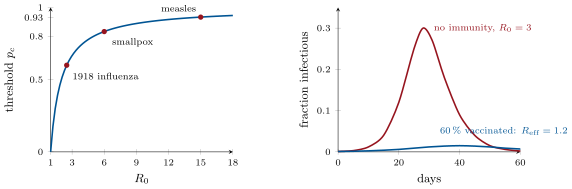
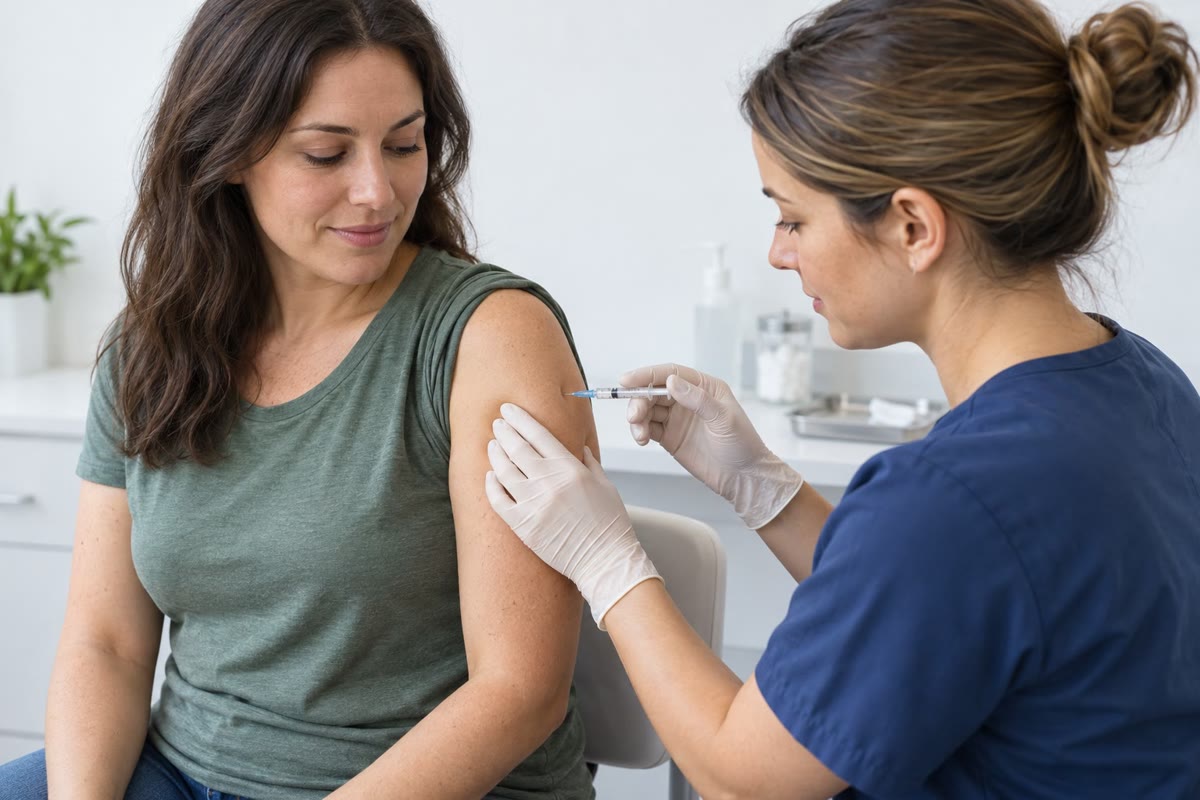
CoachA vaccine presents antigens of a pathogen, with an adjuvant or in a form that triggers innate receptors, so that the recipient acquires memory cells and antibodies without the disease (Chapter 13 lists the kinds). Its efficacy is the fraction of vaccinated people protected. Protection extends beyond the vaccinated: a pathogen spreading in a population where each case infects others on average when all are susceptible — the basic reproduction number — infects only times the susceptible fraction when some are immune, and dies out when that number falls below one. This is herd immunity: above a threshold of immune people the chain of transmission breaks and the unvaccinated — infants, the immunocompromised, those in whom the vaccine failed — are protected by the others.
Examples
Example 16.12 (Measles and smallpox)
Measles has : , and with a vaccine of efficacy after two doses the coverage needed is — which is why measles returns wherever vaccination slips a few per cent, and why an unvaccinated child in a well-vaccinated country is nonetheless safe. Smallpox had –, a threshold near –, no animal reservoir, no asymptomatic carriers and a vaccine that worked in one dose: eradicable, and eradicated. Polio is nearly there. Influenza and the coronaviruses, whose antigens drift (Chapter 13) and whose immunity wanes, are not. In an unvaccinated population an epidemic with infects, by the final-size relation, of people; with , .
Example 16.7 (Kinetics of a response)
About one B cell in binds a given epitope, so a body’s B cells hold some precursors, of which perhaps a hundred meet the antigen in the draining node. Dividing every eight hours, a hundred cells become in a week. Antibody appears in the serum after four to six days, IgM first, peaks at about two weeks and declines with a half-life of three weeks for IgG as the short-lived plasma cells die, settling at the level the long-lived marrow plasma cells maintain for years. A second exposure starts from – memory cells of high affinity already switched to IgG: antibody rises within two days, ten- to a hundredfold higher, and neutralises the pathogen before it can establish itself — which is what a vaccine buys.