 Coach
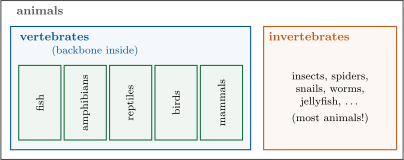
CoachA vertebrate is an animal with an inner skeleton built around a backbone — like the spine you felt in Example 17.2. An animal without a backbone is an invertebrate: insects, spiders, snails, worms, jellyfish — the vast majority of all animals.
Examples
Example 21.2 (The cat’s addresses)
One cat, several nested addresses: the cat is a mammal (fur, milk for the young); every mammal is a vertebrate (a skeleton with a backbone inside); every vertebrate is an animal. Cat inside mammals, mammals inside vertebrates, vertebrates inside animals: each box sits inside a bigger one.
Example 21.5 (Sorting a zoo delivery)
Six crates arrive: a python (dry scaly skin, shelled eggs — reptile), a toad (moist bare skin — amphibian), a penguin (feathers — bird), a shark (fins and gills — fish), a dolphin (milk for its calf — mammal), and a crate of giant snails (no backbone at all — invertebrates, in no vertebrate class whatever).
Example 21.9 (A new species arrives)
Naturalists still discover animals never seen before. When a new bat-like animal is found with fur and milk, it goes straight into the mammals — and at once biologists expect a backbone, a four-chambered heart and warm blood, before any of it is checked. The classification pays out predictions.