 Coach
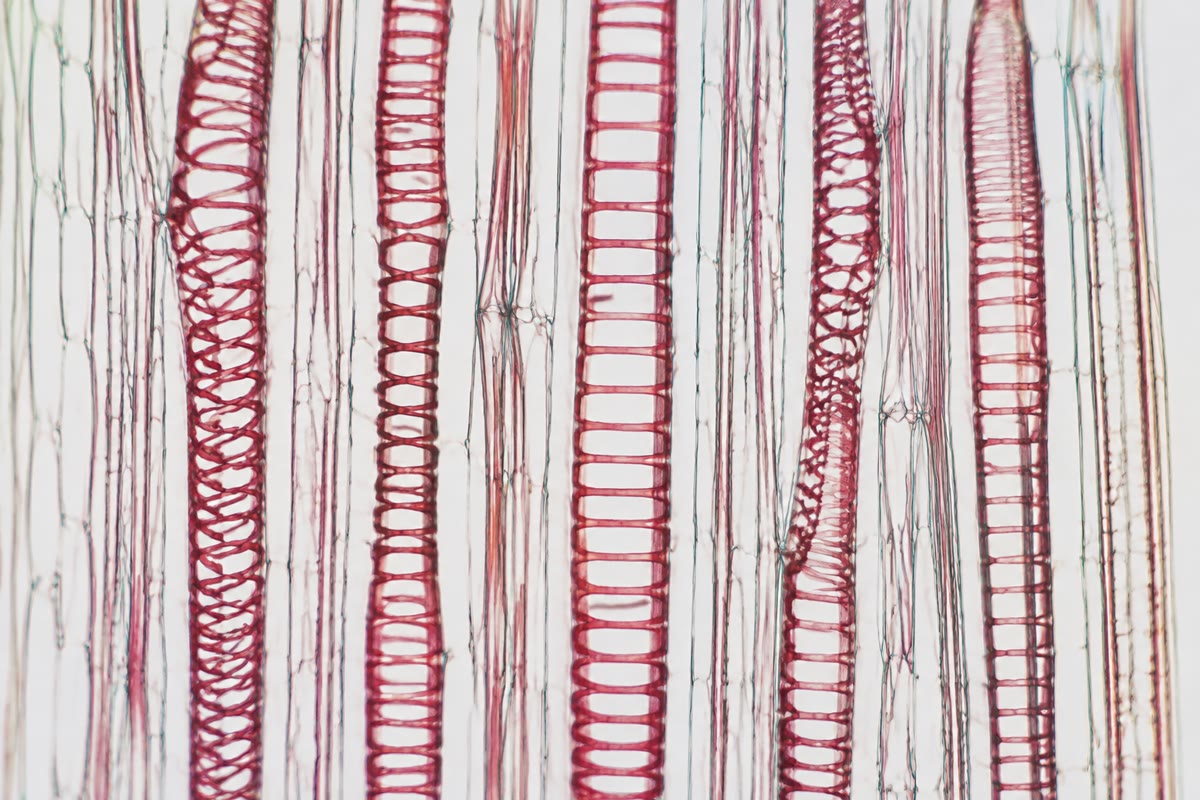
CoachWater travels in the tracheids and vessels of the xylem (Chapter 3): dead cells emptied of their contents, their lignified walls thickened in rings and spirals that keep them from collapsing under the tension inside, joined end to end through perforations (vessels) or through pits in their side walls (tracheids). A vessel may be wide and centimetres to metres long: wide tubes carry far more (flow through a tube rises as the fourth power of its radius) but are more vulnerable to cavitation — the sudden formation of a gas bubble in water under tension, which empties the conduit and puts it out of service. Pits between conduits stop bubbles spreading; freezing and drought both cause cavitation, and a tree’s vessels are partly refilled by root pressure in spring or replaced by new wood each year.
Examples
Example 24.5 (The top of the tree)
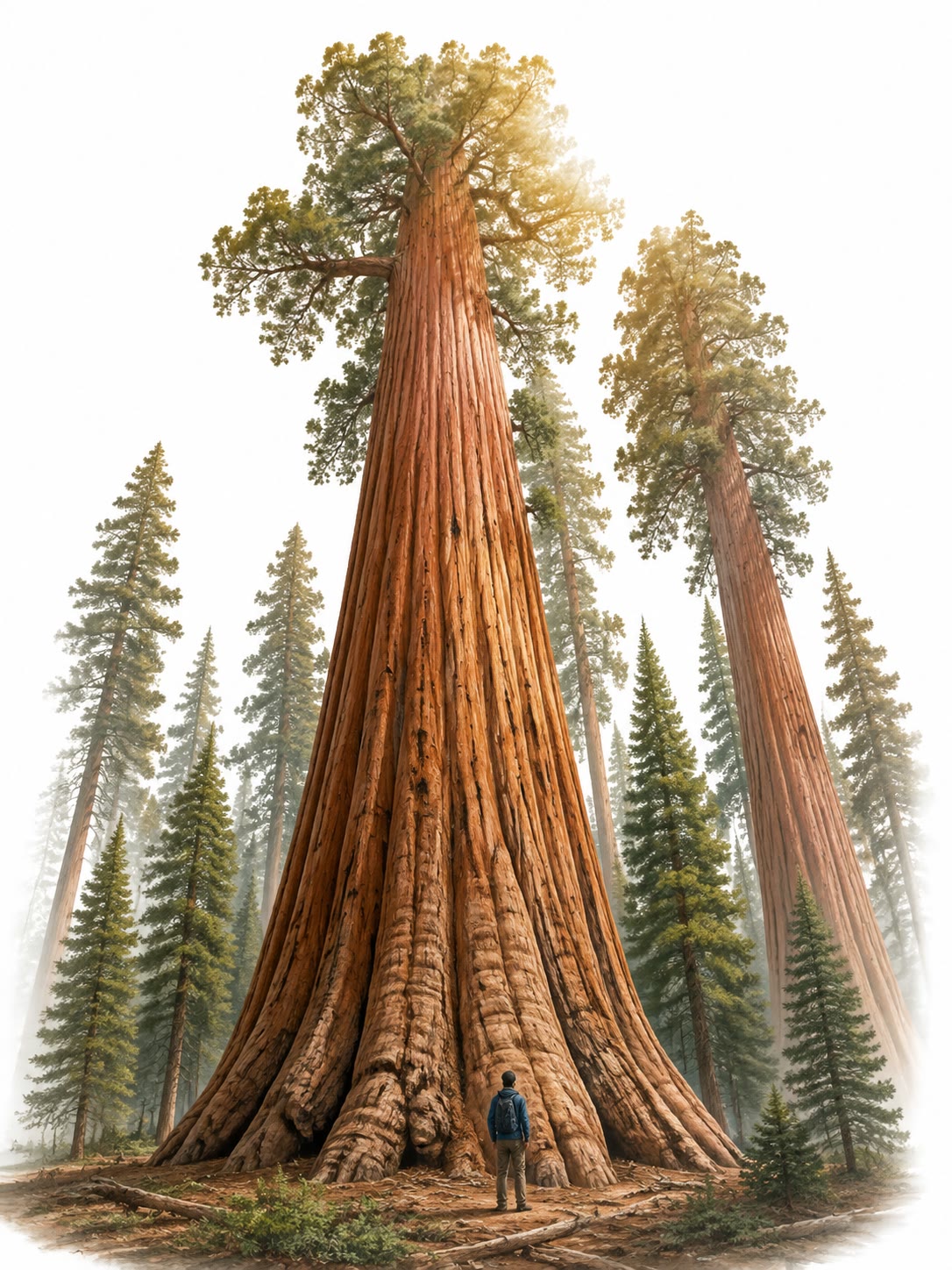
At the column’s weight alone demands of tension; friction in the vessels adds as much again by day, so the xylem at the crown is near and the leaf cells, to draw water from it, lower than that: their stomata must close earlier in the day and their photosynthesis is slower than a low branch’s, and the leaves at the top are small and thick. The height of the tallest trees, some , is probably set by this: above it, the leaves cannot keep the tension without cavitating on a dry afternoon.