
সব বই

পেশাদার

1 Markets I: The Ecosystem and Exchange-Traded Marketsবাজার অনলাইন 2 Markets II: Rates, FX and Creditবাজার অনলাইন 3 Markets III: Commodities, Energy and Cryptoবাজার অনলাইন 4 Quantitative Methodsপদ্ধতি অনলাইন 5 Derivatives and Volatilityডেরিভেটিভস অনলাইন 6 Rates, Credit, XVA and Riskসুদহার, ঋণ ও ঝুঁকি অনলাইন 7 Research Craft: Predictors, Backtests, Measurement, Portfoliosগবেষণা অনলাইন 8 Strategies I: Equities and Futuresকৌশল অনলাইন 9 Strategies II: Volatility, Relative Value, Macro and the Bank Desksকৌশল অনলাইন 10 Microstructure and Executionএক্সিকিউশন অনলাইন 11 Market Making and High-Frequency Tradingমার্কেট মেকিং অনলাইন 12 Machine Learning for Marketsমেশিন লার্নিং অনলাইন 13 Low-Latency Softwareপ্রযুক্তি অনলাইন 14 Networks, Hardware and Trading Infrastructureপ্রযুক্তি অনলাইন 15 Research, Data and Risk Platformsপ্রযুক্তি অনলাইন 16 The Desk and the Firmপ্রতিষ্ঠান অনলাইন 17 The Industry: Firms, Roles and Careersক্যারিয়ার অনলাইন 18 Interviews I: Maths, Probability and Speedক্যারিয়ার অনলাইন 19 Interviews II: Markets, Trading Games and the Final Roundক্যারিয়ার অনলাইন 20 Interviews III: Codeক্যারিয়ার অনলাইন
অ্যাপ পরিচিতি Coach সাইন ইন পড়া শুরু করো

বইগুলো এখনো বাংলা ভাষায় পাওয়া যায় না — ইংরেজি সংস্করণ দেখানো হচ্ছে।

Biology · পরিভাষা

Apomixis কী?

Definition 7.5 University Biology — Year 2 · অধ্যায় 7 — Asexual Reproduction and Cloning in Plants

Apomixis is the production of seeds without fertilisation: an embryo develops from an unreduced egg cell (the megaspore mother cell skips meiosis) or directly from a cell of the nucellus, and the seed carries the mother’s genotype. Dandelions, hawkweeds, blackberries, Kentucky bluegrass and many citrus do this; the citrus seed often holds several embryos, one sexual and the rest nucellar copies of the mother. Apomixis keeps the seed — its dispersal, dormancy and coat — and drops the meiosis, so that a well-adapted genotype is broadcast unchanged; most apomicts are polyploids of hybrid origin whose meiosis would fail anyway. The animal counterpart is parthenogenesis, development from an unfertilised egg: obligate in some lizards and in bdelloid rotifers, which have had no males for tens of millions of years; cyclical in aphids and water fleas, which multiply parthenogenetically all summer, a female giving birth to live daughters that already carry their own embryos, and switch to a sexual generation in autumn that lays overwintering eggs.
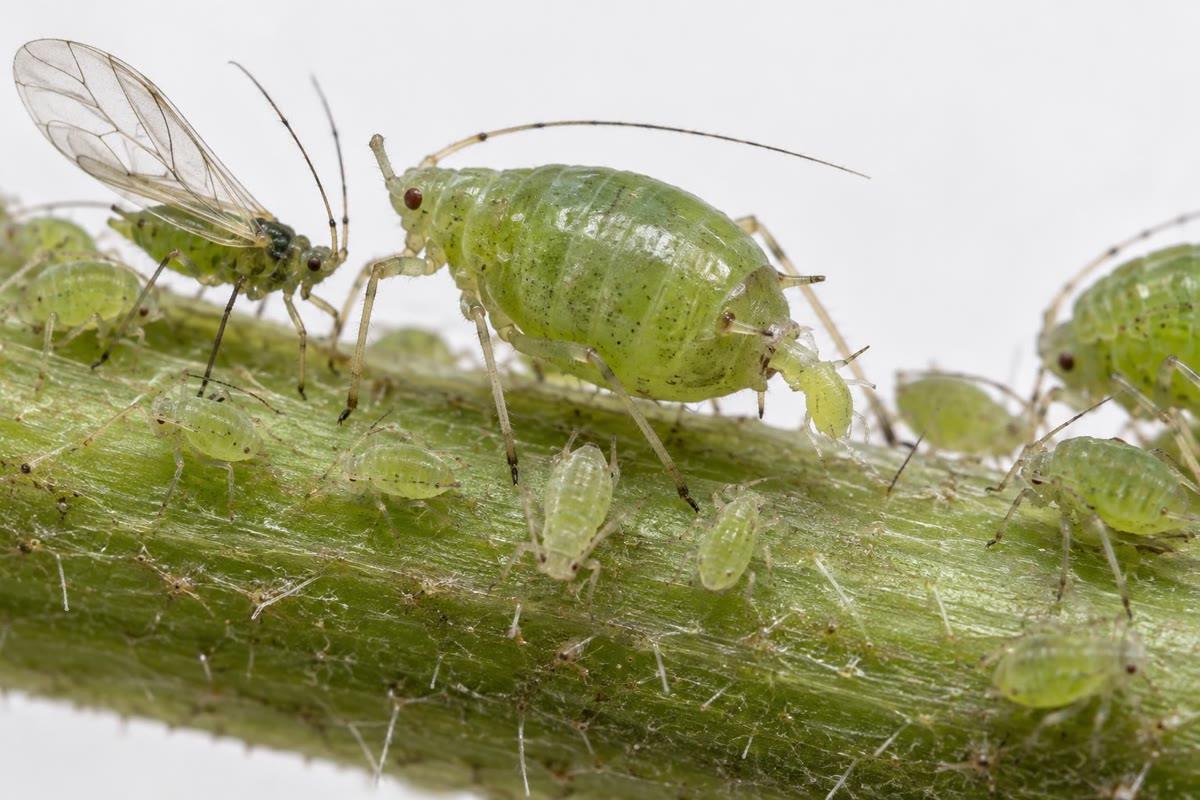
Aphids on a stem: a wingless parthenogenetic female giving birth to a live daughter, nymphs of several ages, and a winged migrant — a summer’s exponential growth without a single male.

উদাহরণ

Example 7.6 (An aphid summer)

A parthenogenetic aphid matures in about eight days and produces some five daughters a day for two weeks; the daughters are born already pregnant (the embryos begin developing inside the mother’s embryos). With a generation time near ten days and a net rate of increase of about 5050 per generation, a single founder in April could, unchecked, leave 5012≈2×102050^{12} \approx 2\times 10^{20} descendants within four months — more in mass than every animal now alive. Ladybirds, lacewings, parasitoid wasps, fungi and rain keep the number to a few thousand per plant, and the autumn sexual generation resets the clone into recombined eggs before winter.

প্রসঙ্গসহ পড়ো →