Coach
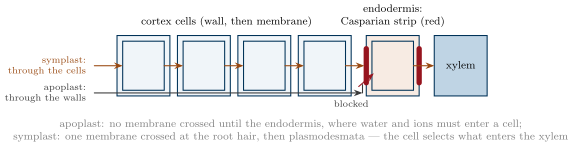
CoachWater and solutes cross the root cortex by two routes: the apoplast, the continuous system of cell walls and intercellular spaces, through which they move without crossing any membrane; and the symplast, the continuous cytoplasm of the cells connected by plasmodesmata (Chapter 6), entered by crossing one plasma membrane. At the inner boundary of the cortex the endodermis (Chapter 3) blocks the apoplast: a band of suberin and lignin, the Casparian strip, impregnates its radial walls, so that everything entering the vascular cylinder must pass through an endodermal cell’s membrane. The membrane’s transporters thus decide what reaches the xylem, and prevent what has been loaded into the xylem from leaking back.