
全部书籍

专业

应用 关于 Coach 登录 开始阅读

书籍暂未推出简体中文版——当前显示英文版。

Biology · 术语表

什么是 Cell fractionation?

又称: homogenate · differential centrifugation · marker enzyme

Definition 5.12 University Biology — Year 1 · 第 5 章 — The Cell: Unit of Life

Cell fractionation separates the components of a cell for study. The tissue is homogenised — cells broken open in a cold, isotonic buffer by grinding or shearing, leaving the organelles intact — and the homogenate is subjected to differential centrifugation: a series of spins of increasing force and duration, each of which pellets the largest and densest particles remaining in suspension. Each fraction is identified by its appearance under the electron microscope and by marker enzymes, activities known to reside in one compartment only.
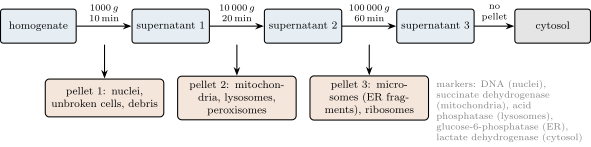
Differential centrifugation of a homogenate. Each spin pellets what is larger or denser than the previous one left in suspension: nuclei first, then mitochondria, then the fragments of membranes, and finally the soluble cytosol. Marker enzymes tell which organelle went where.
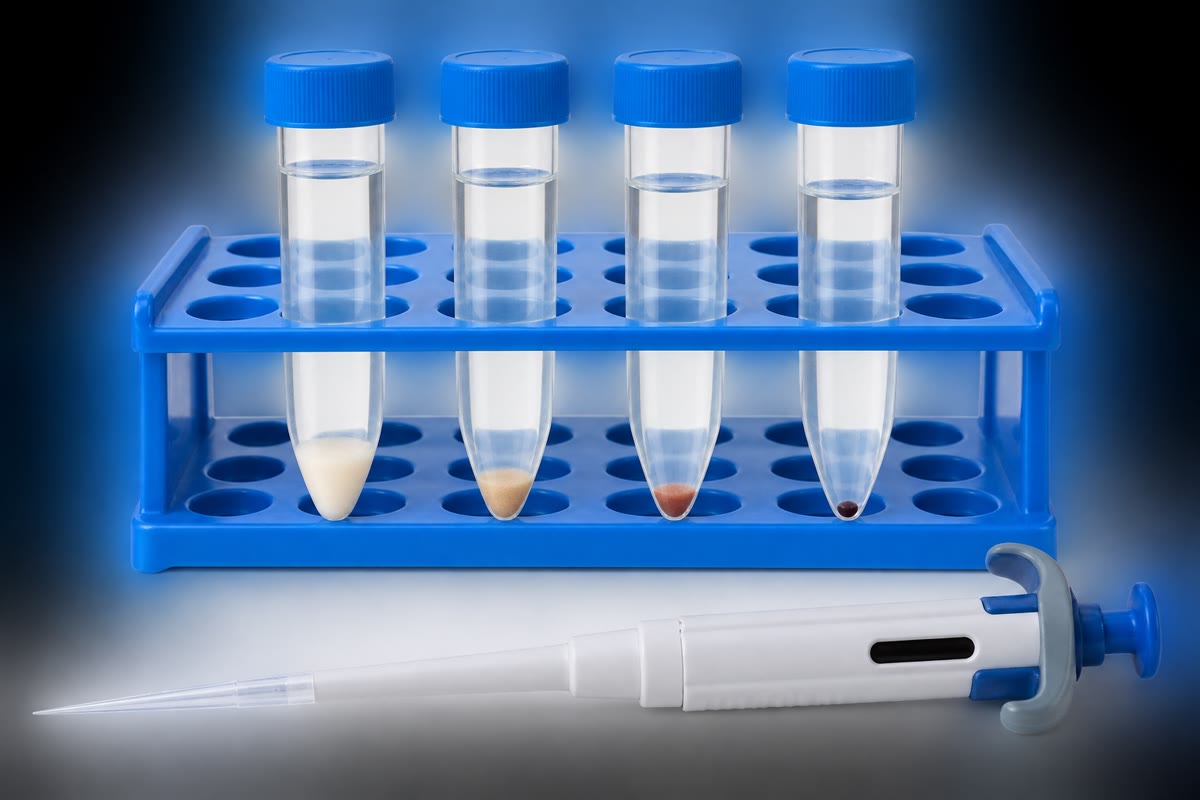
Fractions after successive spins: the pellets of nuclei, mitochondria and microsomes, each under its cleared supernatant.
在原文中阅读 →