
সব বই

পেশাদার

1 Markets I: The Ecosystem and Exchange-Traded Marketsবাজার অনলাইন 2 Markets II: Rates, FX and Creditবাজার অনলাইন 3 Markets III: Commodities, Energy and Cryptoবাজার অনলাইন 4 Quantitative Methodsপদ্ধতি অনলাইন 5 Derivatives and Volatilityডেরিভেটিভস অনলাইন 6 Rates, Credit, XVA and Riskসুদহার, ঋণ ও ঝুঁকি অনলাইন 7 Research Craft: Predictors, Backtests, Measurement, Portfoliosগবেষণা অনলাইন 8 Strategies I: Equities and Futuresকৌশল অনলাইন 9 Strategies II: Volatility, Relative Value, Macro and the Bank Desksকৌশল অনলাইন 10 Microstructure and Executionএক্সিকিউশন অনলাইন 11 Market Making and High-Frequency Tradingমার্কেট মেকিং অনলাইন 12 Machine Learning for Marketsমেশিন লার্নিং অনলাইন 13 Low-Latency Softwareপ্রযুক্তি অনলাইন 14 Networks, Hardware and Trading Infrastructureপ্রযুক্তি অনলাইন 15 Research, Data and Risk Platformsপ্রযুক্তি অনলাইন 16 The Desk and the Firmপ্রতিষ্ঠান অনলাইন 17 The Industry: Firms, Roles and Careersক্যারিয়ার অনলাইন 18 Interviews I: Maths, Probability and Speedক্যারিয়ার অনলাইন 19 Interviews II: Markets, Trading Games and the Final Roundক্যারিয়ার অনলাইন 20 Interviews III: Codeক্যারিয়ার অনলাইন
অ্যাপ পরিচিতি Coach সাইন ইন পড়া শুরু করো

বইগুলো এখনো বাংলা ভাষায় পাওয়া যায় না — ইংরেজি সংস্করণ দেখানো হচ্ছে।

Biology · পরিভাষা

Chromosome, chromatid, karyotype কী?

অন্য নাম: chromatid · centromere · karyotype

Definition 12.4 High School Biology · অধ্যায় 12 — The Cell Cycle and Mitosis

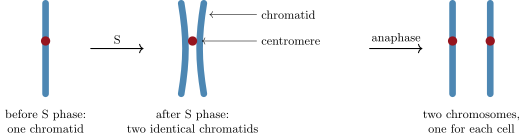
A chromosome is one DNA molecule with its packing proteins. Between divisions it is a loose, invisible thread; at the start of mitosis it coils into a compact rod visible under the light microscope. After replication each chromosome consists of two identical chromatids, joined at the centromere: the familiar X shape. The karyotype of a species is its complete set of chromosomes, photographed at metaphase and arranged in pairs by size: a human cell has 46, in 23 pairs, the members of a pair being homologous — same genes at the same positions, one from each parent.
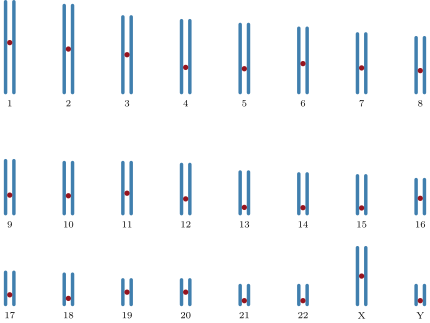
A human karyotype, schematically: the 22 pairs of ordinary chromosomes numbered by decreasing size, then the sex chromosomes — X and Y here, so a male. Each chromosome is drawn as its two chromatids, the centromere in red.
One chromosome through the cycle. Replication turns it into two chromatids joined at the centromere; anaphase separates them into two single-chromatid chromosomes, one for each daughter cell. The count of chromosomes changes only at anaphase.

উদাহরণ

Example 12.8 (Human numbers)

A human cell in metaphase holds 46 chromosomes and 92 chromatids; in anaphase, 92 chromosomes, 46 moving to each pole; each daughter, 46 chromosomes of one chromatid each, containing exactly the DNA the mother had at the start of its cycle.

প্রসঙ্গসহ পড়ো →