 Coach
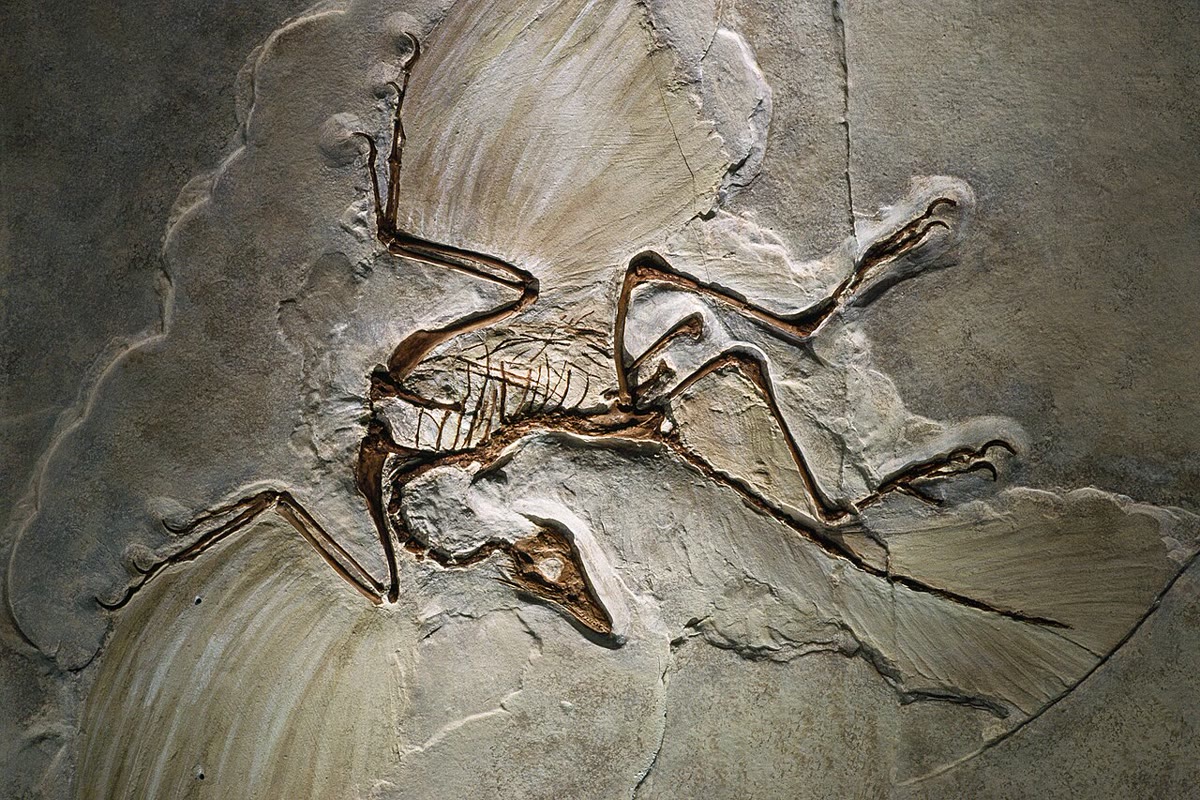
CoachA fossil is a preserved trace of past life — shell, bone, leaf-print, footprint — sealed in sedimentary rock. Rock layers stack in time order, oldest lowest; reading upward reads history. Fossils are the remains half of Definition 37.1’s inventory, kept for millions of years.
Examples
Example 67.3 (The whale series)
The whale’s dossier, filled by rocks: successive fossils, in time order, run from a wolf-sized fourlegged shore mammal, through forms with shrinking legs and strengthening tails, to legless full swimmers — while today’s whale still builds tiny hidden hip-and-leg bones (Example 44.3 noted the vestiges) and still nurses, breathes air and grows fetal hair. Prediction, fossils, vestiges: three keys, one lock.