 Coach
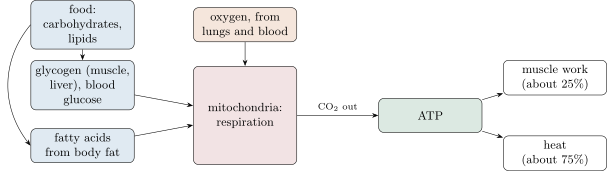
CoachGlycogen is the animal form of stored carbohydrate: a branched chain of glucose units, held as granules in the muscle cells (about in an adult) and in the liver (about ). Muscle glycogen fuels the muscle that stores it; liver glycogen is broken down into glucose released into the blood, keeping the blood glucose near for the brain and the other tissues. Fat, stored in adipose cells, is the far larger reserve (Chapter 1), but it can be burned only slowly and only with oxygen.
Examples
Example 7.9 (The marathon wall)
Running consumes about per kilogram of body mass per kilometre; a runner spends , and a marathon costs . The glycogen stores hold about . If the runner burns glycogen too fast, the stores run out around the thirtieth kilometre; the muscles must then rely on fat, which supplies energy at barely half the rate, and the pace collapses — "hitting the wall". Trained runners burn a larger share of fat from the start, and eat carbohydrate during the race.
Example 7.11 (An hour of cycling)
One hour at on the pedals: metabolic power about , energy ; oxygen , i.e. — consistent with the curve. If half comes from carbohydrate: of glucose or glycogen, and of fat.