 Coach
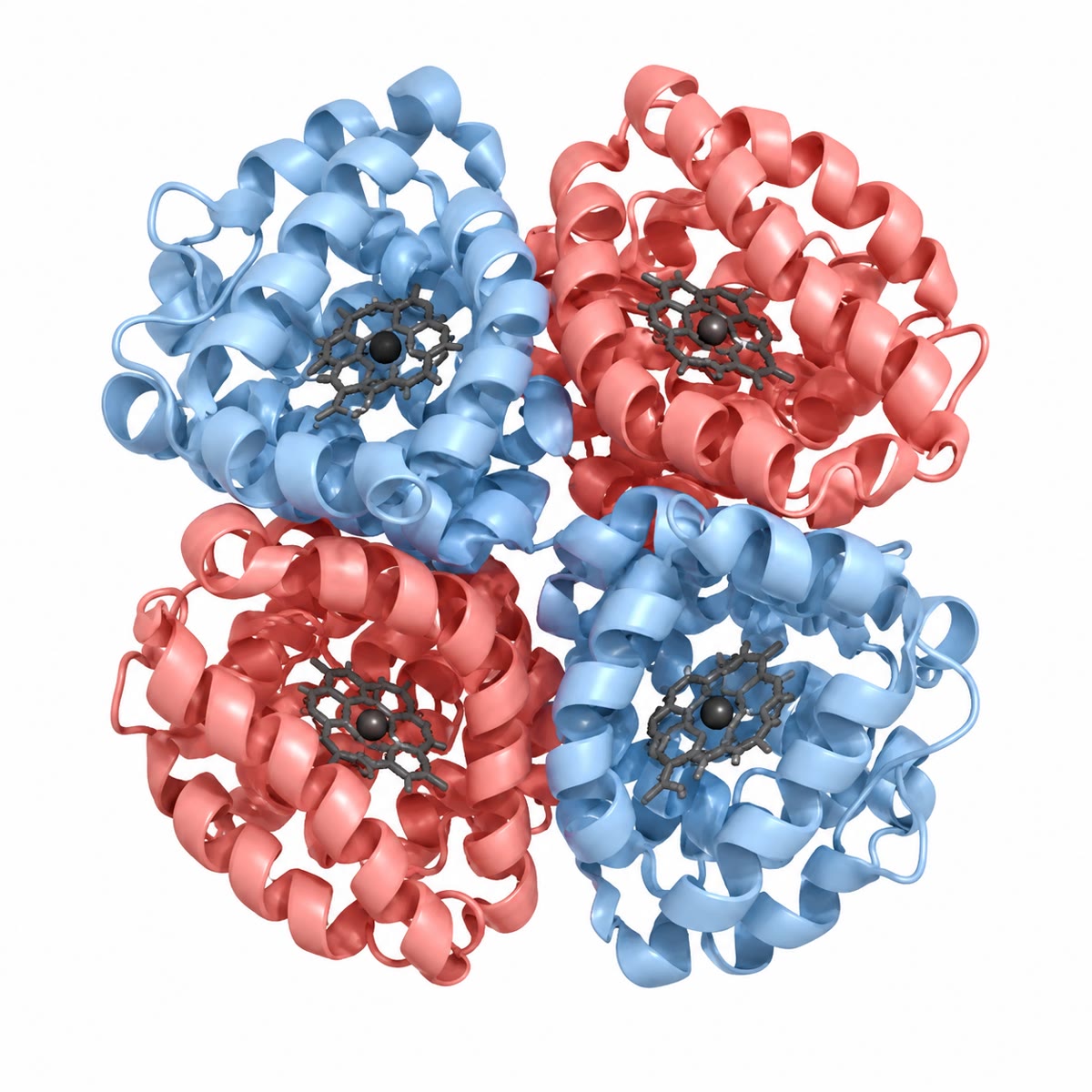
CoachThe tertiary structure is the complete three-dimensional arrangement of one polypeptide: its helices, sheets and loops packed together, often in several compact domains that fold independently. It is held by non-covalent forces — the hydrophobic effect burying non-polar side chains in a core away from water, hydrogen bonds, salt bridges between charged side chains, van der Waals packing — and sometimes by disulfide bridges, covalent S–S bonds between two cysteines, in proteins secreted to the oxidising outside. The quaternary structure is the assembly of several polypeptides (subunits) into one protein: haemoglobin is two and two chains. Globular proteins are compact and water-soluble (enzymes, carriers); fibrous proteins are extended and insoluble (collagen’s triple helix, the coiled coils of keratin and myosin, silk).
Examples
Example 12.15 (Reading a gel)
A crude extract shows dozens of bands; after affinity chromatography one band remains at the position of the marker. Run without SDS and without reducing agent, the same protein migrates as a species: it is a dimer of two identical chains held by a disulfide bridge, which the reducing agent breaks and the detergent separates. Two gels, one line of reasoning, and the quaternary structure is known.