Biology · Glossary

What is Horizontal gene transfer?

Definition 3.7 University Biology — Year 2 · Chapter 3 — Mutations and Genome Diversification

Prokaryotes acquire genes from cells that are not their parents by three routes. Transformation: a cell takes up naked DNA from its surroundings (released by dead cells) and recombines it into its chromosome; some species are naturally competent, and it is the route by which pneumococci exchange capsule genes. Conjugation: a donor carrying a conjugative plasmid (the F factor of E. coli) builds a pilus, draws a recipient close, and passes a single strand of the plasmid through a pore while replicating it by the rolling circle; if the plasmid has integrated into the chromosome (an Hfr strain), chromosomal genes are transferred in order behind it, and the time at which each enters maps the chromosome. Transduction: a bacteriophage packages a piece of host DNA by mistake and injects it into the next cell it infects. Together these routes move resistance genes between species within hospitals in years, and have moved metabolic genes across the whole bacterial tree over geological time, so that a prokaryote’s ancestry is a web as much as a tree (Chapter 24).
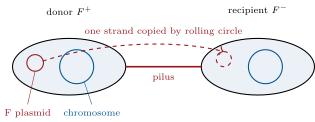
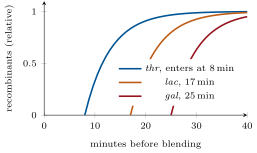
Left: conjugation — the donor passes one strand of its F plasmid through the pilus junction while copying it. Right: the interrupted-mating experiment with an Hfr donor: each chromosomal gene begins to appear among recombinants at a characteristic time, which maps the chromosome in minutes.
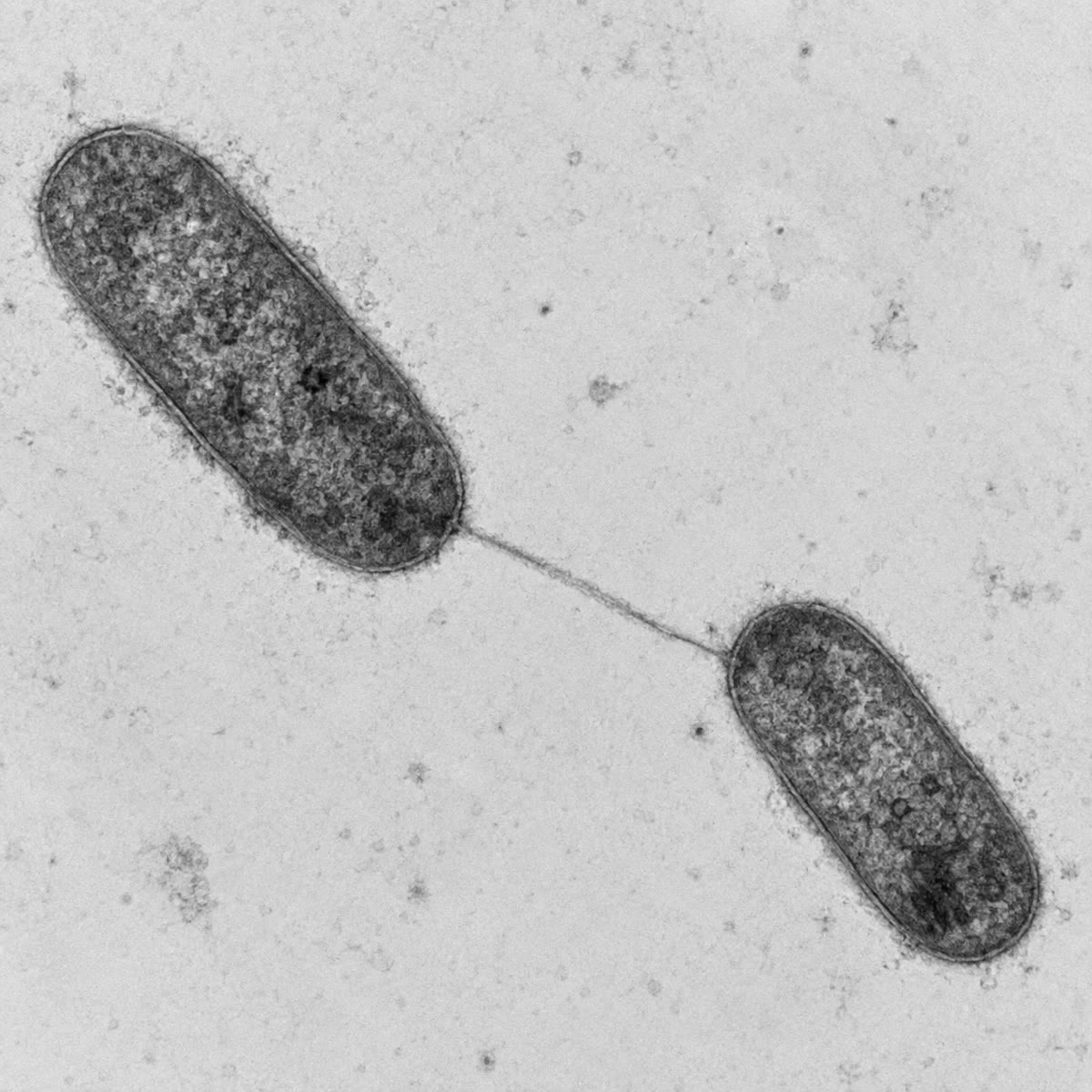
Two bacteria joined by a conjugative pilus, seen by transmission electron microscopy: the bridge along which the plasmid passes.

Examples

Example 3.8 (Resistance on the move)

A resistance gene typically arises once, by mutation or from the soil bacterium that makes the antibiotic, and then travels: from a chromosome onto a transposon, from the transposon onto a conjugative plasmid, from the plasmid across species by conjugation and across strains by transduction, and back into a chromosome by transformation. Plasmids carrying five or six resistances at once (assembled in integrons, which capture gene cassettes) were found in Japan in the 1950s, a few years after the drugs came into use; the gene for the carbapenemase NDM-1, first seen in 2008, reached every continent within three years on a plasmid. The evolution of resistance is mostly not the evolution of new genes but the movement of old ones.
Read in context →
Definition 12.8 University Biology — Year 3 · Chapter 12 — Bacteriology: Growth, Physiology and Genetics

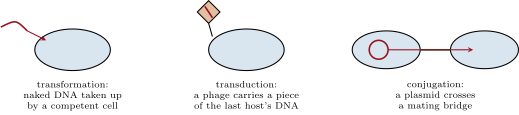
Bacteria reproduce clonally but exchange genes by three routes. Transformation: uptake of naked DNA from the environment by a competent cell — the route by which Griffith’s pneumococci acquired their capsule and Avery showed that the transforming principle was DNA (1944). Transduction: a phage that packages a piece of host DNA and injects it into the next host (Chapter 13). Conjugation: transfer of a plasmid through a pilus and a mating bridge from a donor carrying it to a recipient, demonstrated by Lederberg and Tatum (1946) with auxotrophic strains of E. coli that produced prototrophic recombinants only when mixed. Conjugative plasmids carry their own transfer genes; many also carry resistance genes, often clustered in integrons and flanked by transposons, so that a single mating can transfer resistance to five antibiotics at once, across species. The consequence is that a bacterial species has a core genome shared by all strains and an accessory genome that varies — a pangenome: two E. coli strains may differ by a fifth of their genes, and pathogenic strains differ from harmless ones mainly by acquired islands of virulence genes. The genes of the Year 2 volume’s mutation chapter arise by mutation; the genes of this one mostly arrive.

The three routes of horizontal transfer. Genes for resistance, virulence and metabolism move between cells — and between species — faster than mutation could make them.
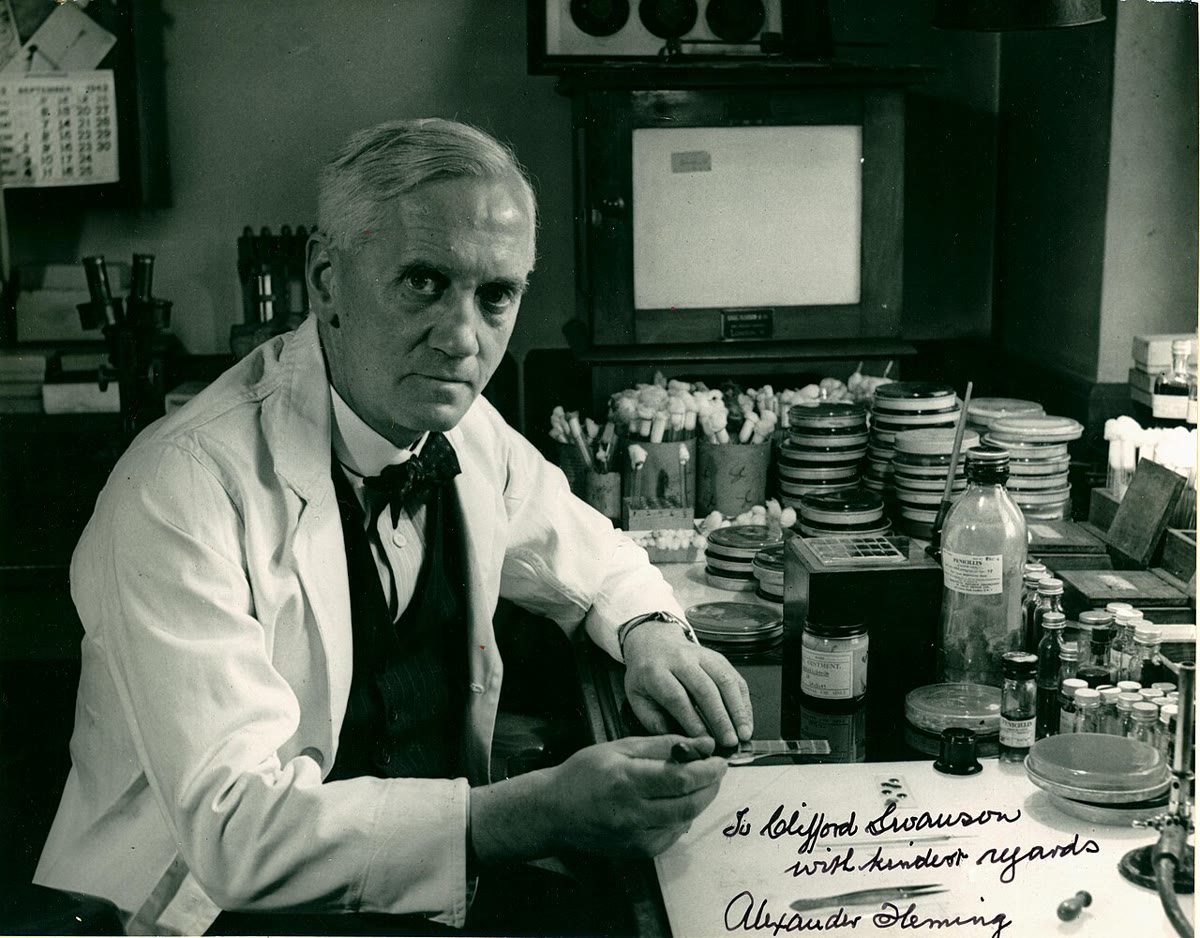
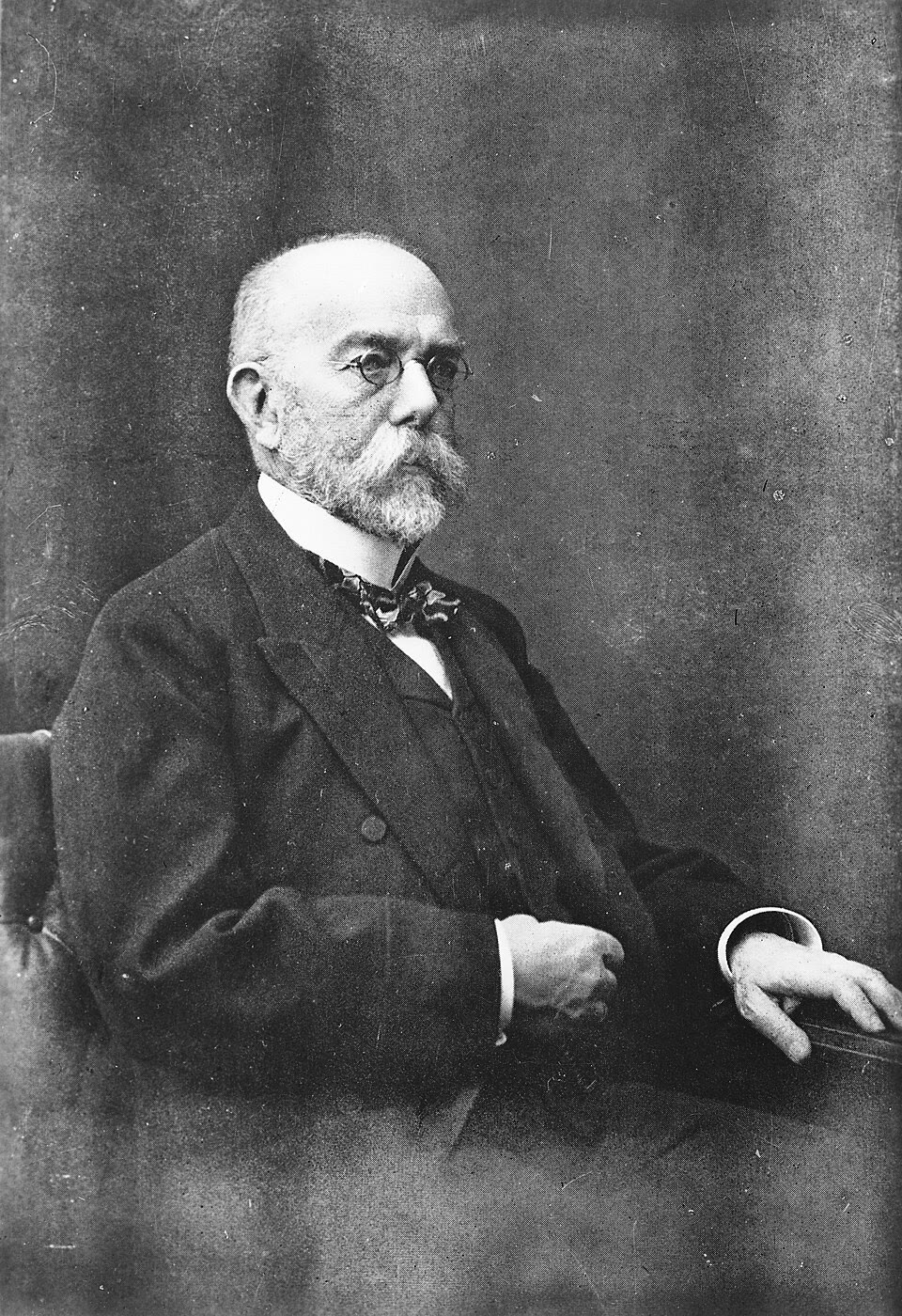
Robert Koch, who proved that particular bacteria cause particular diseases and invented the methods for growing them (Wellcome Collection, CC BY 4.0). Right: Alexander Fleming in his laboratory with plates of the mould whose product became penicillin (U.S. Navy archive, public domain). Robert Koch, who proved that particular bacteria cause particular diseases and invented the methods for growing them (Wellcome Collection, CC BY 4.0). Right: Alexander Fleming in his laboratory with plates of the mould whose product became penicillin (U.S. Navy archive, public domain).
Robert Koch, who proved that particular bacteria cause particular diseases and invented the methods for growing them (Wellcome Collection, CC BY 4.0). Right: Alexander Fleming in his laboratory with plates of the mould whose product became penicillin (U.S. Navy archive, public domain).
Read in context →