 Coach
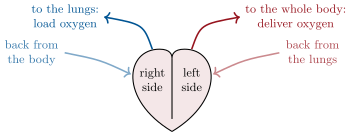
CoachThe heart is a hollow muscle, about the size of its owner’s fist, in the middle of the chest behind the rib cage. By squeezing — a beat — it drives the blood through the vessels. It has two sides: the right side pumps blood to the lungs to load oxygen; the left side pumps the oxygen-rich blood to the whole body.

Examples
Example 27.7 (The heart keeps up with the legs)
Running, your leg muscles burn nutrients and oxygen fast; the deliveries must speed up. So the heart beats faster and harder — a child’s pulse can pass in a sprint — while breathing quickens to reload the blood (Example 26.6). Heart and lungs are two halves of one supply chain.
Example 27.2 (One delivery round)
Follow a drop of blood: through the lungs it turns bright red, loaded with oxygen; the heart sends it out; in a running leg muscle it hands over oxygen and nutrients, takes on carbon dioxide, and darkens; back at the heart, it is sent to the lungs to unload and reload — and out again. A full round takes well under a minute.