Coach
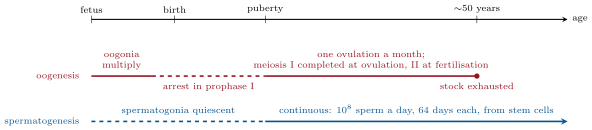
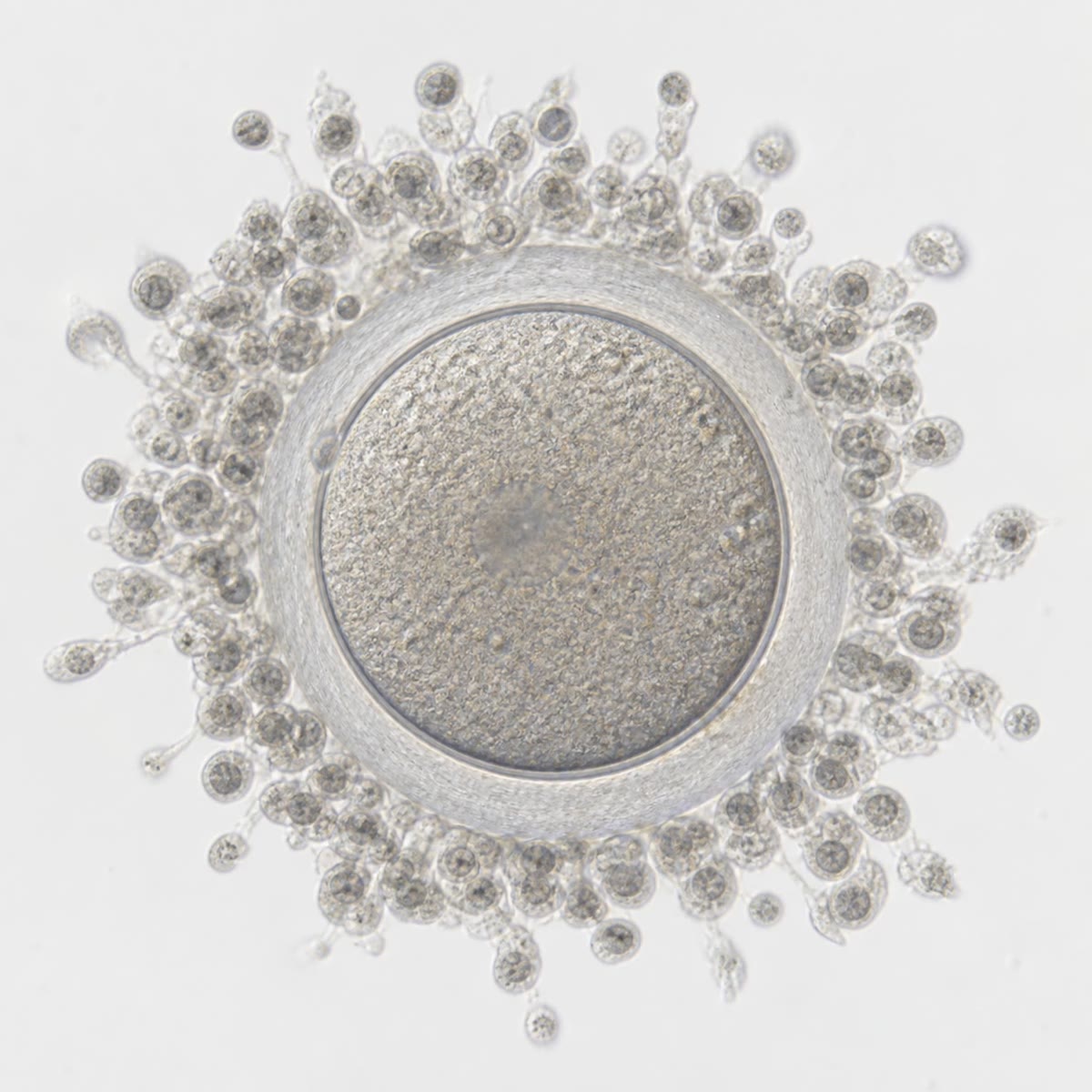
CoachOogenesis is the mirror image of spermatogenesis in almost every respect. The oogonia multiply only in the fetus: by birth a girl carries a stock of about a million primary oocytes, each arrested in prophase I of meiosis and wrapped in a single layer of cells — a primordial follicle — and no new ones are ever made. From puberty, each month a cohort of follicles grows: the oocyte enlarges, the surrounding granulosa cells multiply into layers, an outer theca forms, a fluid-filled cavity opens (the Graafian follicle, two centimetres across), and usually a single one reaches ovulation: the oocyte, only now completing meiosis I and arresting again in metaphase II, is expelled with its halo of granulosa cells into the oviduct. The emptied follicle becomes the corpus luteum, a temporary gland of progesterone. Meiosis produces one egg and three minute polar bodies — all the cytoplasm goes to one cell — and meiosis II is completed only if a sperm enters. Of the million oocytes, about are ovulated in a lifetime; the rest degenerate (atresia), and when the stock is exhausted, around fifty, cycles stop: the menopause.