 Coach
CoachAn electrolysis is a redox reaction forced by an electrical generator, in the direction opposite to the one it would take by itself. An accumulator is a cell that can be recharged: during charging, the generator drives its reaction backwards, as an electrolysis.
Examples
Example 47.12 (Water, split)
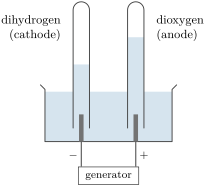
At the cathode: ; at the anode: . For four electrons, two molecules of dihydrogen and one of dioxygen, while the ions and formed at the two electrodes recombine into water: overall , the reverse of the combustion of hydrogen, which needs energy to happen.
Example 47.14 (Refining copper)
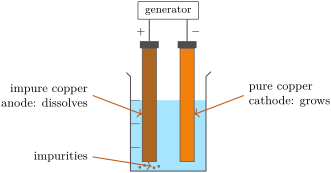
Impure copper from the smelter is made the anode of an electrolysis cell in copper sulfate solution, and a thin sheet of pure copper the cathode. At the anode copper dissolves, ; at the cathode pure copper is deposited, ; the impurities fall to the bottom or stay in solution. A current of for carries , that is , which deposits of copper: .