University Biology — Year 1 · Bachelor Year 1
29Classifying the Living World
About million species have been named, and every year some are added; the number that exist is estimated at nearly million for the eukaryotes alone, and nobody knows how many bacteria. A name is only the beginning: a biologist wants to know which species is closest to which, and the answer is a tree, because the species are related by descent. This chapter gives the rules of naming, the methods by which relationships are inferred from characters — and the criterion, parsimony, by which competing trees are judged — the shape of the tree of life as it is now understood, and the state of the inventory of what lives.
29.1 Species and names
Definition 29.1 (Species)
A species is, under the biological species concept, a group of populations whose members can interbreed and produce fertile offspring and are reproductively isolated from other such groups. The concept cannot be applied to organisms that do not reproduce sexually (most bacteria, many protists and some plants and animals), to fossils, or to populations that never meet; there a species is recognised by its morphology (the morphological concept), by its distinct lineage on a tree (the phylogenetic concept), or by a threshold of genetic divergence. All the concepts try to name the same thing: a lineage evolving separately from others.
Definition 29.2 (Nomenclature and ranks)
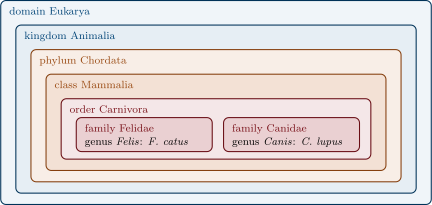
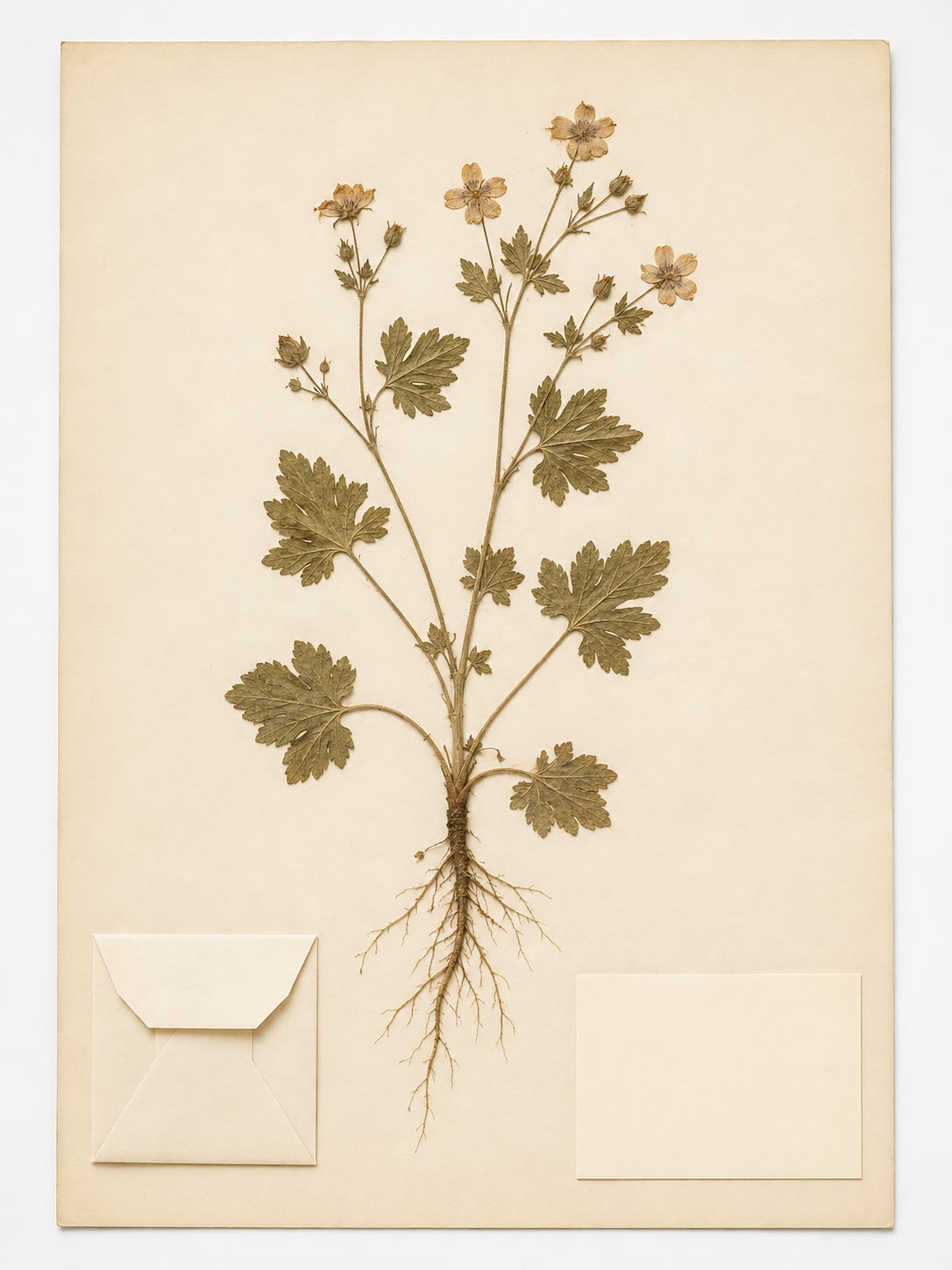
Every species has a binomial name: the name of its genus (capitalised) followed by a specific epithet, both in italics — Homo sapiens, Quercus robur, Escherichia coli — often followed by the author and year of its description. The system, fixed by Linnaeus in 1753 (plants) and 1758 (animals), nests species in a hierarchy of ranks: genus, family, order, class, phylum (or division), kingdom, domain. A group at any rank is a taxon. Each name is tied to a type specimen, deposited in a museum or herbarium, which fixes what the name refers to; the oldest valid name has priority; and the rules are codified so that one organism has one name worldwide. The ranks are conventions — there is no property that all families share and no genus does; only the species is a natural unit.
29.2 Reconstructing relationships
Definition 29.3 (Systematics, phylogeny, cladistics)
Systematics is the study of the diversity of organisms and of the relationships among them; a phylogeny is the tree of those relationships, a hypothesis about the order in which lineages split. Phenetics groups organisms by overall similarity, counting all characters equally; cladistics groups them by shared derived characters only, so that every group is a clade — an ancestor and all of its descendants. Modern classification aims to make every named taxon a clade.
Definition 29.4 (Characters: homology, homoplasy, polarity)
A character is any heritable feature with two or more states (limb present or absent; a given base in a gene A, C, G or T). Two organisms’ characters are homologous when inherited from a common ancestor, homoplastic when similar by convergence or reversal (the wings of birds and bats; the streamlined bodies of dolphins and sharks). A character state is ancestral (plesiomorphic) if present in the group’s ancestor, derived (apomorphic) if it arose within the group; the derived states shared by a clade, its synapomorphies, are the only evidence for it. Polarity is determined by comparison with an outgroup, a taxon known to lie outside the group being studied: the state it shows is taken as ancestral.
Definition 29.5 (Monophyly, paraphyly, polyphyly)
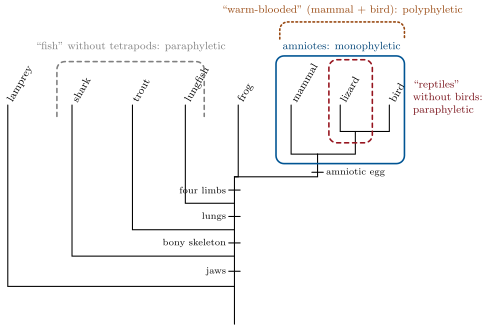
A group is monophyletic (a clade) if it contains an ancestor and all its descendants; paraphyletic if it contains an ancestor and only some of its descendants (the “reptiles”, which exclude the birds descended from them; the “fish”, which exclude the tetrapods; the “invertebrates”); polyphyletic if it groups descendants of different ancestors by a convergent character (the “warm-blooded animals”, birds and mammals; the “algae”). Paraphyletic groups are useful descriptions of grades of organisation but are not clades and are no longer given formal names.
Definition 29.6 (Parsimony)
Among all the trees that could relate a set of taxa, the most parsimonious is the one that requires the fewest evolutionary changes of character state — the smallest tree length, the sum over characters of the minimum number of changes each needs on that tree. A character that fits the tree with one change is consistent with it; one that needs two or more is a homoplasy on that tree. Parsimony is not a claim that evolution is economical; it is the rule that a hypothesis should not multiply convergences beyond what the data force.
Method 29.7 (Building a cladogram from a character matrix)
- Choose the taxa and an outgroup; list characters with their states, coding the outgroup’s state 0 (ancestral) and the derived state 1.
- Group taxa by shared derived states, starting from the character shared by the most taxa (the deepest clade) and nesting inward; each 1 shared by a set of taxa is a candidate synapomorphy for that set.
- Where characters conflict (two groupings cannot both be clades), draw each alternative tree and count its length: for each character, the fewest changes that place its states on the tree.
- Keep the shortest tree; the characters that needed extra changes on it are the homoplasies. If two trees tie, the data do not decide and more characters are needed.
- Read the tree: name the clades, note which traditional groups are paraphyletic, and check that it agrees with independent data (molecular sequences, fossils).
Example 29.8 (Two trees, counted)
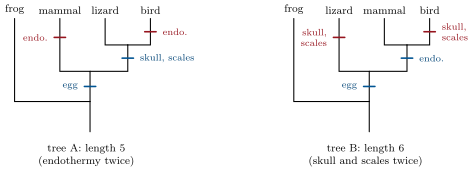
Four taxa: lizard, bird, mammal, frog (outgroup). Characters: amniotic egg (lizard, bird, mammal: 1), diapsid skull (lizard, bird), endothermy (bird, mammal). Tree A, (lizard, bird) then mammal: egg 1 change, skull 1, endothermy 2 (arising twice) — length 4. Tree B, (bird, mammal) then lizard: egg 1, endothermy 1, skull 2 — length 4. A tie; add feathers on the leg scales and epidermal scales (lizard, bird): tree A length 5, tree B length 6. Tree A is preferred, and endothermy is a homoplasy: it evolved twice.
Remark 29.9 (Molecular characters)
A gene sequence supplies hundreds of characters at once, each site a character with four states, comparable across organisms that share no visible feature — a bacterium and an oak. Sequences are aligned, homologous sites compared, and trees built by parsimony or by statistical methods that model the rate of substitution; the molecular clock, the rate at which neutral differences accumulate, dates the splits. The methods, and the pitfalls of long branches and unequal rates, are treated in the Year 2 volume.
29.3 The tree of life
Proposition 29.10 (Three domains)
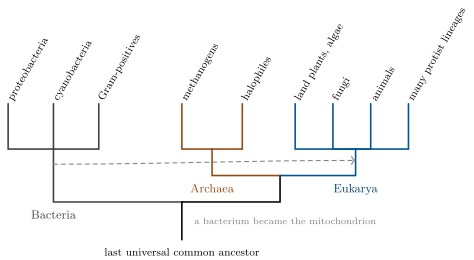
Life divides into three domains: Bacteria, Archaea and Eukarya. Bacteria and Archaea are both prokaryotic in cell organisation (Chapter 5) but differ in their membrane lipids, cell walls, RNA polymerases and ribosomes; the Archaea’s transcription and translation machinery is closer to the eukaryotes’ than to the bacteria’s, and the eukaryotic cell arose from an archaeal lineage that acquired a bacterium as its mitochondrion (Chapter 6). Within the Eukarya the old kingdoms — animals, plants, fungi and a “protist” remainder — are replaced by a handful of major lineages, of which the animals, the fungi and the land plants are three small twigs, and the “protists” a paraphyletic assortment of everything else.
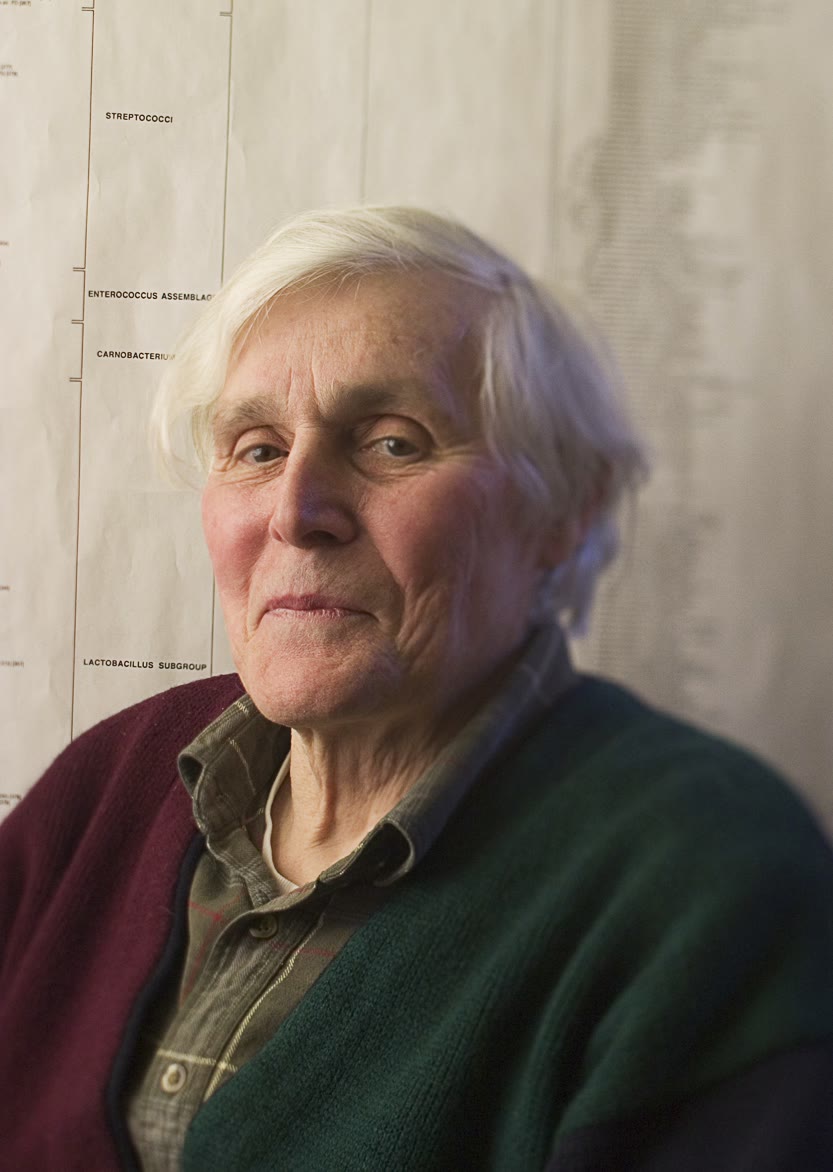
Evidence. Woese and Fox (1977) compared the sequence of the small-subunit ribosomal RNA — a molecule every cell has, of the same function and alignable across all of life — among bacteria, methanogens and eukaryotes, and found that the methanogens differed from the other bacteria as much as either differed from the eukaryotes. The prokaryotes were two groups, not one; the tree drawn from this one gene has been confirmed by whole genomes and by the distinct biochemistry of the Archaea (ether-linked lipids, no peptidoglycan). ∎
Proposition 29.11 (The main eukaryote lineages)
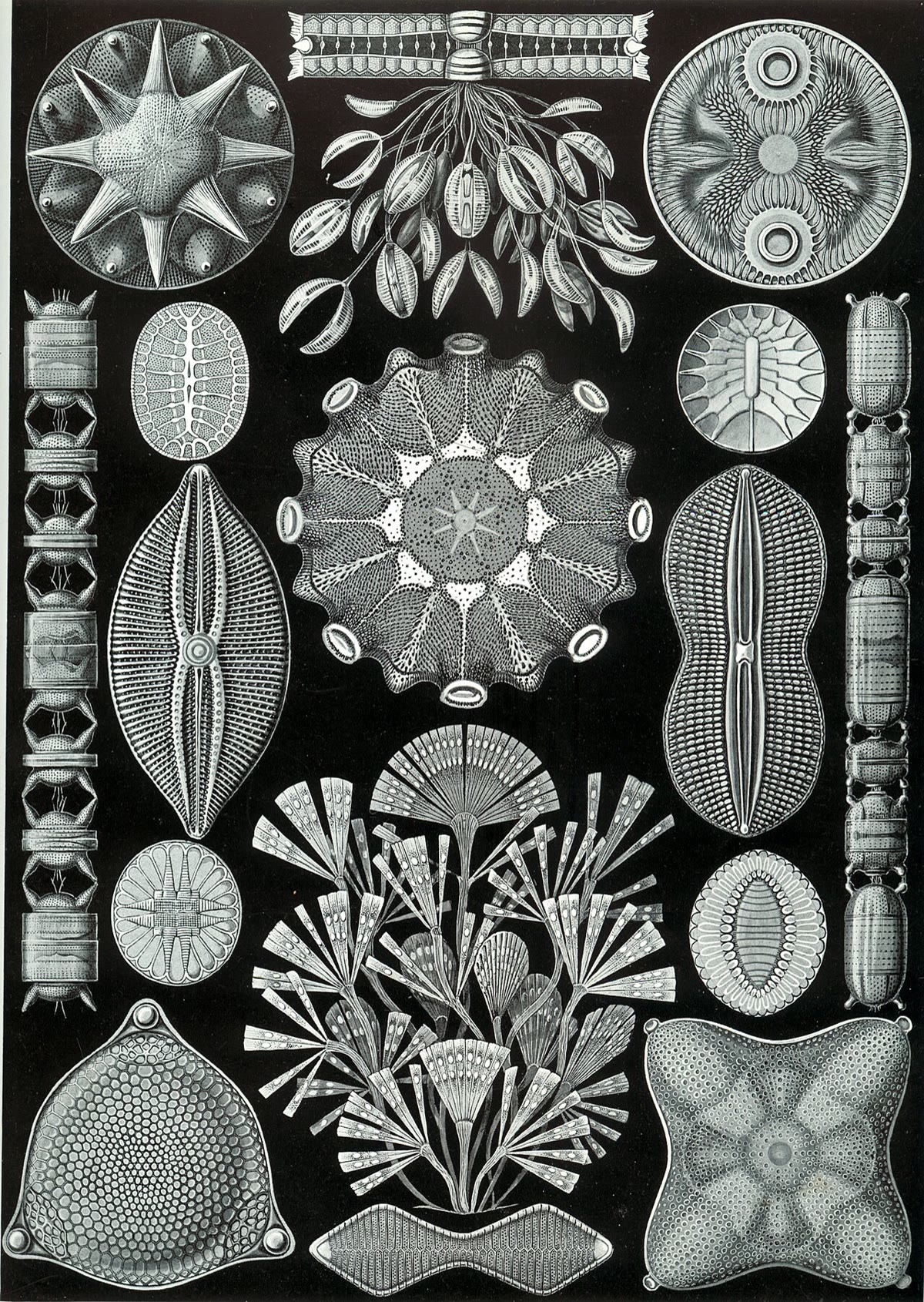
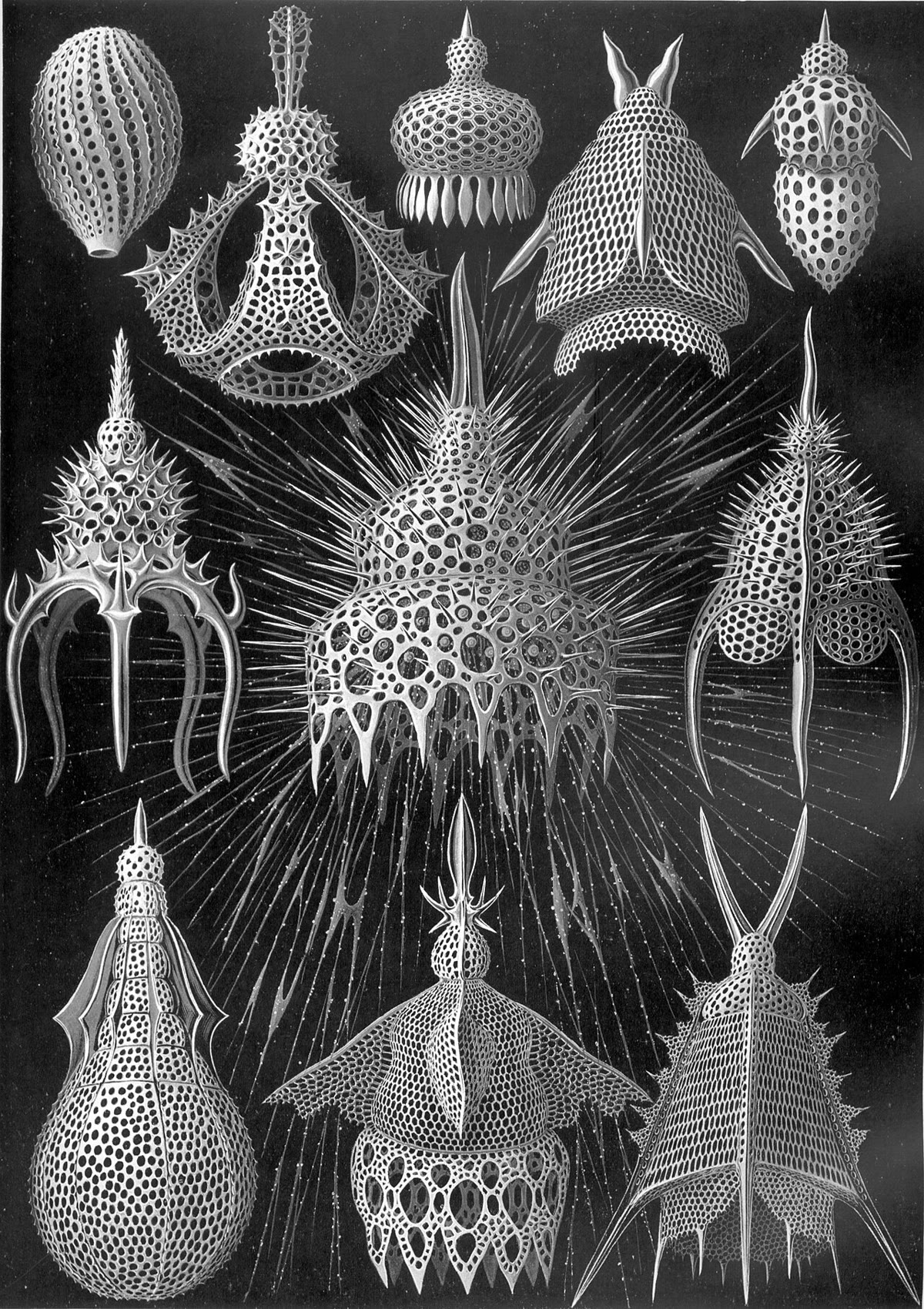
The eukaryotes fall into a few great groups: the opisthokonts (animals, fungi and their unicellular relatives, whose cells swim with one rear flagellum); the Archaeplastida (land plants, green and red algae, with the primary chloroplast); the Amoebozoa; the Excavata (flagellates such as Trypanosoma and Euglena); the SAR group (stramenopiles such as diatoms and brown algae; alveolates such as ciliates, dinoflagellates and the malaria parasite; rhizarians such as foraminifera and radiolarians). Animals and fungi are thus closer to each other than either is to plants; the “algae” are scattered through four groups; and the microscopic majority of eukaryote diversity lies outside the three kingdoms with common names.
29.4 The inventory of life
Definition 29.12 (Biodiversity)
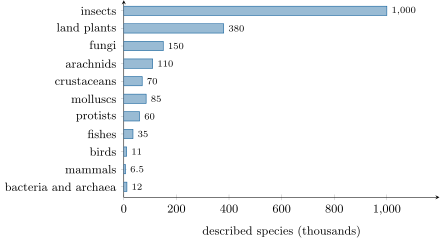
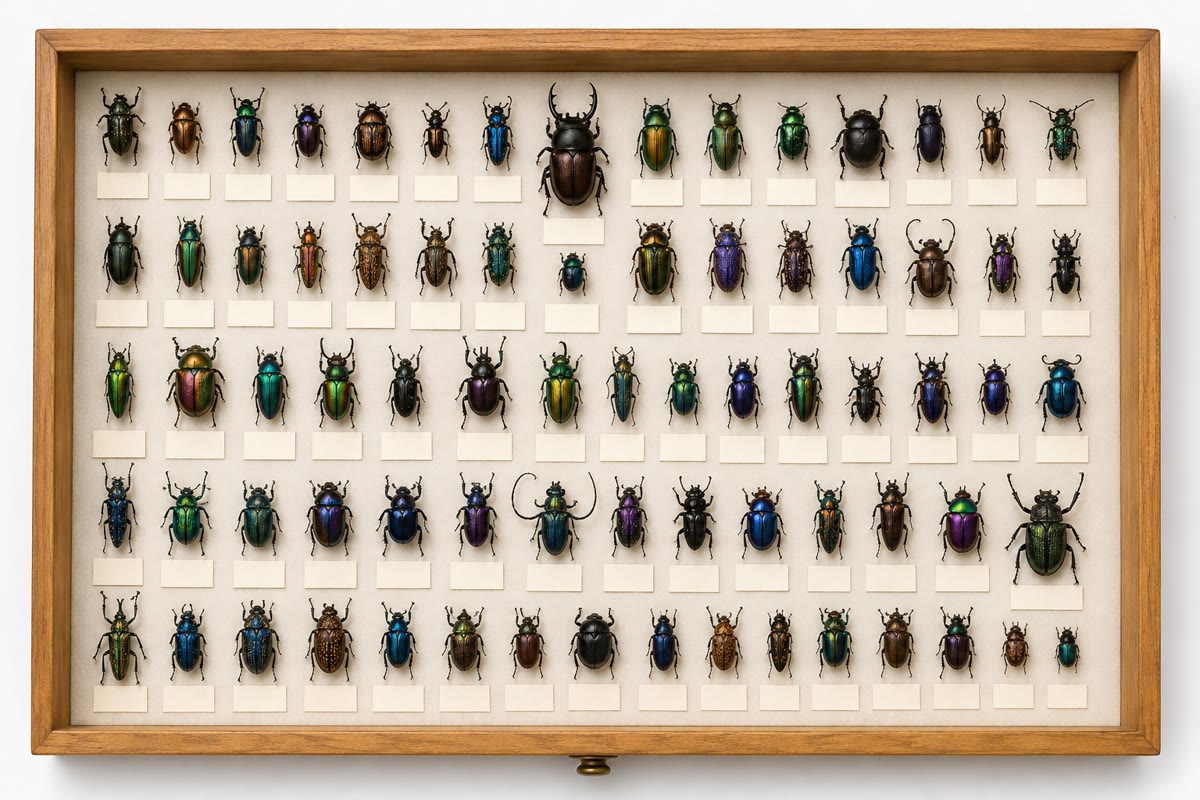
Biodiversity is the variety of life at every level: genetic diversity within species, the number and abundance of species, and the variety of communities and ecosystems. Its inventory is unfinished: some million species have been described, of which a million are insects, plants, fungi, vertebrates and a few tens of thousands each of molluscs, crustaceans, protists and prokaryotes; the number of eukaryote species is estimated, from the rate at which new higher taxa are still being found, at close to million, so that most species are unnamed, and most of those are small, tropical, or both. Species have always gone extinct — the background rate, from fossils, is about one species per million per year — and the present rate, driven by habitat loss, exploitation, invasive species and climate, is estimated at a hundred to a thousand times that.
Method 29.13 (Estimating how many species there are)
- Count the species described in a group and the rate at which new ones are still being added; if the rate is not slowing, the inventory is far from complete.
- Extrapolate from a well-known group to a poorly known one by a ratio: if the temperate faunas hold two insect species per plant species, and the tropics have plants, the tropics hold at least half a million insects.
- Sample intensively a small area (fogging a tropical tree canopy with insecticide, sequencing the DNA of a litre of sea water) and scale up from the fraction of species that are new.
- Use the pattern across ranks: the numbers of phyla, classes, orders and families are nearly complete and rise regularly toward the species level; extrapolating the regularity gives the total (about million eukaryotes).
- Report the estimate with its range; the honest answer for the prokaryotes is a range of several orders of magnitude.
29.5 Exercises
Exercise 29.1 ★
Write the name of the house cat correctly, identify its genus and epithet, and place it in its family, order, class and phylum.
Solution
Solution of Exercise 29.1.
Felis catus: genus Felis, epithet catus; family Felidae, order Carnivora, class Mammalia, phylum Chordata.
Exercise 29.2 ★
Define homology and homoplasy with an example of each, and say which is evidence for a clade.
Solution
Solution of Exercise 29.2.
Homology: similarity by descent from a common ancestor (the forelimb bones of a bat and a human). Homoplasy: similarity by convergence or reversal (the wings of a bat and a bird). Only shared derived homologies are evidence for a clade.
Exercise 29.3 ★
State whether “fish”, “birds” and “warm-blooded animals” are monophyletic, paraphyletic or polyphyletic, with the reason.
Solution
Solution of Exercise 29.3.
“Fish”: paraphyletic (excludes the tetrapods that descend from fish). Birds: monophyletic (all descendants of one feathered ancestor). “Warm-blooded animals”: polyphyletic (birds and mammals got endothermy separately).
Exercise 29.4 ★
Name the three domains and give two features that separate the Archaea from the Bacteria.
Solution
Solution of Exercise 29.4.
Bacteria, Archaea, Eukarya. Archaea have ether-linked membrane lipids and no peptidoglycan; their RNA polymerase and ribosomal proteins resemble the eukaryotes’.
Exercise 29.5 ★★
Why cannot the biological species concept be applied to bacteria or to fossils, and what is used instead?
Solution
Solution of Exercise 29.5.
Bacteria do not interbreed — they divide, and exchange genes across what would be species boundaries — and fossils cannot be tested for interbreeding. Bacteria are delimited by sequence similarity (a threshold on ribosomal RNA or genomes); fossils by morphology.
Exercise 29.6 ★★
Three taxa X, Y, Z and an outgroup. Character 1 is derived in X and Y; character 2 in Y and Z; character 3 in X and Y; character 4 in X and Y. Draw the two possible trees, compute their lengths, and give the most parsimonious one and its homoplasy.
Solution
Solution of Exercise 29.6.
Tree (X,Y),Z: characters 1, 3, 4 one change each, character 2 two changes: length 5. Tree (Y,Z),X: character 2 one change, characters 1, 3, 4 two each: length 7. (X,Y) is preferred; character 2 is the homoplasy.
Exercise 29.7 ★★
Why is an outgroup needed to build a cladogram, and what goes wrong if the outgroup chosen actually belongs inside the group?
Solution
Solution of Exercise 29.7.
The outgroup fixes the polarity of every character: its state is taken as ancestral, so that only the derived states count as evidence. An outgroup that is really inside the group makes some derived states look ancestral and roots the tree in the wrong place, turning clades into paraphyletic groups.
Exercise 29.8 ★★
Explain why animals and fungi are considered closer relatives than animals and plants, and what character the opisthokonts share.
Exercise 29.9 ★★
Woese found that methanogens differ from other bacteria as much as from eukaryotes. Why did this justify a new domain rather than a new kingdom within the bacteria?
Solution
Solution of Exercise 29.9.
A kingdom within the bacteria would imply the methanogens are closer to other bacteria than to eukaryotes; the sequences showed three lineages equally distant from one another, so the prokaryotes were not one group and the deepest division of life was threefold.
Exercise 29.10 ★★★
A tropical tree canopy fogged with insecticide yields 1200 beetle species, of which are specific to that tree species; beetles are of the canopy’s insects, and the canopy holds two thirds of the tree’s insects; there are tropical tree species. Estimate the number of tropical insect species and list the assumptions.
Solution
Solution of Exercise 29.10.
Host-specific beetles per tree species: ; canopy insects specific to the tree: ; whole tree: ; times trees: million. Assumptions: the fogged tree is typical, the specificity is real and not sampling error, beetles are of insects on every tree, and species specific to one tree are not counted twice — each is uncertain by a factor of two or more, and later estimates have fallen toward million.
Exercise 29.11 ★★★
A species is described from a single museum specimen; later, living populations are found that differ slightly. Explain the role of the type specimen in deciding what the name applies to, and why priority matters.
Solution
Solution of Exercise 29.11.
The type specimen is the object the name refers to: the living populations are the same species if they are judged conspecific with the type, and a new species if not; in the second case the old name stays with the type and the new populations need a new name. Priority guarantees that if two names are found to refer to one species, the older is kept, so that names do not multiply or drift with each new opinion.
Exercise 29.12 ★★★
“Parsimony assumes that evolution takes the shortest path.” Discuss: what parsimony does assume, when it fails (convergence, fast-evolving lineages), and how molecular data and fossils are used to check a tree.
Solution
Solution of Exercise 29.12.
Parsimony assumes only that convergences and reversals are rarer than shared descent, so that a tree should not be made to require more of them than the data force. It fails when convergence is common (similar habitats), when characters are correlated (one adaptation counted as many), and when fast-evolving lineages accumulate chance similarities and are drawn together (“long branches attract”). Molecular sequences supply many independent characters and models of substitution to test the same tree; fossils supply the order of appearance of the derived states and dates for the splits; agreement among independent data is the test.
29.6 Problem: Eight Vertebrates and a Tree
Problem 29.1
Weekend problem — a character matrix of eight vertebrates, its cladogram built by hand, two rival trees scored by parsimony, the traditional groups tested for monophyly, and a species-count estimate, ending on the most parsimonious tree and its length
The matrix scores ten characters (1 = derived state present) for a lamprey (outgroup), a shark, a trout, a lungfish, a frog, a lizard, a mouse and a pigeon.
| 1 | 2 | 3 | 4 | 5 | 6 | 7 | 8 | 9 | 10 | |
| jaws | bony skeleton | lungs | four limbs | amniotic egg | hair | feathers | diapsid skull | endothermy | keratin scales | |
| lamprey | 0 | 0 | 0 | 0 | 0 | 0 | 0 | 0 | 0 | 0 |
| shark | 1 | 0 | 0 | 0 | 0 | 0 | 0 | 0 | 0 | 0 |
| trout | 1 | 1 | 0 | 0 | 0 | 0 | 0 | 0 | 0 | 0 |
| lungfish | 1 | 1 | 1 | 0 | 0 | 0 | 0 | 0 | 0 | 0 |
| frog | 1 | 1 | 1 | 1 | 0 | 0 | 0 | 0 | 0 | 0 |
| lizard | 1 | 1 | 1 | 1 | 1 | 0 | 0 | 1 | 0 | 1 |
| mouse | 1 | 1 | 1 | 1 | 1 | 1 | 0 | 0 | 1 | 0 |
| pigeon | 1 | 1 | 1 | 1 | 1 | 0 | 1 | 1 | 1 | 1 |
Part I — Reading the matrix.
- Which characters are shared by all taxa but the outgroup? What do they tell about the tree?
- List the characters in order of the number of taxa that share the derived state, and say which clade each defines.
- Which characters are present in a single taxon? Are they of any use in placing that taxon?
- Which pair of characters conflict with each other, and among which three taxa?
- State the polarity of character 3 (lungs) and explain how the outgroup fixes it.
- How many distinct rooted trees can relate the three amniotes to one another, once the rest of the tree is fixed? Which characters bear on the choice?
Part II — Building the tree.
- Draw the cladogram implied by characters 1 to 5: the nested clades from jaws to the amniotic egg.
- Within the amniotes, draw tree A, in which the lizard and the pigeon are sister taxa, and tree B, in which the mouse and the pigeon are sisters.
- Compute the length of tree A: for each of the ten characters, the minimum number of changes it requires.
- Compute the length of tree B likewise.
- Which tree is most parsimonious, and by how much?
- Name the homoplastic character on the preferred tree and describe its evolutionary interpretation.
- If characters 8 and 10 were removed, what would the two lengths be, and what would you conclude?
Part III — Groups on the tree.
- On the preferred tree, is the group (shark, trout, lungfish) — the “fish” — monophyletic? Which taxon would have to be added?
- Is (lizard, mouse, pigeon), the amniotes, monophyletic? Name its synapomorphy.
- Is (lizard) alone plus the crocodiles and turtles — the traditional “reptiles” — monophyletic once the pigeon is placed? What kind of group is it?
- Is (mouse, pigeon), grouped by endothermy, a clade? What kind of group is it?
- The lungfish is often called a fish. On the tree, is it closer to the trout or to the frog? Which character decides?
- Give the ranks that the three amniotes would occupy in a Linnaean classification, and explain why the ranks convey no information about the depth of their splits.
Part IV — The inventory.
- About vertebrate species are described and the rate of new descriptions is a year for fishes and for mammals. Which inventory is nearer completion?
- A survey of the DNA in of seawater finds distinct ribosomal sequences, of which match no described organism. What does this imply for the prokaryote inventory?
- If the background extinction rate is one species per million per year and there are million eukaryote species, how many should go extinct a year? The observed rate for well-studied groups is about times higher: how many per year does that give for all eukaryotes?
- Why is a species that goes extinct before being described a loss for systematics as well as for the ecosystem?
- Explain why the number of described families is a better guide to the total than the number of described species.
- State the result: the most parsimonious tree of the eight vertebrates, written in nested parentheses, and its length.
Solution
Solution of Problem 29.1.
1. Character 1, jaws: shared by all but the lamprey, so it defines the ingroup and confirms the lamprey as outgroup. 2. 1 (7 taxa: jawed vertebrates), 2 (6: bony vertebrates), 3 (5: lungfish and tetrapods), 4 (4: tetrapods), 5 (3: amniotes), 8, 9 and 10 (2 each: lizard+pigeon, mouse+pigeon, lizard+pigeon), 6 and 7 (1 each). 3. Hair (mouse) and feathers (pigeon): unique states, autapomorphies, which diagnose the taxon but say nothing about its relatives. 4. Character 9 (endothermy: mouse+pigeon) conflicts with 8 and 10 (lizard+pigeon); the conflict is among the three amniotes. 5. Absence of lungs is ancestral (the lamprey, shark and trout lack them), presence derived; the outgroup’s state is taken as ancestral. 6. Three: any one of the three can be the odd one out — (lizard,pigeon) with mouse outside, (mouse,pigeon) with lizard outside, (lizard,mouse) with pigeon outside. Only characters 8, 9 and 10 differ among the three, so only they bear on the choice. 7. (lamprey,(shark,(trout,(lungfish,(frog,(lizard, mouse, pigeon)))))), each node marked by one character. 8. Tree A: (mouse,(lizard,pigeon)); tree B: (lizard,(mouse, pigeon)). 9. Tree A: characters 1–8 and 10 one change each (9), character 9 two changes: length . 10. Tree B: characters 1–7 and 9 one each (8), characters 8 and 10 two each: length . 11. Tree A, by one step. 12. Endothermy: it arose twice, once in the mammal line and once in the bird line — a convergence, consistent with their different mechanisms (fur and sweat versus feathers and air sacs). 13. Without 8 and 10: tree A length 9 (endothermy twice), tree B length 8 (all consistent): B would be preferred. The conclusion depends on the characters chosen; with few characters one homoplasy can tip the result, which is why many characters, and molecular ones, are needed. 14. No: their common ancestor is also the ancestor of the tetrapods, so all four tetrapods would have to be added. 15. Yes: the amniotic egg. 16. No: the pigeon descends from within the reptiles (it is sister to the lizard here, and to the crocodiles in fuller trees), so reptiles without birds are paraphyletic. 17. No: their nearest common ancestor is the ancestor of all amniotes, which was not endothermic; polyphyletic, grouped by a convergent character. 18. Closer to the frog: it shares lungs (character 3) with the tetrapods, which the trout lacks; “fish” without the tetrapods is paraphyletic. 19. Class Reptilia, class Mammalia, class Aves: three classes of equal rank, though the lizard–pigeon split is far more recent than the split of either from the mammals; ranks are conventions, and equal rank does not mean equal age or equal distinctness. 20. Mammals: new a year on (); fishes: on () — the mammal inventory is nearer completion, the fish inventory still growing fast. 21. Nine tenths of the sequences belong to organisms never cultured or named: the described prokaryotes are a small fraction of those in even one litre of water, and the inventory is barely begun. 22. Background: a year. A thousandfold: a year — most of them species never described. 23. Its characters, sequence and place on the tree are lost with it; a branch of the tree of life is erased before it was drawn, and any clade it alone would have defined goes with it. 24. Families are large, conspicuous and nearly all described (new families are now rare), so their count is close to complete; the regular ratio of species to genera to families across the well-known groups then lets the family count be extrapolated to species where the species count is not complete. 25. (lamprey,(shark,(trout,(lungfish,(frog,(mouse,(lizard, pigeon))))))), length .