
সব বই

পেশাদার

1 Markets I: The Ecosystem and Exchange-Traded Marketsবাজার অনলাইন 2 Markets II: Rates, FX and Creditবাজার অনলাইন 3 Markets III: Commodities, Energy and Cryptoবাজার অনলাইন 4 Quantitative Methodsপদ্ধতি অনলাইন 5 Derivatives and Volatilityডেরিভেটিভস অনলাইন 6 Rates, Credit, XVA and Riskসুদহার, ঋণ ও ঝুঁকি অনলাইন 7 Research Craft: Predictors, Backtests, Measurement, Portfoliosগবেষণা অনলাইন 8 Strategies I: Equities and Futuresকৌশল অনলাইন 9 Strategies II: Volatility, Relative Value, Macro and the Bank Desksকৌশল অনলাইন 10 Microstructure and Executionএক্সিকিউশন অনলাইন 11 Market Making and High-Frequency Tradingমার্কেট মেকিং অনলাইন 12 Machine Learning for Marketsমেশিন লার্নিং অনলাইন 13 Low-Latency Softwareপ্রযুক্তি অনলাইন 14 Networks, Hardware and Trading Infrastructureপ্রযুক্তি অনলাইন 15 Research, Data and Risk Platformsপ্রযুক্তি অনলাইন 16 The Desk and the Firmপ্রতিষ্ঠান অনলাইন 17 The Industry: Firms, Roles and Careersক্যারিয়ার অনলাইন 18 Interviews I: Maths, Probability and Speedক্যারিয়ার অনলাইন 19 Interviews II: Markets, Trading Games and the Final Roundক্যারিয়ার অনলাইন 20 Interviews III: Codeক্যারিয়ার অনলাইন
অ্যাপ পরিচিতি Coach সাইন ইন পড়া শুরু করো

বইগুলো এখনো বাংলা ভাষায় পাওয়া যায় না — ইংরেজি সংস্করণ দেখানো হচ্ছে।

Biology · পরিভাষা

Embryonic, induced, and cultured কী?

Definition 24.3 University Biology — Year 3 · অধ্যায় 24 — Stem Cells, Regeneration and Ageing

Embryonic stem cells (Evans, Kaufman, Martin, 1981, mouse; Thomson, 1998, human) are inner-cell-mass cells kept dividing in culture without differentiating, by signals (LIF, or FGF and activin) that maintain a core of transcription factors — Oct4, Sox2, Nanog — which activate one another and repress the genes of every lineage. Injected into a blastocyst they join the embryo and contribute to all its tissues, including the germ line, which is how the knockout mouse is made: alter a gene in the cells, make a mouse from them. The Year 2 volume’s nuclear transfer showed that a differentiated nucleus can be reset by egg cytoplasm; Takahashi and Yamanaka (2006) found what does the resetting. Of twenty-four candidate genes, four — Oct4, Sox2, Klf4, c-Myc — introduced together on viruses into skin fibroblasts, converted about one cell in a thousand over three weeks into an induced pluripotent stem cell indistinguishable from an embryonic one, able to form every tissue and a whole mouse. Reprogramming is slow and inefficient because the factors must open chromatin closed by years of differentiation, and the cells pass through a stochastic phase in which most stall; it is also, in principle, a route from a patient’s own cells to any tissue. Add the right signals in the right order and pluripotent cells in a dish recapitulate development: heart muscle that beats, dopamine neurons for transplant into a Parkinsonian brain, retinal cells, and organoids — self-organising three-dimensional tissues a few millimetres across, gut, kidney, liver and cerebral, with the architecture and cell types of the organ, in which human development and disease can be watched and drugs tested.
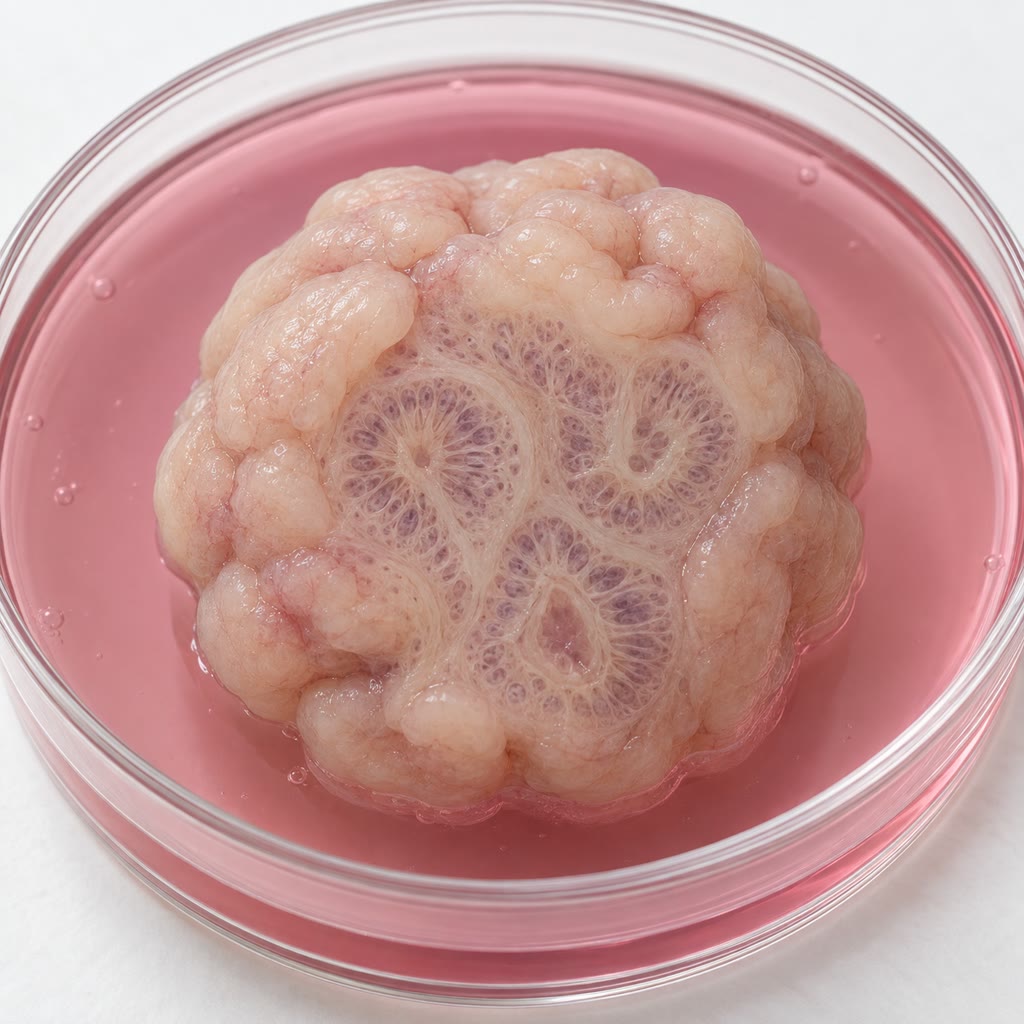
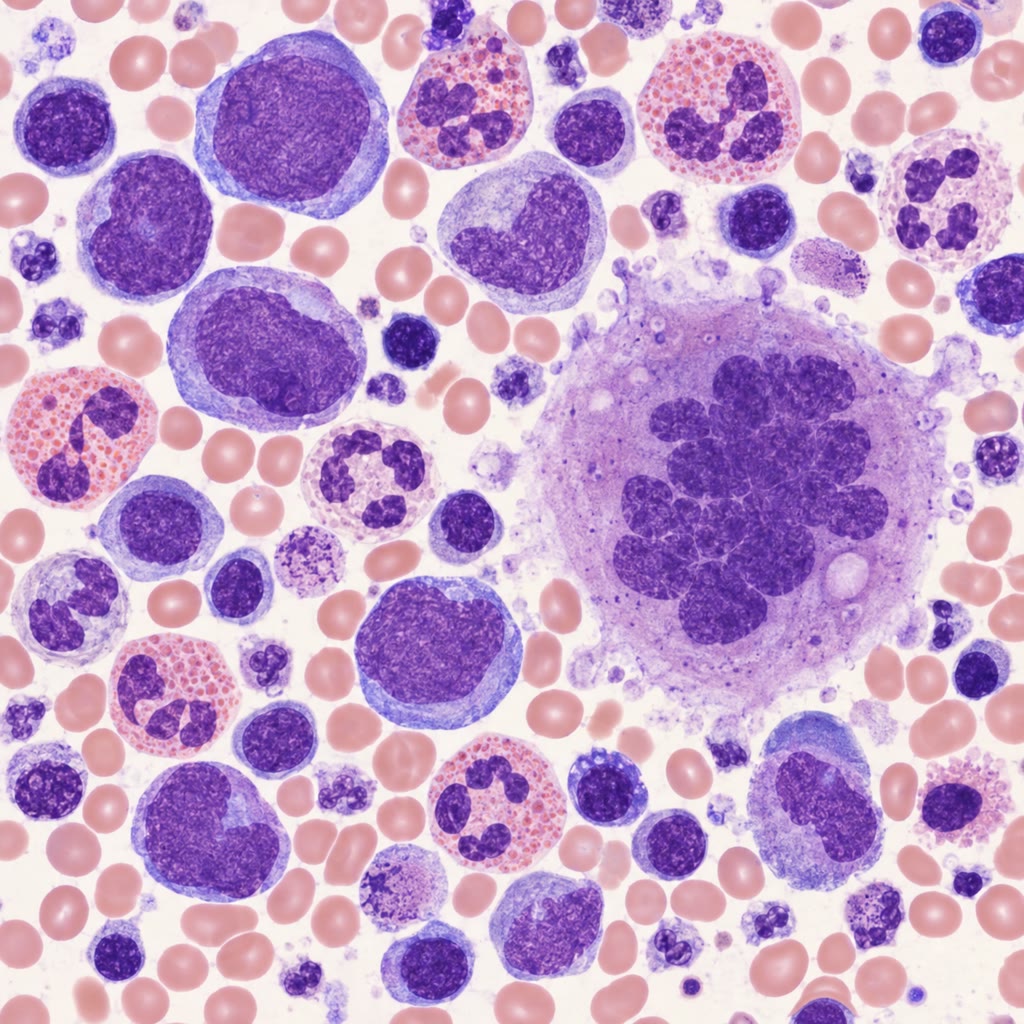
Left: a cerebral organoid grown from human pluripotent cells — a few millimetres of self-organised cortex-like tissue, with ventricle-like cavities and layered neurons. Right: a bone-marrow smear, the hierarchy of the first figure seen all at once: blasts, maturing granulocytes, red-cell precursors and a megakaryocyte. Left: a cerebral organoid grown from human pluripotent cells — a few millimetres of self-organised cortex-like tissue, with ventricle-like cavities and layered neurons. Right: a bone-marrow smear, the hierarchy of the first figure seen all at once: blasts, maturing granulocytes, red-cell precursors and a megakaryocyte.
Left: a cerebral organoid grown from human pluripotent cells — a few millimetres of self-organised cortex-like tissue, with ventricle-like cavities and layered neurons. Right: a bone-marrow smear, the hierarchy of the first figure seen all at once: blasts, maturing granulocytes, red-cell precursors and a megakaryocyte.
প্রসঙ্গসহ পড়ো →