 Coach
CoachRespiration is the gas exchange by which a living thing takes oxygen from its surroundings and releases carbon dioxide. It must not be confused with breathing — the visible chest movements of Definition 26.1: breathing is one way of serving respiration; respiration itself is the gas swap, and it goes on in every living cell, movements or none.
Examples
Example 46.3 (The gallery of respirers)
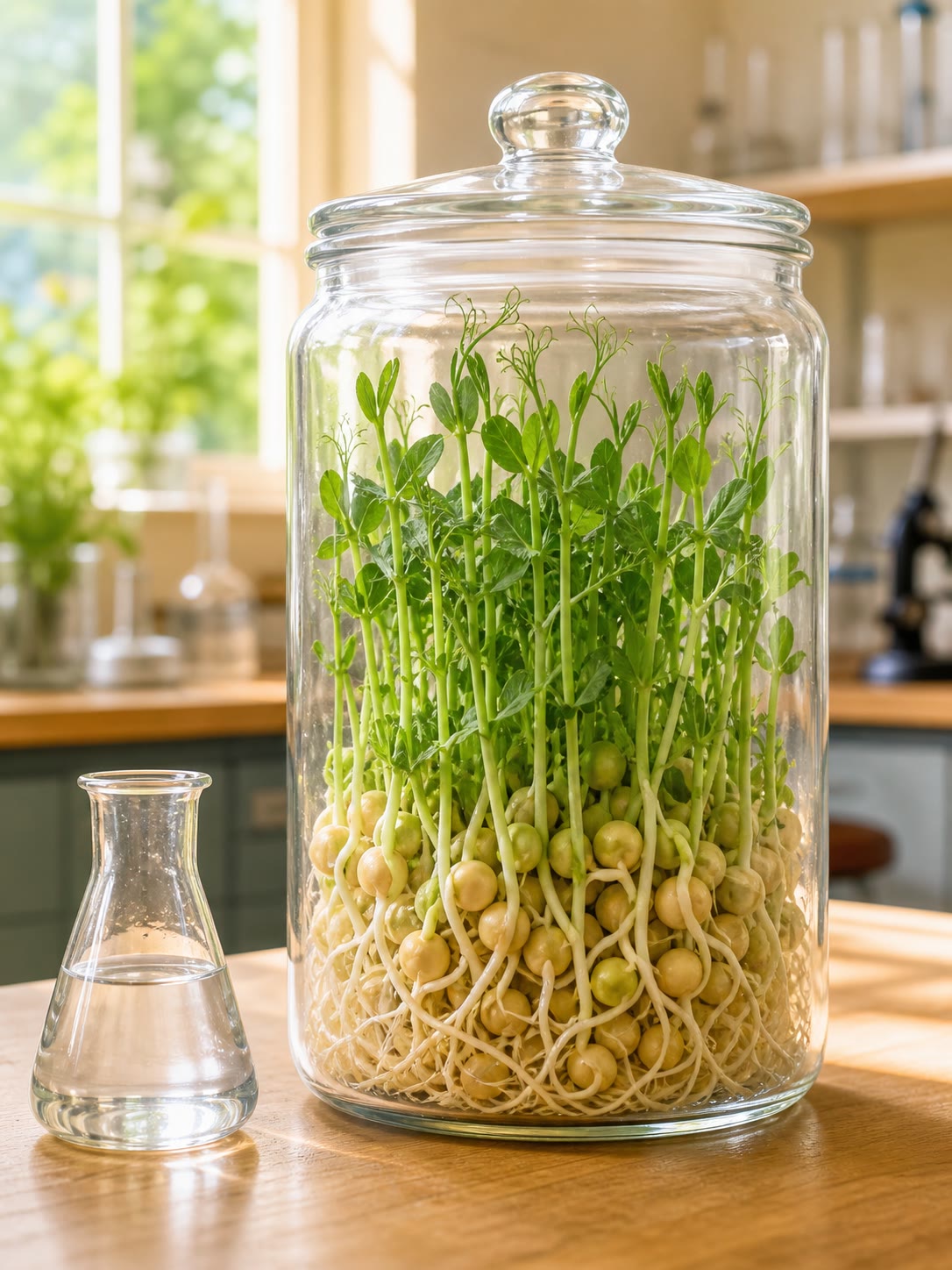
Run the two tests on a menagerie: a mouse — fast fall, quick clouding; a woodlouse — the same, smaller; a germinating pea — unmistakable (a jar of sprouting peas can exhaust its oxygen in a day); a mushroom — yes; pond snails — yes; a spoonful of living soil — yes, its billions of decomposers respiring together (Example 42.2). Only the control jar — pebbles, dry sand — changes nothing.
Example 46.6 (The fire comparison, used honestly)
A candle flame also consumes oxygen and releases carbon dioxide — burning and respiration are genuinely the same kind of chemistry. The differences matter as much: the cell’s burning is slow, flameless, spread over thousands of tiny steps, and its energy is captured for work rather than lost as light and scorch. Respiration is combustion domesticated — fire on a leash, in every cell you own.
Example 46.7 (Reading demand)
Because the burning powers the work, demand tracks effort: the sprinting child of Example 26.6 respires far faster than the reader in the armchair; the germinating pea — building a plant at full speed (Definition 9.4) — respires far faster than the dry, waiting seed beside it, whose respiration idles near zero for years. Respiration is the engine note of life: loud in effort and growth, a whisper in dormancy, silent only in death.