 Coach
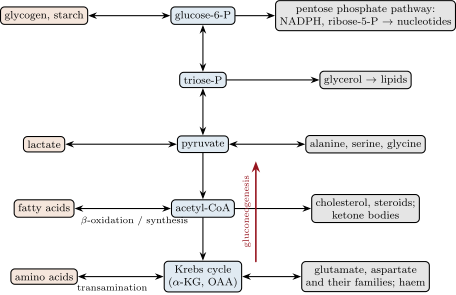
CoachThe pentose phosphate pathway of the cytosol oxidises glucose-6-phosphate to ribulose-5-phosphate and , reducing two to NADPH; its non-oxidative branch then interconverts five-, four-, six- and seven-carbon sugar phosphates, so that the cell can make ribose-5-phosphate for nucleotides when it needs pentoses, NADPH when it needs reducing power (fat synthesis, defence against oxidants), or both, and return the rest to glycolysis. It is the main source of NADPH in animal cells; in plants the chloroplast’s light reactions supply NADPH by day.
Examples
Example 16.8 (Fat from sugar)
A liver given more glucose than it can store as glycogen makes fat: glucose to pyruvate to acetyl-CoA (losing a third of the carbon as and gaining ATP), acetyl-CoA to palmitate at the cost of that ATP and of NADPH from the pentose phosphate pathway, palmitate to triglyceride shipped to adipose tissue. Some of the sugar’s energy is lost in the conversion; the rest is stored nine times more compactly than glycogen (Chapter 9). The reverse — fat to sugar — is impossible.
Example 16.10 (Nucleotides)
A purine ring is assembled on ribose-5-phosphate from glycine, aspartate, two glutamines, two one-carbon units and , at the cost of six ATP; a pyrimidine from aspartate and carbamoyl phosphate. Deoxynucleotides are made from ribonucleotides by reducing the sugar, using NADPH. A cell about to divide makes some nucleotides in an hour; the drugs that block these syntheses — methotrexate, 5-fluorouracil — stop dividing cells first, which is why they treat cancer.