 Coach
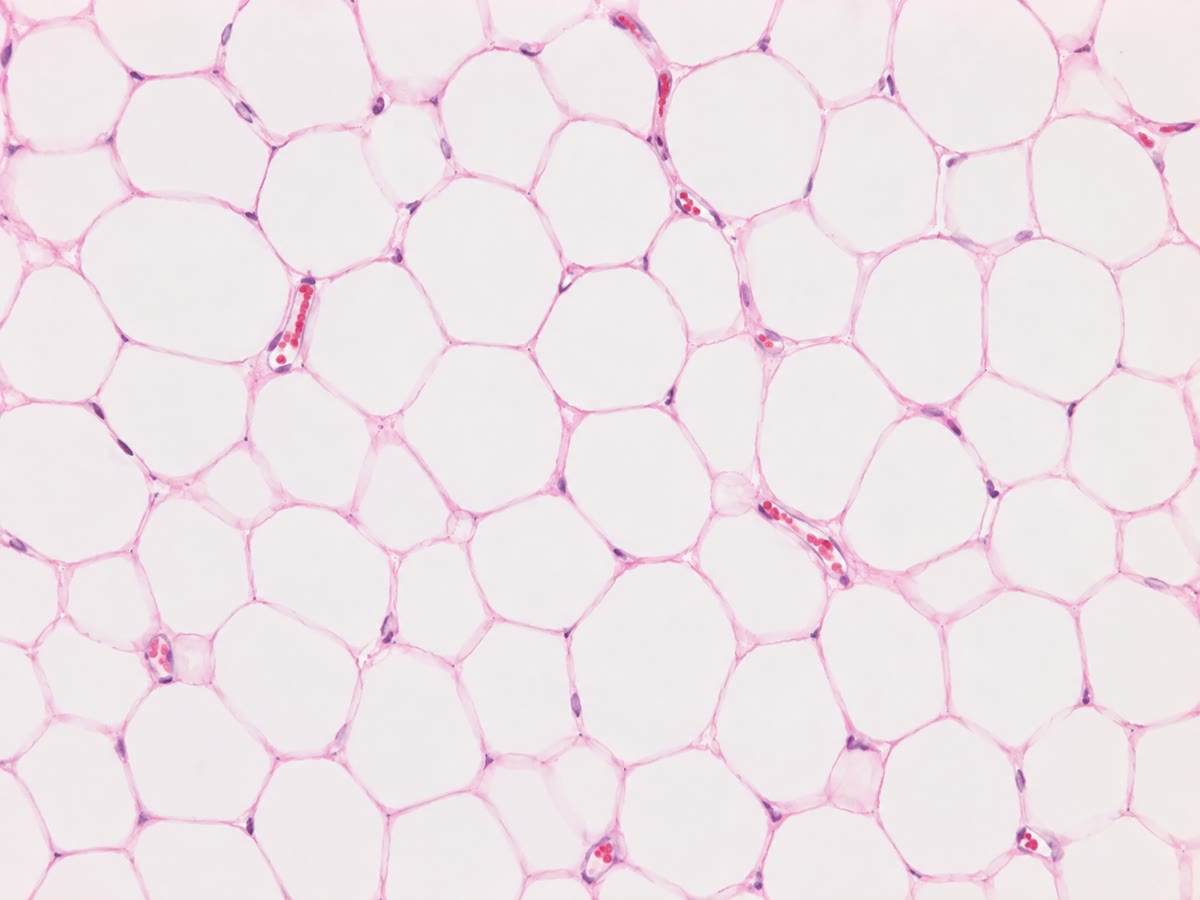
CoachA triglyceride (triacylglycerol, a fat when solid, an oil when liquid) is glycerol — a three-carbon alcohol — esterified on its three hydroxyls by three fatty acids. It has no charge and no polar group left: it is entirely hydrophobic, and it is stored as anhydrous droplets in adipocytes, cells of the adipose tissue that are little more than a droplet of fat with a nucleus pushed to one side.
Examples
Example 9.5 (Why not store everything as fat)
Fat can only be burnt with oxygen, slowly, and cannot be turned back into glucose in animals (Chapter 16); the brain and the red cells need glucose, and a sprinting muscle needs it faster than fat can supply. Glycogen is the fast, oxygen-free, glucose store for hours; fat, the dense store for weeks. A migrating bird, a hibernating dormouse and a camel are fat; a sprinter’s legs are glycogen.
Example 9.9 (Bile salts)
Dietary fat arrives in the intestine as oil; the lipase that digests it works only at the oil–water interface. Bile salts, amphiphilic derivatives of cholesterol, coat the fat into droplets a micrometre across, multiplying the interface a thousandfold, and then carry the fatty acids released, in micelles, to the absorbing cells (Chapter 22). The same trick is used by soap.
Example 9.13 (Butter, olive oil, fish oil)
Butter ( saturated) is solid in the refrigerator and soft at room temperature; olive oil ( oleic acid) is liquid at room temperature and clouds in the refrigerator; fish oil, rich in omega-3 acids with five and six double bonds, stays liquid at , which is what a cod’s membranes need in the North Atlantic.