 Coach
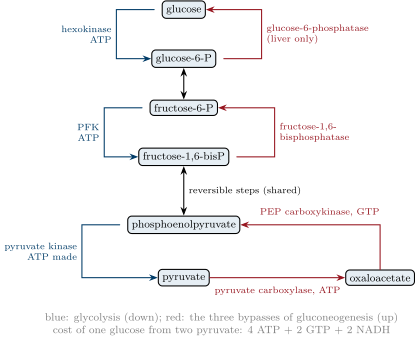
CoachGluconeogenesis makes glucose from non-carbohydrate precursors — lactate, pyruvate, glycerol and the carbon skeletons of most amino acids — in the liver (and a little in the kidney). It runs glycolysis backward through its seven reversible steps and bypasses the three irreversible ones with different enzymes: pyruvate is carboxylated to oxaloacetate (in the mitochondrion, one ATP) and decarboxylated to phosphoenolpyruvate (one GTP); fructose-1,6-bisphosphate is hydrolysed to fructose-6-phosphate; glucose-6-phosphate is hydrolysed to free glucose, which leaves the cell. Per glucose: 6 ATP equivalents and 2 NADH, against the 2 ATP glycolysis yields — the price of running a downhill path uphill.
Examples
Example 16.5 (The Cori cycle)
A sprinting muscle ferments glycogen to lactate, which enters the blood; the liver takes the lactate up, oxidises it to pyruvate, makes glucose from it at 6 ATP per glucose, and returns the glucose to the blood for the muscle to use again. The muscle has gained 2 ATP per glucose without oxygen and passed a bill of 6 to the liver, which pays it with oxygen at leisure: the “oxygen debt” of a sprint is repaid largely in the liver.